
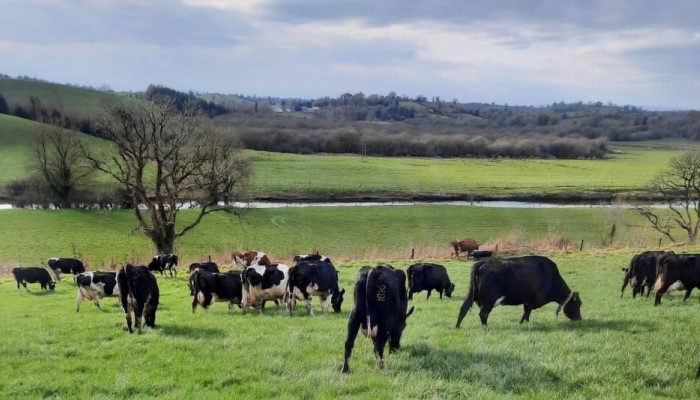
As the New Year progresses and the workload of the upcoming calving campaign kicks off, Dairy Specialist at Teagasc, Patrick Gowing reminds dairy farmers to take stock of how their systems performed in 2025 and to identify changes for the coming year.
Doing the same thing as before will lead to a similar result. Since 2022, we have seen costs of production stay above 37c/L each year. And, despite the better weather and grass growing year in 2025, there was no significant change in the cost structure.
As is widely known, the outlook for 2026 is poor at present and so comes the question: When do we react to this lower milk forecast?
As a rule of thumb, we can apply the 60/40 rule to spring calving systems. That is 60% of the costs with 40% of the output in the first half of the year. So, if we are to have an impact on costs, we have to do it now! Talking about costs saving in September is too late, as most of the costs on the farm will have been incurred and waiting and hoping milk price will recover faster than predicted is a risky game with your business.
The starting point – budgets
Firstly, we need to budget and stick to it. The first budget that needs to be done is your spring budget planner on PastureBase. This will map out your feed budget for the spring, and it only works if updated as new grass covers come in. Make sure you have grass in the system to fully feed your herd in mid-March. Having to feed silage in mid-March can have an impact on milk yield and depress protein concentration for a subsequent 6-8 weeks!
Prepare a budget for concentrate use. Do we know what we are feeding our cows? Map out your planned feeding strategy and total it up to see how much per head you will feed during the year. Is all the feeding necessary? We all agree that cows need to be fully fed, but can this demand be met by the grass on farm? Feeding additional meal can reduce the efficiency of the feeding. Calculating your kg DM per kg of milk solids will give you a guide to the efficiency of your concentrates plan. As this figure increases, it means it’s taking more imported DM per kg of milk solids, so it’s becoming less efficient and hence rising costs.
Examine all costs. We have to find savings. Look at each cost category and see if savings can be made. If it’s not required or giving a low return, then cut this cost from your business. To help you identify which areas your costs may be too high, Teagasc has updated the Bill of Quantities.
When updating the Bill of Quantities, the quantity of inputs stays the same annually, but the input prices will change to reflect the actual input cost changes throughout 2025. To use the Bill of Quantities, you identify the cost category you are high on and then examine it against the Bill of Quantities to see exactly where your usage maybe too high and then react.
An average sized farm producing 500,000L could have their turnover reduced by ~ €50,000 depending on what happens with milk markets compared to 2025. The time to make the changes is now to reduce the impact of this turnover loss.
View and download the Teagasc Bill of Quantities 2025 (PDF)
More from Teagasc Daily: 10 tips for better transition cow nutrition and health