
Protecting lamb health this lambing season
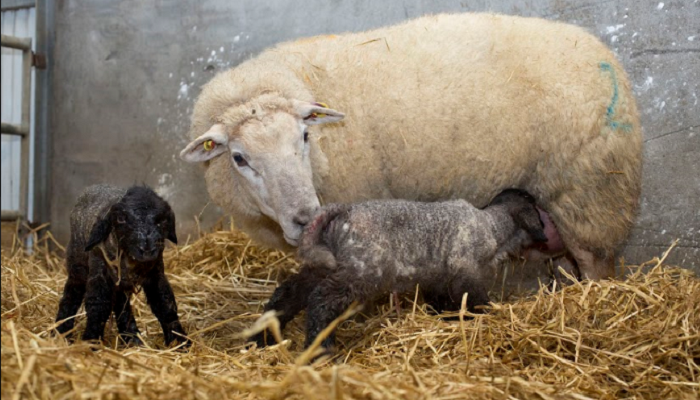
From effective colostrum management, rigorous hygiene and proactive management, Teagasc Sheep Specialist, Ciaran Lynch explains how farmers can significantly enhance lamb survival and overall flock health this lambing season.
Maintaining hygiene for lamb survival
A clean lambing environment is crucial in preventing diseases such as watery mouth, scours (E. coli), and infections like navel and joint ill. Studies have shown up to 38% of lamb mortality is due to infectious agents so, where possible, farmers should aim to reduce the risk by doubling down on the basics. This also has implications for the wellbeing of those working on the farm. Here are a couple of key areas to focus on:
Hygiene practices for farmers and staff
Good hygiene during lambing is non-negotiable. It helps break the chain of infection for lambs – reducing the risk of E. coli, watery mouth, navel ill and joint ill – while also protecting farm workers from zoonotic diseases such as Orf and toxoplasmosis.
Personal Protective Equipment (PPE):
- Always wear clean gloves when assisting lambing or handling lambs to reduce pathogen transmission.
- Use farm-specific overalls, waterproofs and boots that are regularly cleaned and disinfected.
- Students and other farm personnel should use separate, farm-specific workwear (including waterproofs) that stays on site, reducing the risk of disease transmission in either direction.
- To reduce risk, aim to have work gear disinfected or at least brushed off and cleaned before being brought into the household for washing.
Hand hygiene
Good hand hygiene protects staff, family members and visitors. Where possible, provide accessible hand-washing facilities with soap, towels and ideally hot water in the lambing area for quick, frequent use. Thoroughly wash hands with soap and warm running water (ideally hot water where available, over 60°C if facilities allow).
Keep equipment clean
- Clean and sterilize all tools, including stomach tubes and lambing aids, before and after use and stored in a sterile environment.
- Have enough of the basics on hand (stomach tubes, syringes, bottles, jugs or containers) so that you are not relying on using the same one each time. This will allow time for them to cleaned and sterilised properly.
In the below video, Michael Gottstein outlines the 3 bucket system to clean and sterilise equipment for lambing to prevent infection being transferred from ewe to ewe and lamb to lamb:
Lamb care and hygiene
Minimise handling of wet lambs
Carry wet lambs suspended by their front legs with their backs towards you (keep navel facing away) to reduce the risk of infection.
Navel care
Disinfect the lamb’s navel immediately after birth ensuring its fully treated, follow up again four to six hours later to prevent infection.
Shed and pen hygiene
Having pens clean in the lead up to and during lambing can reduce the bacterial challenge significantly during lambing.
Keep group pens clean
Frequent bedding is required in straw sheds, even when costly. This significantly reduces soiled hindquarters and udders and provides a cleaner environment for ewes lambing, and regular cleaning of slats will also help reduce the sources of infection. Improving ventilation, repairing leaks and applying lime to group pens during lambing may also help reduce moisture content and infection.
Clean individual lambing pens
Move ewes and lambs to fresh pens as soon as practical after lambing. Remove soiled bedding, disinfect, apply hydrated lime (or alternative), and use plenty of clean straw after each ewe.
Colostrum
Adequate colostrum intake is the best way to improve lamb survival and subsequent performance. Ensuring nutrition is right in the lead in to lambing will be key to ensuring adequate quality and quantity if colostrum is produced.
Colostrum serves 3 main functions in the newborn lamb:
- Provides a dense source of energy and nutrients,
- Source of maternally derived antibodies that provide the lambs with passive immunity,
- Acts as a laxative to help clean the digestive tract.
In the majority of cases, lambs should have sufficient vigour to consume adequate volumes of colostrum with no intervention. However, in the case of weak lambs or multiple births, intervention may be needed. When supplementing, lambs should receive 50ml per kg of body weight within 6 hours and 200ml per kg within 24 hours. Recommended feeding amounts based on birth type are available in table 1 below.
Table 1: Colostrum feeding rates for newborn lambs
| Birth weight (kg) | First feed | First 24 hours |
| 6 | 300ml | 1,200ml |
| 5 | 250ml | 1,000ml |
| 4 | 200ml | 800ml |
Where the ewe has insufficient milk, an alternative will be needed. However, it’s vital that when using this option always try to ensure that each lamb receives some of its own mother’s colostrum or that of another freshly lambed ewe within the flock by pooling the sample and topping it up with the alternative to facilitate transfer of passive immunity. The balance can be made up with one of the following options:
- Another freshly lambed ewe
- Cow colostrum (pooled from 2 or more cows at a 20% higher feed rate)
- Colostrum alternatives – follow manufactures instructions.
Investigating lamb mortality
Infectious agents are a leading cause of lamb deaths, but the specific cause can differ. Early identification of the causes offers some opportunity to address the issues as they arise and enables better prevention strategies for future lambing seasons. Prompt action will be required, consult your vet and submit samples to a Regional Veterinary Laboratory to get a diagnosis of what the potential causes are.