

Edited By
Catherine Egan
Beef Specialist
Welcome to the Teagasc March Beef Advisory Newsletter. In this edition, Teagasc Beef Specialist, Catherine Egan brings you timely advice on grassland management, calving and calf care, preparing the stock bull for the season ahead and calf rearing.
Grassland Management
Potential exists in March to increase the profit on beef farms, provided the farm and the farmer is set up to take advantage. Maximising days at grass and setting the farm up for the summer is the aim of spring grazing; March is a crucial month for achieving that.
To get the most from spring grass:
- Split the farm into three. Graze one-third by early March, two-thirds by St. Patrick’s Day, and the rest by April 10-15 (heavy farms 10-14 days later). Work out the target area to graze each week.
- The first paddocks grazed should be the fastest growing, have 7-8cm grass cover, and be drier with good access. Graze silage ground in the second third (mid to late March), and wetter paddocks last.
- Pick lighter animals to go out first. They will have the best chance of grazing paddocks without damaging them. Work out if they will graze the target area each week. You may need to let out more stock.
- Use strip-wires to move cattle daily and back fence. This avoids doing damage.
- If ground conditions are poor, bring stock back in, but try to get them out again as soon you can.
The Teagasc Grass10 team, in conjunction with the Drystock team and Advisory Regions, have organised a series of Drystock Early Spring Grass Workshops. These events will provide practical demonstrations on: preparing for turnout; grazing during difficult conditions; early nitrogen and slurry; and grazing infrastructure.
Find details on your nearest Drystock Early Spring Grass Workshop here.
Calving and Calf Management
Spring calving is now in full swing and disease pressure may be rising at farm level. Hygiene and good management are crucial for minimising losses and ensuring calves perform.
- Colostrum: newborn calves need 2L of first milk within two hours of birth. Use a refractometer to test quality; top-quality colostrum reads >22%. If it’s less, substitute with better-quality colostrum from a mature cow. Ensure colostrum is clean, stored in a fridge or frozen and use only sanitised feeding equipment to avoid infection.
- Health and hygiene: keep pens clean, disinfect between cows calving and provide dry bedding. Watch for scour and pneumonia; act fast if you notice either.
- Scour management: isolate sick calves to reduce disease spread, provide electrolytes, continue milk feeding and seek vet advice if needed.
- Creep feeding: provide creep feed to autumn-born calves to ease the weaning process.
Teaser or New Stock Bull Management

Now is the time to plan for your teaser bull or stock bull, if you have not already.
- Stock bull: if purchasing, allow several weeks for acclimatisation. Gradually reduce concentrate feeding.
- Teaser bull: for late-April breeding, the bull should be vasectomised immediately. This is a vet-only procedure. It takes four to six weeks for viable sperm to clear, two to three weeks for recovery, and the teaser bull should join the herd two to three weeks before breeding.
Herd Health
A proactive health plan is key to keeping cattle thriving. Focus on the following:
- Grass tetany prevention:
- Avoid grazing cows on pastures that received heavy slurry applications or high potassium (K) fertilisers. Supplement cows with magnesium (Mg), avoid lush grass, provide fibre (silage or hay) and manage stress.
- Vaccination:
- Calves and yearlings: vaccinate against clostridial diseases and infectious bovine rhinotracheitis (IBR) before turnout.
- Cows and heifers: vaccinate pre breeding for leptospirosis and/or salmonella. If mineral deficiencies exist, administer boluses one month before breeding. Consult your vet for tailored recommendations.
Are You Rearing Calves this Spring?
Dairy calf to beef systems can be profitable, but they are technically demanding. Success depends heavily on getting the first few months of the calf’s life right. Four things that matter most when rearing dairy-beef calves are:
- Profit depends on efficiency
- Buying the right calf and managing stress
- Prevent illness rather than treating it, and
- Consistent feeding matters more than quantity
Available to listen to below, this spring, the Teagasc Beef Edge podcast shared practical advice with farmers rearing dairy beef calves. Insights were shared by Alan Dillon, DairyBeef 500 Manager; David Argue, Teagasc Beef Specialist; Tommy Heffernan, Veterinarian; and Liam Gannon, Volac Milk Replacer Irl – Feed for Growth.
2026 Basic Income Support for Sustainability (BISS) Open
The application process for the 2026 Basic Income Support for Sustainability (BISS), Complementary Redistributive Income Support for Sustainability (CRISS), Eco-Schemes and other related schemes has now opened. Farmers are urged to contact their advisor to ensure applications are processed well in advance of the closing date for BISS applications on Friday, May 15, 2026.
Farm Safety Message – Safe Slurry Management
Persistent rain and waterlogged soils have delayed slurry applications this spring, leading to a build up of work at farm level. Take time to consider how you can make best use of these nutrients while doing so in a safe way.
Key slurry management safety tips:
- Always wait for a breezy day.
- Manage machines with safety in mind.
- Open all doors and vents and remove all animals from the shed.
- Ensure people, particularly children or older persons, do not enter the area during or after agitation commences.
- Make sure tank access points are guarded.
- Stay away from the agitation point for at least the first 30 minutes after agitation starts and beware of gas moving into linked tanks/sheds.
Mind yourself
With poor weather making the busy spring workload challenging, it is important to prioritise your health. Adequate sleep, good diet and asking for help when needed are all very important. Act early and Teagasc advisors are available to help. Some key advice is available in the below video:
Research Update
High crude protein pasture does not induce summer scour syndrome in dairy-beef calves
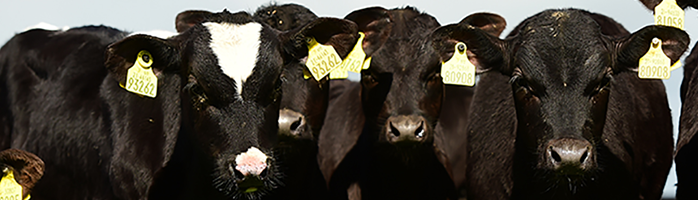
Rischi Robinson, Mark McGee, Edward O’Riordan, Bernadette Earley of Teagasc, Grange, and Catherine McAloon (UCD), provide an update on a study on summer scour syndrome in dairy-beef calves.
High crude protein pasture has been anecdotally linked to summer scour syndrome (SSS) in recently weaned dairy-beef calves; however, experimental evidence is lacking. This study evaluated the effect of inorganic nitrogen fertiliser application rates to pasture on rumen and blood variables and calf health.
Fifty-four weaned Aberdeen Angus × Holstein-Friesian male calves (99 days old; 115 kg) offered hay ad libitum and supplementary concentrates indoors, were assigned pasture that received either 15 (low), 60 (moderate) or 120 (high) kg nitrogen fertiliser/hectare 14-days pre-grazing.
Calves received up to 1 kg concentrate for 7 days post-turnout and rotationally grazed (2-days/paddock) their pasture treatments for 28 days, and subsequently for another 13 days during which no fertiliser was applied.
Increasing nitrogen fertiliser increased herbage crude protein (19.6%, 22.7% and 26.1% for low-, moderate- and high-nitrogen, respectively), rumen ammonia, and plasma ammonia and urea concentrations. Overall, highest values were observed in the high-nitrogen treatment; all physiological values were within normal ranges. Nitrogen fertiliser application rate did not adversely affect calf health or induce SSS.
A recent webinar provided an insight into the Suckler & Dairy Beef Research Highlights from Teagasc Grange. Featuring Dr. Peter Doyle and Jamie O’Driscoll, Teagasc Grange; and Dr. Doreen Corridan, CEO at the National Cattle Breeding Centre (NCBC), a recording of the webinar which provided an update on the Derrypatrick Suckler Calf to Beef Herd and the Dairy Calf to Beef Research Programme is available to view below:
Demonstration Farm Programmes
The Teagasc Drystock Knowledge Transfer Department run dedicated demonstration farm programmes in the areas of suckler and dairy beef.
For the latest from the Teagasc DairyBeef 500 Programme, view its e-newsletter here.
For the latest from the Future Beef Programme, view its e-newsletter here.
To keep abreast of the latest happenings from both programmes, sign up to their frequent e-newsletters here.