
Forestry Road Map 2030
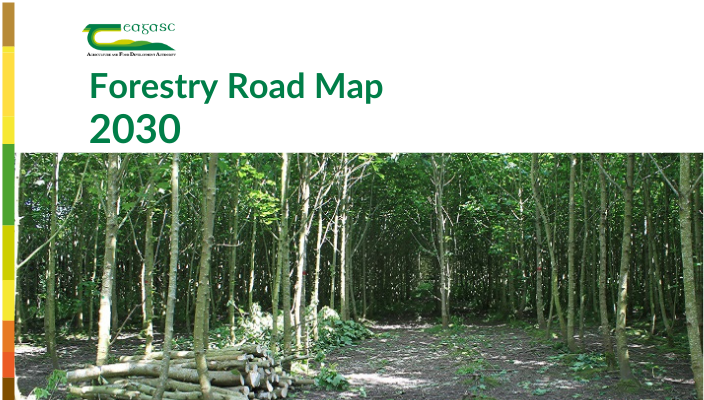
An overview of Ireland’s forestry sector to 2030, outlining current performance, market outlook, sustainability priorities, and future targets.
The forestry sector in Ireland continues to grow and represents an increasingly important resource for rural economies.
The national forest area extends to over 815,000 hectares, representing 11.8 percent of the total land area, excluding inland waterbodies. The land under forestry is almost evenly distributed between public and private ownership.
Ireland’s Forest Strategy 2023 -2030 sets out the need to urgently increase forestry on both public and private land to deliver benefits for climate, biodiversity, water quality, wood production, economic development and quality of life. The current Forestry Programme 2023-2027 provides financial support for the creation of a range of smaller woodlands and larger forests to suit landowners objectives. Planting rates have been low in recent years but did increase in 2025 (2,527 ha) which is more than 50% higher than 2024 levels. Forests and forest products play an important role in mitigating climate change by sequestering and storing atmospheric carbon. Well planned and managed forests facilitate increased biodiversity value.
The sector has seen some significant challenges in recent years including major storm events and ash dieback disease. This has led to an increased focus on planning for harvesting and forest reconstitution. Enhanced forest planting rates and sustainable management of existing forests are needed to strengthen the carbon sink capacity of the forest resource post 2030. Support for private forest certification is also critical to meeting future market and consumer demands.
Well planned and managed farm forestry remains vital to vibrant rural economies. Commercial growers will use increased automation and precision technologies to reduce the reliance on labour, enhance safety and improve productivity and sustainability.
Forestry can promote health and wellness, including stress reduction, community engagement, cognitive restoration, and a renewed sense of purpose.