
Food Industry Road Map 2030
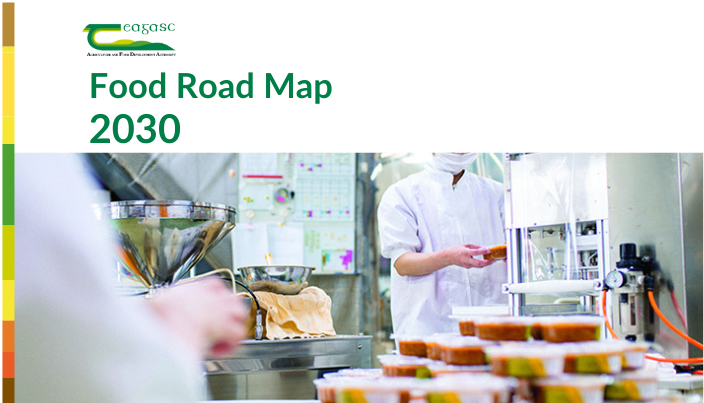
Teagasc has published a Food Industry Road Map to 2030. The Irish food sector makes a significant contribution to employment, output and national incomes.
In 2024. the agri-food sector accounted 5.4% of modified gross national income (GNI*) while agri-food exports accounted for over 8.6% of all merchandise exports. The industry generates considerable economic activity beyond direct employment such as transport, logistics, and retail, while also yielding strong value-added output relative to input costs. Output value is expected to rise in 2025 due to price increases across most sectors.
The Irish food sector is dominated by dairy and meat production, which together account for over 60% of Irish food output and export value. Approximately 90% of Irish food is exported to over 180 countries around the world. Global demand continues to be strong for safe, high-quality, and traceable food and beverage products and food ingredients from Ireland. In 2024 total food and drink exports, including live animals, were valued at approximately €19 billion and were almost evenly exported to the European Union (32%), Great Britain (38%) and Other International Markets (30%). Export values have risen to €19 billion in 2025 (Bord Bia).
Ireland has strived to add value to its food production and exports and in this regard there has been a steady increase in the export value of prepared consumer foods and drinks in recent years. The processing sector has invested and upgraded its systems and facilities substantially in recent years. This investment has led to improved efficiencies in processing as well as increased utilisation of by-products and improved sustainability credentials.
The global food industry is undergoing transformative changes driven by changing consumer preferences including increasing demands for improved sustainability as well as technological advancements. There is also a rising demand for healthier food options, transparency in food sourcing and “clean label” products. Robotics and AI will have a substantial impact on the future food industry, as will changing trade policies, stricter food safety standards, and growing regulatory frameworks on sustainability. Food safety and human health are ongoing challenges for the industry, particularly due to our high level of exports and ambition to service high value markets.
The industry is seeking to optimise the use of chemicals during cleaning in all aspects of food production and processing to minimise residues while retaining high food safety standards. The industry needs to reduce packaging and waste around food processing while ensuring maximum shelf life at the highest food safety standards.
The Irish food sector must respond to global market developments while also maintaining the highest microbiological and chemical food safety standards. There will be opportunities in the development of alternative dietary protein sources, co-product valorisation and the fermentation and biotransformation of new products and ingredients.
The medium term outlook for the Irish Food & Drink sector remains generally positive, with industry optimistic and ambitious. The food processing sector is very important to rural regions of Ireland where preparation and processing of new foods and by-products can provide a diversification opportunity for existing producers as well as new entrants for food and non-food use.