
Making up for lost time on DairyBeef 500 farms
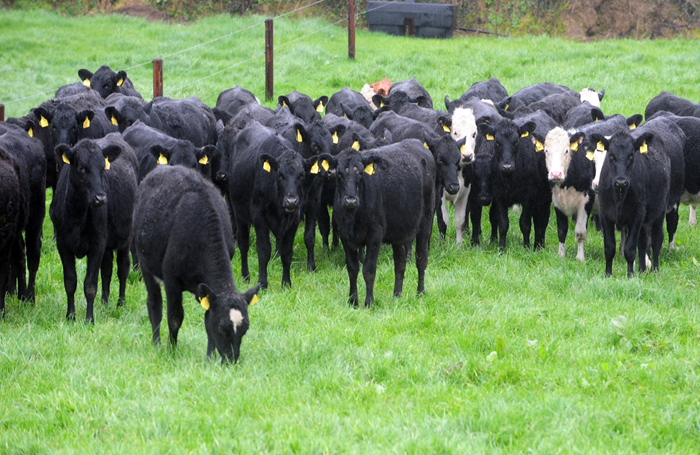
After a delayed start to the 2026 grazing season, DairyBeef 500 Advisor, Fergal Maguire shares key advice for getting grazing, fertiliser applications and plans for silage ground back on track.
So far in 2026, conditions on many of the Teagasc DairyBeef 500 demonstration calf-to-beef farms have been extremely challenging. During February, even light and free draining soils were waterlogged, meaning that very little slurry was spread. Only a small number of farms managed to apply nitrogen, and very little grazing took place.
Because of the prolonged wet weather, fertiliser plans will need to be adjusted to account for the lost opportunities to spread slurry and nitrogen earlier in the season. Given how wet land conditions have been, particularly in the east and south of the country, many farmers are only now considering applying nitrogen to grazing ground.
Under normal circumstances, first applications of nitrogen might be around 23 units/acre. However, this year it may be more appropriate to increase the first application to approximately 30 units/ac of nitrogen. This is to take account of the fact that little or no nitrogen was applied during February. As a result, any grass growth that occurred during this period will largely have relied on nitrogen from soil reserves.
Applying a slightly higher rate now will help replenish these reserves and support grass growth through March. A second application towards the end of March or early April will also be required, but this can be applied at a reduced rate compared with previous years, with around 30 units/ac of nitrogen being sufficient.
Keep an eye on the weather
Farmers need to be conscious of both current and forecast weather conditions when deciding whether to spread fertiliser. The key factors to consider are rainfall and soil temperatures. However, at this time of year, rainfall in the days following application is often more important than soil temperature.
Ideally, there should be no heavy rain forecast within five days of spreading nitrogen. Some rainfall after application is not a problem and can help move nitrogen into the soil, but if more than 5mm of rain is forecast within a few days, it is generally advisable to delay spreading.
Ground conditions must also be considered. If a tractor is leaving visible marks or causing damage in the paddock, then conditions are too wet to spread fertiliser.
In early spring, urea-based fertilisers are generally the most suitable source of nitrogen. Urea is more stable in the soil, converting to ammonia and binding to soil particles, which reduces the risk of leaching. In contrast, CAN based nitrogen is more prone to losses and is therefore less suitable for early spring applications.
As unprotected urea is no longer available, most farmers will now be spreading protected urea in granular form. As a general rule, compound fertilisers such as 18:6:12 or 10:10:20 should not be applied until later in the spring, typically from late March onwards, as phosphorus is more prone to run off during wetter conditions.
Plans for silage ground
Some silage fields that would normally have been grazed by now currently have a heavy cover and may not be grazed before closing. In these situations, the best option will be to apply 40–50 units of nitrogen per acre and plan to cut these fields in late April. Applying nitrogen now will help maintain sward quality, but it is important that these fields are cut early to avoid a decline in silage quality.
Where silage fields are still intended for grazing, they should ideally be grazed off by late March, with slurry and fertiliser applied by early April to ensure the crop is ready for cutting around 20 May.
Typically, around 80 units of nitrogen (N) per acre is recommended for growing a first-cut silage crop. However, farmers should take into account the nutrients supplied by slurry when calculating fertiliser requirements.
On average, 1,000 gallons of cattle slurry contains approximately 9 units of nitrogen (N), 5 units of phosphorus (P) and 32 units of potassium (K). These nutrients can significantly reduce the amount of chemical fertiliser required.
It is also important to note that slurry from sheds where cattle are fed high levels of concentrates will generally have a higher nutrient content. As a result, the amount of nitrogen, phosphorus and potassium per 1,000 gallons of slurry may be considerably greater than average, and this should be considered when planning fertiliser applications.
Getting stock out to grass
The recent improvement in weather conditions should allow many farmers to get cattle out grazing. To minimise the risk of poaching, cattle should initially be grazed on paddocks with lighter covers, before moving onto heavier covers once ground conditions improve.
A common question at this time of year is whether cattle cause more damage when given a large or small grazing area. In general, it is preferable to graze smaller areas and move cattle frequently. If some damage does occur, the paddock will then have a longer rest period before the next grazing.
In many cases, any damage caused at this stage of the year is superficial, particularly where lighter cattle are grazing. However, farmers should be prepared to house cattle again if weather conditions deteriorate. As the saying goes, March is the month of many weathers.
Fergal Magure is an Advisor on the Teagasc DairyBeef 500 Programme. For more information, visit the DairyBeef 500 webpage here.