
ICBF Sire Advice – an essential tool for all dairy farmers
To get maximum genetic gain, minimise calving difficulty risk using dairy beef sires, whilst delivering high Commercial Beef Value (CBV) progeny, dairy farmers should run ICBF Sire Advice every breeding season, Teagasc Dairy Specialist, Stuart Childs and Dan O’Riordan, ICBF, tell us more.
The principles of genetic gain date back to the late 1800s. Since then, animal performance has increased through various breeding programmes.
The advent of genetic technologies such as genomics (using an animal’s DNA or genotype to predict how the animal will perform in the future) brought a step change to the rate of genetic gain in the Irish cattle population.
The National Genotyping Programme (NGP) is an ambitious programme that plans to deliver a genotype for all stock born in Ireland by 2030. NGP is generating information, that when coupled with advancements in sexed semen technology, will allow for even greater genetic gain in Irish dairy and beef herds than ever seen before.
Application of Sire Advice
Genotyping generates vast amounts of information on each male and female analysed. It identifies superior genetic males and females for maximising genetic gain both within herd and nationally. It also has the capacity to identify lethal genes such as Holstein Haplotype 1 (HH1) and Holstein Haplotype 3 (HH3) which if inherited incorrectly, can result in embryonic death.
ICBF Sire Advice is a decision support tool that allows farmers to make informed decisions through identification of the superior females and matches them with dairy sires that will maximise the genetic gain the herd can achieve.
ICBF Sire Advice can now also prevent matings that will result in inbreeding occurring or matings between carriers of HH1 and HH3 genes to prevent this genetic mutation causing costly embryonic losses for farmers.
The programme also displays the genetic capacity for TB resistance for all bulls using a traffic light system which facilitates easy identification and selection of sires with greater resistance to TB (Figure 1). Enhancing genetic resistance to TB can significantly reduce the number of reactors, minimise herd disruptions, and lower costs. To improve TB resistance, farmers should aim to use bulls with a breeding value below 8.5%. For faster progress, select bulls with a breeding value below 6.5%.
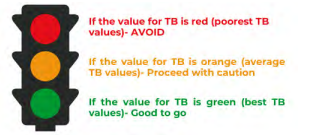
Figure 1: Traffic light system for TB resistance
For dairy beef matings, ICBF Sire Advice matches the chosen Dairy Beef Index (DBI) sires to maximise the beef merit of the progeny while minimising calving difficulty using the females’ likelihood of calving difficulty based on the dam’s genetic merit and age. Furthermore, farmers that used sire advice in 2023, on average had an EBI that was €41 greater and delivered 50 kg more milk solids/cow than herds that didn’t use the application. At €6.00 per kg milk solids, this difference is worth €300 per cow or €30,000 for the average herd.
Conclusion
High rates of genetic gain are necessary to futureproof your herd. ICBF Sire advice is a decision support tool to assist dairy farmers with selecting and allocating dairy sires to maximise the genetic gain in the next generation of dairy replacements.
It also facilitates dairy beef matings to maximise beef output from the dairy herd while minimising calving difficulty.
In 2024, based on sire advice matings and dairy cow numbers, 47% of the national dairy cow herd were mated on the basis of matings generated by the sire advice programme.
To get maximum genetic gain, minimise calving difficulty risk using dairy beef sires, whilst delivering high CBV progeny, dairy farmers should run ICBF Sire Advice every breeding season. Sire advice’s latest update avoids mating carriers of lethal mutations which is expected to save the dairy industry about €2.2 million annually. The system can also be easily updated as new lethal mutations are discovered.
The above was prepared by Stuart Childs, Teagasc Dairy Specialist, and Dan O’Riordan, ICBF, and first published in the Moorepark Dairy Open Day Book 2025. For more tips and advice, access the Moorepark Dairy Open Day Book 2025 here.