
Adapting to high fertiliser prices on sheep farms
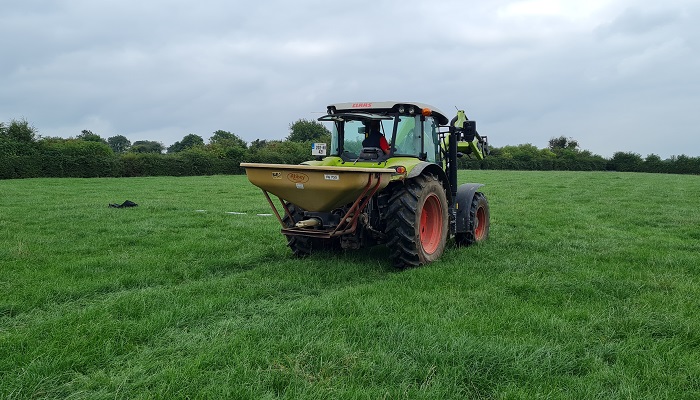
With the cost of fertiliser rising and peak grass growth approaching, Teagasc Sheep Specialist, Ciaran Lynch shares essential advice for sheep farmers when it comes to fertiliser applications over the coming weeks.
Due to the current global situation, fertiliser costs have risen sharply, with availability of some products becoming challenging in certain regions. Since early spring, ongoing geopolitical conflict has resulted in increases in the cost of urea and CAN of approximately 50% and 30%, respectively.
A proportion of farms will have some or all fertiliser stocks purchased prior to these increases. However, a large cohort of farms have little or no fertiliser purchased or applied. This will present a significant challenge for grass growth and overall farm performance. The breakdown of cost per tonne and per kg of nitrogen (N) is summarised in Table 1.
Table 1: Fertiliser costs spring 2026
| Cost €/ton | Cost €/kg N | |||
| Early spring | Current | Early spring | Current | |
| Protected urea | €520 | €800 | €1.13 | €1.74 |
| CAN | €410 | €540 | €1.52 | €2.00 |
While these figures represent a significant increase in expenditure, the cost per kg N should be considered in the context of feed value produced. Assuming reasonably productive grassland, a response of 20 kg DM per kg N applied in mid-April can be expected. The resulting cost per kg of feed, increasing into May, for the two purchasing scenarios is outlined in Table 2.
Table 2: Cost per kg of feed provided
| Cost €/kg N | |||
| Early spring | Current | Concentrate | |
| Protected urea | €0.06 | €0.09 | €0.35 |
| CAN | €0.08 | €0.10 | |
Why spread?
From an animal performance perspective, we are approaching peak ewe milk yield, reflected in increased intake (see Figure 1). Lambs are also increasing their grass intake, coinciding with the period of highest growth rates.
A reduction in grass supply and/or quality will result in either Increased reliance on more expensive supplementation, or reduced animal performance, with lasting impacts for the remainder of the season.
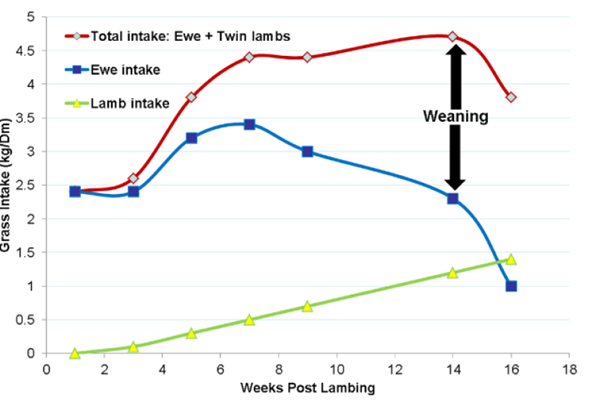
Figure 1: Grass intake for ewe and lambs
We are also entering the period of highest grass growth on farms. This must be utilised not only to maximise animal performance, but also to allow silage ground to be closed in a timely manner.
The standard nitrogen application rates for different stocking rates, aimed at maintaining adequate grass supply, are presented in Table 3. Where fertiliser budgets are tight, a “little and often” approach to application is recommended rather than omitting applications altogether. Applying approximately two-thirds of the recommended rates will still support grass supply, albeit at a reduced level.
Table 3: Suggested N rates (kg/ha) by stocking rate with approximate application dates
| Ewes/ha | March | April | May | June |
| 6 | 12 | 10 | ||
| 8 | 18 | 15 | ||
| 10 | 20 | 15 | 12 | |
| 11 | 20 | 15 | 12 | |
Grassland management
Complete a fertiliser and cashflow budget. The increased costs will require careful planning in terms of merchant credit and available cashflow.
Focus on long-term cost-benefit rather than short-term reductions in input use. 3
In addition:
- Ensure soil pH is at optimum levels to release existing nutrients
- Maximise the response to applied fertiliser and organic manures
- Consider investment in fencing infrastructure to improve grazing management
In terms of investments look at correct pH to release nutrient locked in the soil and maximise response of fertiliser/manures applied and some fencing infrastructure purchases.
For more insights on managing your sheep farm over the month of April, read the Teagasc Sheep Advisory newsletter here.
Upcoming webinar
Join us online on Wednesday, 15 April at 8pm for an episode of Let’s Talk Sheep, which will focus on grassland management on the sheep farm. The Teagasc Sheep Specialist team will be joined by Dr. Philip Creighton, Sheep Enterprise Leader, Teagasc.