
Biochar research to focus on emissions reductions and nutrient losses
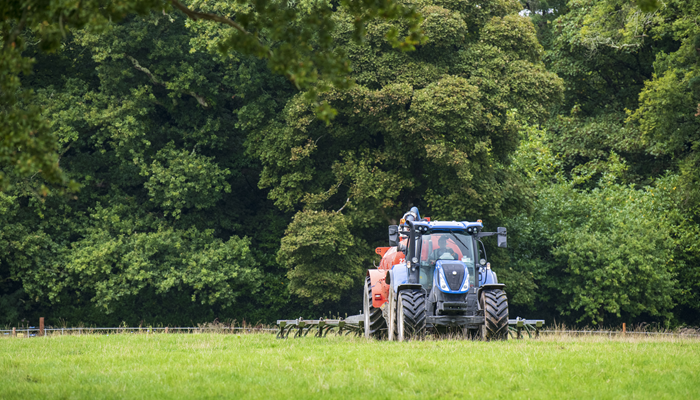
Led by University of Limerick and bringing together many partners across Ireland, Teagasc has been allocated funding for the BIOCHAR Project. Shaun Connolly, Teagasc Researcher, highlights some of the research Teagasc will be undertaking in both Teagasc Johnstown Castle and Teagasc Grange.
The funding will support a multi-year, systems-based biochar research programme within Teagasc, spanning both Teagasc Johnstown Castle and Teagasc Grange. The project will generate robust, field-validated evidence on how biochar can reduce greenhouse gas (GHG), ammonia (NH₃) and nitrate losses across cattle slurry, poultry litter and anaerobic digestion (AD) systems.
At Johnstown Castle, the research will focus on controlled slurry storage and lysimeter trials. Climate-controlled experiments will simulate Irish winter storage, testing direct incorporation of biochar into cattle slurry and quantifying impacts on CO₂, CH₄, N₂O and NH₃ emissions using high-resolution gas analysis. Parallel lysimeter studies will assess nitrate leaching following landspreading of biochar-amended slurries, alongside detailed chemical analysis (pH, dry matter, total ammoniacal nitrogen and total carbon). In addition, poultry litter trials will evaluate biochar as a bedding additive to reduce in-house ammonia emissions, improve litter quality and enhance bird welfare outcomes under commercial conditions.
Complementary research at Teagasc Grange will investigate the role of biochar amended poultry litter within anaerobic digestion systems, examining its effects on biogas yield, methane stability, digestate quality and downstream emissions. This integrated approach allows the project to assess biochar performance across the full manure management chain, from housing and storage through to digestion and land application.
Expected outputs include comprehensive GHG and NH₃ emissions datasets, nitrate leaching data, a technical white paper on biochar use in slurry and contributions to improved emission factors and MRV platforms. Crucially, large-scale farmer demonstrations and knowledge transfer activities will ensure the findings are practical, scalable and directly relevant to Ireland’s climate and water quality targets.
Funding for the BIOCHAR Project was announced by Minister for Agriculture, Food and the Marine, Martin Heydon TD, and Minister for Climate, Energy and the Environment, Darragh O’Brien TD. For further details on this announcement, visit here.