
First-cut silage: Rethink your strategy
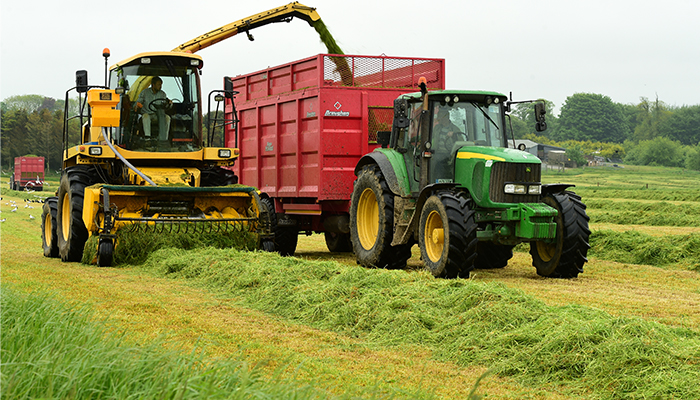
First-cut silage is generally the best opportunity to secure high quality silage, writes Mark Treacy, Teagasc Dairy Specialist, who outlines a strategy to balance cutting date, nitrogen use and silage quality.
The fertilisation of silage crops has been delayed on many farms this spring due to the challenging weather conditions experienced, with many farms only now being able to travel silage fields.
Many of these farms, where traditionally first-cut silage is made in early to mid-May, are now questioning what an appropriate cutting date is this year, and how much nitrogen to apply.
There is a strong temptation to delay the cutting of first-cut silage to allow the crop time to bulk up and replenish diminished silage stocks, however this is likely to have a negative effect on silage quality, as well as reducing the yield of second cuts.
The negative effects on quality are because digestibility declines sharply once grass has headed out, with many of the commonly used silage grass varieties having heading dates in the latter half of May.
Once a grass plant begins heading, the yield of digestible material will increase to a very limited extent. Instead, dry matter yield will be increased by indigestible material which is of limited value to stock.
Silage dry matter digestibility (DMD) is likely to decline by about 0.5 units for every day cutting is delayed after heading out. Harvesting of the crop is therefore necessary to reset the grass plant and get it back producing digestible material. Delaying the first cut harvest date beyond late May is likely to result in an overall reduction in the total dry matter harvested between 1st and 2nd cuts, while quality will also be lower.
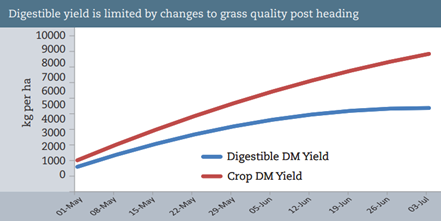
Figure 1: Digestible yield is limited by changes to grass quality post heading (Source: Teagasc – Quality Grass Silage for Dairy and Beef Production Systems – A Best Practice Guide).
A buffer and quality feed
While the challenging weather conditions this spring have reminded us of the importance of having a sizable buffer of silage available on farm, what was also very apparent was the value of quality silage when feeding freshly calved cows.
For spring calving herds with a moderate stocking rate, at least 50% of silage reserves need to be of at least 72% DMD, and ideally higher. While it is relatively easy to dilute high quality silage during the winter period, it is extremely difficult to compensate for poor quality silage when a high-quality diet is required.
First-cut silage is generally the best opportunity to secure high quality silage, therefore where nitrogen fertilisation is only taking place now it is sensible to reduce the nitrogen rate applied and cut a high-quality crop before it heads out.
As a rough rule of thumb, a silage crop will use 2 units of nitrogen per day, therefore where a nitrogen is only being applied now a reduced rate of 60 units per acre (75 kg N/ha) is appropriate if targeting a cutting date in mid to late May.
Mark Treacy joined Stuart Childs on a recent episode of the Dairy Edge podcast to share dairy management tips for April. Listen in below: