
ESAI Postgraduate Researcher of the Year 2025
The Environmental Science Association of Ireland (ESAI) announced that Mr. Morad Mirzaei, a PhD candidate with Trinity College Dublin and Teagasc Environment, Soils and Land Use Department, was the winner of the prestigious ESAI Postgraduate Researcher of the Year Award 2025.
The ESAI Postgraduate Researcher of the Year is a competitive award to recognise the quality research being undertaken in Ireland.
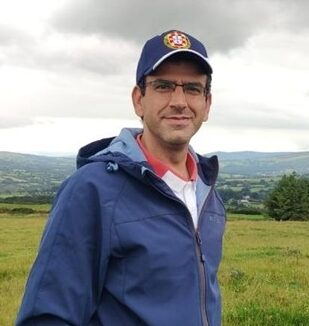 Mr. Mirzaei’s PhD research, “Assessing the role of multi-species swards in mitigating carbon and greenhouse gas emissions from intensively managed grasslands in Ireland,” investigates how increasing plant diversity in pasture systems influences ecosystem function. Specifically, the research evaluates how multi-species grasslands can reduce greenhouse gas emissions, enhance soil carbon sequestration, and improve the resilience and sustainability of grassland-based livestock production systems.
Mr Mirzaei said; “The findings of this research show that grasslands with a mixture of plant species deliver substantial benefits for more sustainable farming systems. Multispecies swards can maintain pasture productivity comparable to traditional ryegrass systems while significantly reducing greenhouse gas emissions and reducing the need for fertilisers.”
His PhD research has used new drone-based mapping to provide a more accurate estimate of greenhouse gas emissions from grazed grasslands. This is important to support the development of more targeted and effective mitigation strategies. Overall, combining plant diversity in pastureland offers a practical and cost-effective pathway to reduce emissions, improve resource use, and support more sustainable and resilient agricultural systems.
The outcomes of this research contribute to national and international efforts to develop climate-resilient agricultural systems that balance food production with environmental sustainability. It also advances interdisciplinary research on grassland ecosystems, biodiversity–ecosystem functioning relationships, and climate mitigation in agricultural landscapes.
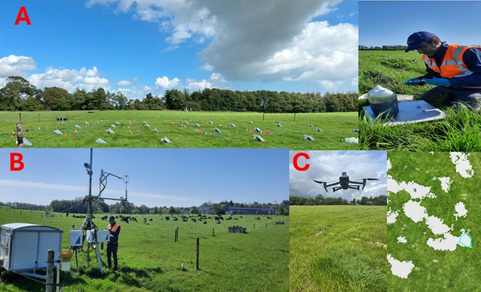
Figure 1. Measurement approaches for greenhouse gas emissions in Irish grasslands.
Static chambers used to measure soil nitrous oxide (N2O) fluxes (A); eddy covariance systems measuring ecosystem-scale carbon dioxide (CO₂) exchange between the grassland ecosystem and the atmosphere (B); and UAV-based mapping used to detect and quantify urine patch distribution under grazing conditions (C).
Dr. Karl Richards, Head of the Teagasc Climate Centre congratulated Morad Mirzaei on winning the ESAI Postgraduate Researcher of the Year Award 2025, and said; “These research outcomes highlight that multispecies swards can contribute to reducing greenhouse gas emissions from agriculture while maintaining production.”
This work is conducted under the supervision of Dr. Matthew Saunders (Discipline of Botany, School of Natural Sciences, Trinity College Dublin), Dr. Rachael Murphy (Teagasc Environment, Soils and Land Use Department and Teagasc Climate Centre), and Dr. Karl Richards (Teagasc Climate Centre). Through this collaboration, the project integrates expertise across plant ecology and ecophysiology, soil science, and agricultural climate research. This research is supported by Taighde Éireann, Research Ireland under Grant Number 13/RC/2092_P2 through the iCRAG Research Ireland Centre for Applied Geosciences and was also supported by the Teagasc Climate Centre.