
EIP measures implemented on Newford farm
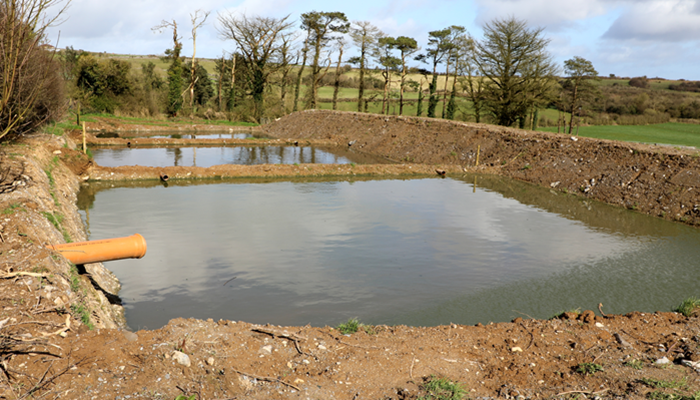
Following the relocation of Newford Farm to Scrine, Co. Roscommon, Alana Coyne of Dawn Meats writes, a strong emphasis was placed on ensuring that the farmyard and roadway infrastructure was designed and managed in a way that protects local water quality, reduces environmental risk and improves overall farm efficiency.
To support this objective, the farm availed of funding through the Farming for Water European Innovation Partnership (EIP), which enabled the implementation of a number of practical, targeted measures.
The primary driver behind these measures was the need to separate clean rainwater from contaminated yard water and to manage surface water flows more effectively. Uncontrolled rainwater entering the yard increases the volume of grey water that must be treated and significantly raises the risk of nutrient and sediment losses to nearby watercourses, particularly during periods of heavy rainfall.
A series of concrete water bars were installed on the farm roadway to divert surface rainwater away from the yard and back into adjoining fields. This reduces the volume of water entering the yard, minimises wear and tear on the roadway surface, and lowers the overall quantity of grey water generated. The EIP contributed €213 per water bar installed.
Clean rainwater from roofs and roadways is diverted into a separate drainage system, ensuring that only contaminated water enters the treatment system. This separation improves the effectiveness of downstream filtration and reduces the risk of overloading the yard water management infrastructure.
Good yard management is also critical. The use of a bucket and brush to regularly remove silage residues, soil and organic material from the yard helps keep runoff as clean as possible before it reaches the treatment system. Cleaner runoff improves the efficiency of sediment capture and reduces maintenance requirements. The farm availed of €2,000 from the EIP towards the bucket and brush.
At the centre of the system are the farmyard settlement tanks, which collect yard runoff and allow heavier sediment and solids to settle out before the water moves on for further treatment. The two chamber settlement tank system, with a combined capacity of 7,000 gallons, plays a key role in protecting the downstream treatment features. Routine monitoring and periodic cleaning of the tanks are essential to maintain performance and prevent sediment carryover. The funding available for one farmyard settlement tank is €6,500 through the Farming for Water EIP.
Following the settlement tanks, water flows into a series of three shallow ponds, each measuring 15 × 15 metres and approximately half a metre deep. These ponds are designed to slow water movement and facilitate the removal of nutrients such as nitrogen and phosphorus through natural biological processes. The ponds will be planted with aquatic vegetation, which enhances nutrient uptake, improves filtration efficiency during the growing season, and delivers an additional biodiversity benefit. The EIP assisted with €800 towards each of the small-scale wetland ponds.
After passing through the ponds, water enters a vegetated bunded drain, which provides a final polishing stage. This drain further slows the flow of water, allowing remaining nutrients to be absorbed back into the soil profile before the water exits the farmyard system. The EIP contributed €1,000 towards the vegetated bunded drain.
Overall, these EIP measures deliver multiple benefits to the Newford system. They significantly reduce the environmental risk associated with farmyard runoff, help protect local watercourses, and demonstrate strong environmental stewardship. From a farm management perspective, they also reduce the volume of contaminated water requiring treatment, improve yard durability, and provide a practical, replicable example of how environmental protection and efficient farm operation can be achieved together.
Newford availed of the Farming for Water EIP funding which was available at the time. The EIP is currently closed with hopes to reopen in Late May dependant on funding. It is a €60 million initiative launched in 2024 which was co-funded by the EU and Ireland to directly fund farmers for water quality improvements beyond regulatory compliance. Priority is given to specific catchments where water quality has declined and areas with significant agricultural pressures.
The above was first published as part of the Newford Open Day. For further insights, view the Newford Open Day book (PDF) here.
More from Teagasc Daily: A new focus for Newford
More from Teagasc Daily: Successful Newford Open Day