
Mid-season stocking rate – sometimes less is more
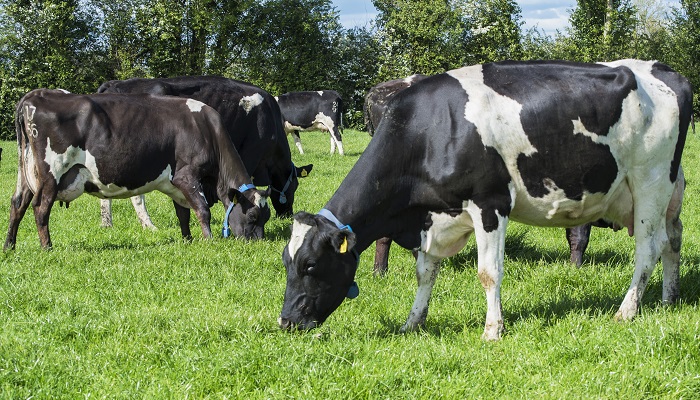
How much feed are dairy cows eating? This has been a regularly asked question over recent years. Ronan Mulligan, Teagasc Dairy Advisor, explains why getting stocking rate right is crucial.
If we look back to 10 years ago, cows were eating 17–18 kg of dry matter (DM) per day on average. Since then, there has been significant progress made on farms in relation to genetic potential, therefore herds are capable of producing higher levels of performance. As a result, herd-level intakes have increased to 19–20 kg DM per cow on a daily basis.
Recent analysis of PastureBase Ireland figures shows that milking platform stocking rates exceed 3.5 LU/ha on 55% of farms for the months of May and June combined. Another 20% of these farms are exceeding 4 LU/ha for this period. We know average growth rates across that period are in the region of 60–65 kg DM/ha. Overstocking your grazing area to a position where growth can’t meet demand during this period results in grazing covers that are too strong, reduced intakes due to poor grass quality, and feeding higher levels of concentrate, all of which result in sub-optimal herd performance.
PastureBase Ireland data has also shown that, on average during the mid-season, grass allowance has been set at 15 kg DM per cow. Even with a concentrate feeding rate of 3–4 kg, it falls short of the required level of intake to optimise performance. Feeding high levels of concentrate to meet herd demand is a costly exercise and leaves the farm in a position where it is buying expensive concentrate to try to maintain output.
As we approach peak grass growth over the coming weeks, many farms will soon make the decision to close up parts of the milking platform for long-term silage or reseeding, with the milking platform stocking rate possibly being set at 4–4.5 LU/ha. This would increase demand to 76–86 kg DM/day (grass allowance of 19 kg DM per cow per day). Farmers need to ask themselves: can they consistently grow 80 kg+ per day for a 10–12 week period while silage and reseeding are taking place? On many farms, the answer will be no. Those levels of growth only happen for approximately 2–3 weeks of the year. This then begs the question: what is the most appropriate stocking rate throughout the mid-season?
First things first, the ideal pre-grazing yield that we want cows going into is 1300–1400 kg DM/ha. Grazing covers in excess of 1600 kg DM increases the stem content in the sward and therefore reduces intake, while also jeopardising clean-outs. There is no point allocating extra grass when it is of poor quality. Ideally, we want to stock the milking platform at a rate where growth matches demand for as long as possible in the season, with grazed grass being the primary form of feed.
Optimal stocking rate will vary from farm to farm depending on the growth rate. A stocking rate of 3.0–3.5 LU/ha seems to be the most appropriate on many dairy farms. So, if the farm was stocked at 3.4 LU/ha and allocated 19 kg DM/day during the mid-season, this would mean a herd demand of 65 kg DM/day. The first thing this ensures is that the cows can be fed adequately. It also leaves some capacity to take some paddocks out as surplus silage in order to maintain grass quality. This is a luxury that would not be afforded in a higher-stocked scenario, where the farmer has no choice but to graze that stemmy, poor-quality 2000 kg DM cover that would otherwise be skipped. Short increases in stocking rate to manage periods of high growth (2–3 weeks), where surpluses are taken and the paddocks are returned to the rotation (wedge), are not a problem; in fact, it is what should happen, but not for 10–12 weeks.
The number one cause of underperforming herds in the summer period is a grass allowance and grass quality issue. With this in mind, three simple tips to maximise performance and profitability this mid-season are:
- Plan your mid-season stocking rate now and examine the previous year’s growth rates if you are grass measuring.
- Try to arrange to have multiple contractors who could potentially come in and take out any short-term surpluses and get the paddock back into the wedge as soon as possible.
- Aim to graze paddocks at 1300–1400 kg DM/ha.