

Edited By
Martina Harrington
Beef Specialist and Future Beef Programme Manager
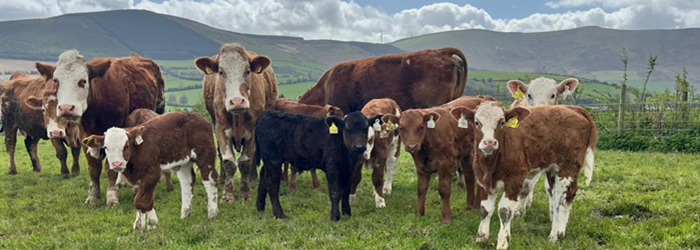
Welcome to the Teagasc May Beef Advisory Newsletter. In this edition, Teagasc Beef Specialist, Martina Harrington brings you timely tips on getting your suckler cows back in calf, pre-breeding advice and managing grass – both grazed and silage – through the month of May.
Dairy Beef Weighing Scheme deadline
The National Dairy Beef Weighing Scheme (NDBWS) application deadline is May 15th, 2026.
The NDBWS pays €20 for each eligible calf you weigh and record. Calves must be dairy‑bred males or beef‑sired calves from dairy dams. You must weigh a minimum of 5 calves and payments are capped at 50 calves per herd. Calves must be born between 01 July 2025 and 30 June 2026, be at least 12 weeks old, and have been on your farm for at least 10 days. Calves must be weighed on a registered weighing scales and the weights submitted to ICBF within 7 days and before 1 November.
Check your agfood.ie application carefully before you submit, you cannot amend it afterwards.
Grassland management
Spring 2026 has been very mixed. Some farms have cattle out early, fertiliser spread and a full rotation completed, while others still have stock indoors or only recently turned out with little or no fertiliser applied. This creates very different grass situations from farm to farm.
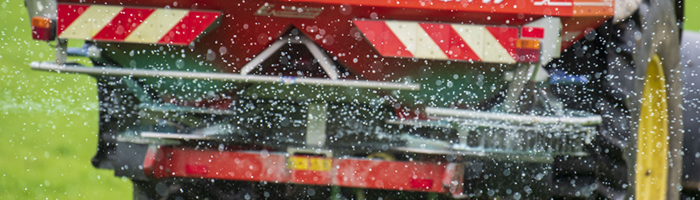
Where fertiliser has already gone out, keep the programme moving. Grass remains the cheapest feed available, and timely nitrogen after grazing will help maintain quality and supply. Target 18-23 units N/acre after each grazing.
Where allowances permit, applying a compound fertiliser will greatly improve response by supplying phosphorus and potassium as well as nitrogen. If planning a second cut, avoid using slurry on grazing ground.
Where little or no fertiliser has been applied, increase first-round rates to 27-35 units N/acre to drive recovery and build covers quickly. Again, if possible, apply in a compound form. Like above, follow up with 18-23 units N/acre after each grazing.
May often delivers the biggest flush of grass of the year and keeping quality grass in May drives animal performance for the rest of the season, so walk paddocks weekly, remove surplus paddocks early as bales, and avoid carrying heavy stemmy covers into June.
Get your cows back in calf
A calf per cow per year remains the foundation of profitable suckler farming. With the breeding season starting on many farms in early May the key factors to get right this month are:
- Rising plane of nutrition,
- Calf-cow bond,
- Mineral supplementation,
- Vaccination before breeding,
- Heat detection and records, and,
- Bull fertility.
Rising plane of nutrition
Fertility and nutrition are closely linked. Cows need to be on a steady or rising plane of nutrition at breeding. Good grass quality is the cheapest way to achieve this. Where grass supply is tight, supplement with silage rather than allowing cows lose condition.
Pre-breeding vaccines
Vaccination is an important part of breeding preparation. Discuss timing with your vet now so cows are protected before service.
Leptospirosis
Leptospirosis can reduce fertility, cause early embryo loss and lead to abortions. Heifers need a primary course of two injections, 4–6 weeks apart. Cows require a one‑shot booster.
Bluetongue – new for 2026
Bluetongue vaccination is a new consideration this year. Reports from Europe is illness in cattle is not severe but infertility can be a huge issue with some herds reporting 20-25% infertility.
The primary course is two injections three weeks apart. If planning to vaccinate, start early enough so both doses are complete before breeding or peak midge season.
Mineral supplementation
If you had slow calvings, retained placentas or similar problems this spring, you might have a mineral deficiency. Talk to your vet, blood‑test about 10 cows, and correct any deficiency based on the results.
Keep magnesium buckets in front of suckler cows, particularly where weather remains changeable and grass is lush. Tetany risk can remain high during cool, wet periods and rapid growth flushes.
Heat detection and bull fertility are key
If you use AI, check cows three to four times a day and record heats carefully. Simple aids like tail paint, a vasectomised bull fitted with a chin‑ball harness, or activity monitors can all improve submission rates.
If you’re using stock bulls, make sure they are sound on feet and legs, fit but not over‑fat, and are seen serving cows. Remember around 20–25% of bulls can be sub‑fertile, so watch for repeat heats and act quickly if repeats rise – bring in another bull or switch to AI.
Bull power: a mature bull can serve up to 40 cows. A good rule of thumb for young bulls is one female per month of age up to 30 months. Watch them closely to make sure mating is actually taking place.
How to pull back late calvers
Restrict suckling
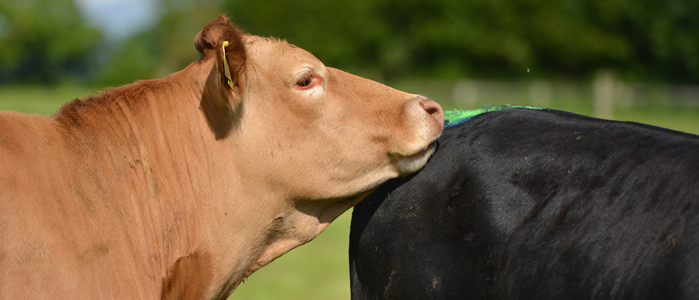
Separate the cow and calf from about day 30 after calving, then allow twice‑daily suckling for two weeks. This method will bring around 85–90% of cows into heat within 18–22 days. Keep the cow and calf at least 50m apart when separated- sight and smell help maintain the bond.
Synchronisation
A simple PRID/CIDR programme can bring cows not cycling back into heat. Use this on cows that calved more than 35 days ago. Example programme:
- Day 0 (e.g. Monday at 10:00) – insert the PRID/CIDR and give a GnRH injection.
- Day 7 (same time, one week later) – remove the PRID/CIDR and give prostaglandin plus PMSG. PMSG is helpful if cows are not cycling or are thin.
Cows will often start to show heat the Tuesday evening. You can use the AM/PM rule (inseminate about 12 hours after heat detection) or use fixed‑time AI at 72 hours after PRID/CIDR removal (e.g. Thursday at 10:00 if removed Monday at 10:00). If using stock bulls, ensure you have enough – treated cows will come into heat over a 2–3 day period.
Calving heifers at 24 months
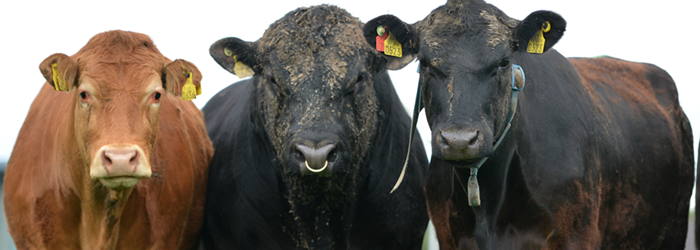
With weanling prices where they are, can you afford not to calve heifers at 24 months? Over 80% of the heifers in the Future Beef Programme calve at 24 months with no problems, but it does require planning.
Heifers need to be approximately 60% of their mature cow weight at bulling. For the average suckler cow (700kg), that is 420kg. Heifers bred lighter than this may have issues calving, going back in calf next year, and reaching their mature body weight.
Bull choice is critical, especially if it’s your first time calving heifers at 24 months. Use an AI bull with a heifer calving‑difficulty of <7% and a reliability of >80%, select short‑gestation sires, and aim to calve to grass early next year.
Silage planning – timing is everything
Target cutting in mid–late May for better quality and to leave time for a strong second cut. Wilt for 24–36 hours in dry weather to improve preservation and intake but avoid over‑wilting.
Second cut
If you couldn’t apply slurry to first cut, save it for the second. Apply around 3,000 gallons/acre, ideally diluted and ahead of light rain – this will supply much of the crop’s P and K needs. Top up N with 1.5 bags of protected urea (38% N) plus sulphur, or 2 bags CAN plus sulphur per acre if protected urea is unavailable. Aim for 12–15 units sulphur/acre on silage ground.
Date for the diary
The Future Beef Programme will host two farm walks over the coming weeks on:
- John Pringles’ farm, Aughrim Co. Wicklow, May 29th at 6.30pm
- John and James Dunne’s farm, Portarlington, Co. Offaly, June 5th at 6.30pm
We will have a deep dive into the farms performance to include financials, breeding, calving at 24 months, grassland management, health, meeting factory specs, water quality, biodiversity and much more.
Research update
Paul Smith, Mark McGee and Paul Crosson of Teagasc, Grange, provide an update on the national performance of prime beef cattle from 2018 to 2025.
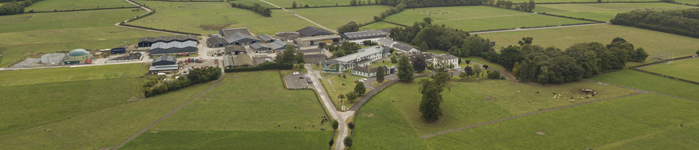
In 2018, 1.27 million prime cattle (steers, heifers, young bulls) were finished at an average of 26.0 months and 338 kg carcass weight. By 2025, throughput had fallen to 1.16 million head, reflecting a declining cow herd, while finishing age was 26.5 months and carcass weight remained broadly similar.
Although finishing age initially improved to 25.6 months between 2018 and 2022, progress has since slipped due to weather impacts (2023 & 2024) and a reduction in the proportion of male cattle being finished as young bulls. In 2025, young bulls on average were finished 238 days earlier than steers and at heavier weights. Indeed, if the contribution of young bulls to the prime beef kill was maintained at 2018 levels (14.6 vs 8.5%), the national finishing age in 2025 would have been reduced by approximately 14 days.
Herd composition has also shifted significantly. Suckler-bred animals accounted for 49% of prime cattle finished in 2018 but just 38% in 2025. Encouragingly, since 2018, carcass spec compliance (i.e. ≤30 months of age, carcass fat score of 2+ to 4= and carcass conformation score ≥O=) has increased from 54% to 61%, showing continued progress, especially in suckler and beef x dairy cattle, despite system and environmental challenges.
The Beef Edge Podcast
The Beef Edge is Teagasc’s weekly beef podcast for farmers. Presented by Catherine Egan the podcasts will cover the latest news, information and advice to improve your beef farm performance.
Listen in to the latest episodes below:
Demonstration Farm Programmes
The Teagasc Drystock Knowledge Transfer Department run dedicated demonstration farm programmes in the areas of suckler and dairy beef.
For the latest from the Teagasc DairyBeef 500 Programme, view its e-newsletter here.
For the latest from the Teagasc Future Beef Programme, view its e-newsletter here.
To keep up to date with the latest happenings from both programmes, sign up to their frequent e-newsletters here.