
The ExAl project: Exploring common alder’s resilience to dieback disease
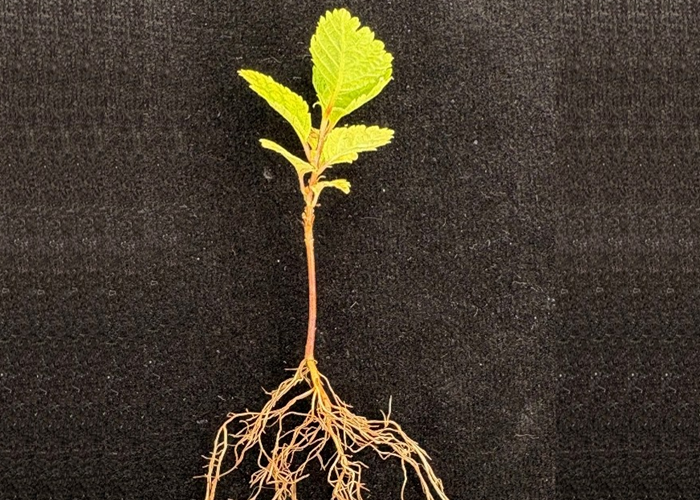
The ExAl project investigates how naturally occurring microorganisms can enhance alder resilience to dieback disease. Teagasc PhD student, Emma Fuller and Dheeraj Singh Rathore, Tree Improvement Research Officer at Teagasc, tell us more.
Ireland’s common alder (Alnus glutinosa) is an important species in wetland ecosystems, where it supports biodiversity and enhances soil fertility through its ability to fix atmospheric nitrogen. However, alder populations are increasingly threatened by dieback disease caused by Phytophthora alni, posing a significant risk to wetland ecosystems. This decline affects biodiversity as well as reduces the ecological and economic value of alder within Irish forestry systems. In Ireland, alder occupies approximately 19.65 thousand hectares, representing about 2.8% of the total forest area and around 9% of the broadleaf forest area (National Forest Inventory, 2022)
The ExAl project, launched in September 2022 as part of the tree improvement programme at Teagasc in collaboration with the South East Technological University, Carlow, aims to deepen our understanding of the relationship between alder trees and the microorganisms that live on and within them. By exploring these interactions, the project investigates how beneficial microbes could be used to improve tree health and enhance disease resilience.
Why the microbiome matters for tree health
Trees are closely associated with diverse communities of microorganisms, collectively known as the microbiome. These microbes can play important roles in nutrient cycling, plant growth promotion and protection against pathogens.
Understanding which microorganisms are consistently associated with healthy trees, often referred to as the core microbiome, can help identify beneficial microbes that may support disease tolerance and overall tree health. For example, certain bacteria such as Pseudomonas and Bacillus species can produce antimicrobial compounds or volatile organic compounds that suppress pathogen growth, while also stimulating plant defence responses that help the tree resist infection.
Harnessing these naturally occurring microbes offers a sustainable, nature-based approach to managing tree diseases, reducing reliance on chemical intervention and supporting more resilient forest ecosystems.
Investigating alder-associated microbial communities
The ExAl project combines field sampling, laboratory experiments and controlled glasshouse studies to investigate alder-associated microbiome and identify potential bio-agents for disease management.
Key areas of research include:
- Investigating the core microbiome of alder trees in Ireland, across tissues, seasons and locations.
- Isolating culturable microbes and screening them for antagonistic activity against Phytophthora alni using laboratory-based inhibition assays.
- Evaluating potential bio-agents to assess their ability to reduce disease development under controlled conditions.
Key findings from ExAl research – from microbiome analysis to disease control
A major focus of the project has been the development of robust methods to analyse microbial communities across different tree compartments and associated soil. This has enabled large-scale sequencing of alder-associated microbiomes, helping to identify key microbes linked to tree health.
In parallel, more than 500 microbes have been isolated from alder tissues, with 257 screened for their ability to suppress Phytophthora alni. Several strains have shown strong inhibitory activity and have been further characterised using genetic and biochemical approaches.
The most promising candidates are currently being evaluated in controlled glasshouse experiments, where early results indicate their potential to reduce disease symptoms and slow disease progression in alder seedlings.
Supporting sustainable forest health
The ExAl project highlights the potential of microbiome-based solutions for managing tree diseases in a sustainable way. By identifying and utilising beneficial microbes naturally associated with alder, this research supports the development of environmentally friendly strategies to protect alder.
This work contributes to the establishment of more resilient forests and the long-term sustainability of Ireland’s wetland ecosystems, particularly in nursery production systems and future planting programmes.
Next steps
Ongoing work focuses on completing microbiome analyses to define the core microbial communities associated with healthy alder trees, alongside further evaluation of candidate bio-agents under controlled conditions.
Future research will explore how these beneficial microbes can be effectively applied within forestry systems, contributing to the development of resilient planting material and supporting the long-term health of Ireland’s wetland ecosystems.
This research forms part of a wider effort to develop innovative, sustainable approaches to tree health, combining microbiology, plant pathology and forestry science, ultimately translating research findings into practical forestry applications.
Further information on Teagasc’s ExAl project is available here