

Edited By
Dr Joe Patton
Head of Dairy Knowledge Transfer
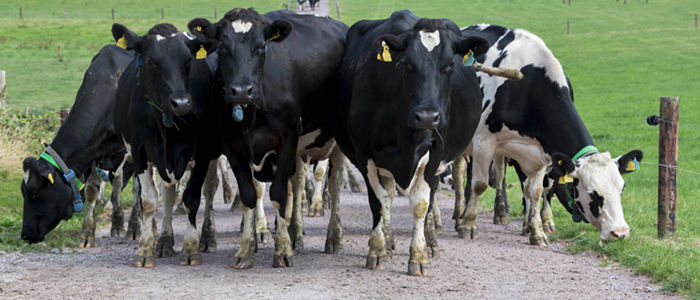
Welcome to the Teagasc May Dairy Advisory Newsletter. In this edition, Teagasc Head of Dairy Knowledge Transfer, Dr Joe Patton shares his top five tips for the month ahead, along with practical advice on grassland management, breeding and making the best quality silage.
Top 5 tips for May
- Identify any cows calved more than 30 days and not detected in heat. Draft, check and treat any cows with issues.
- Continue to assess body condition score (BCS). Put any thin cows on once-a-day milking until they are mated. Low somatic cell count (SCC) is essential for this.
- Ensure that calves are consuming 2kg concentrate plus ad lib roughage post weaning and prior to turnout.
- Biosecurity: Provide disinfectant for any visitors to your farm e.g. AI technician, vet, scanner etc. Quarantine any purchased bulls for one month prior to breeding.
- Walk silage paddocks twice per week. It can be easy to miss the correct window for making quality silage. Do not delay based on nitrogen application date – if conditions are good, test for sugars and cut at the right time for high quality.
Managing peak grass growth in May
A settled spell in April has allowed many farms to get back on track with this year’s grazing. Some farms did not manage to get all of the first round grazed. Instead, they took the right decision to skip the heaviest covers at the end, baling these out and moving on to the second round.
Some farms closed such paddocks for a heavier silage crop. In many cases, these now need to be cut sooner rather than later and brought back into the grazing rotation. Experience shows that farms who close up too much area through April and May, and then have a delayed first cut, end up being very tight for grass through June.
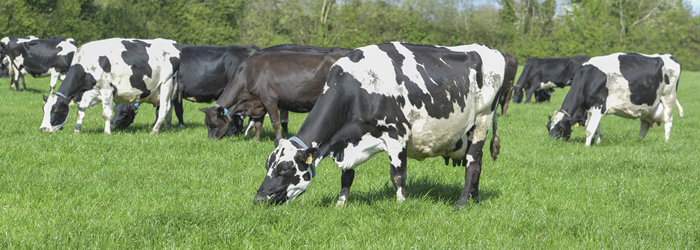
That said, May is generally the month when the rate of grass growth reaches its peak for the year and grass supply can change fast. How you respond to grass growth is the key. Grass grows at a rate of 60-70kg DM/ha/day during May. So, a 20-day rotation will result in 1300 to 1400 kg/ha of grass being grown in this 3-week period. Every effort must be made to get cows to graze the right cover of grass. Keeping the sward green from top to bottom is important for both grass quality but also the level of regrowth. The grass plant is right for grazing when it is at the 2-3 leaf stage. Of course, if grass starts growing the ‘fourth’ leaf – the rotation is now getting too long! Also, the first leaf starts to die and more stem starts to appear. This reduces the grass quality and the cows do not perform as well. Milk protein content in particular is very sensitive to grass quality.
Every 4% reduction in grass digestibility will reduce milk solids yield by 5%
Average farm grass cover should be maintained at 160-180kg DM/cow. This is equivalent to an average farm cover of around 600 to 700 kg DM/ha. Paddocks with too strong of grass covers, or those where the rotation length is too long, should be removed as surplus grass for silage.
Breeding
Use the ICBF weekly fertility report to track your progress
The ICBF weekly fertility report is a tool for monitoring and improving breeding performance on your farm. With AI techs using handhelds to record serves as they happen, or indeed farm software packages that are used by DIY farmers, the weekly fertility report allows for real-time charting of your progress with submission rate and bull usage.
Submission rate:
The target is 90% of eligible cows in 3 weeks, or approximately 30% of eligible cows each of week 1-3 in breeding to achieve the target. Tracking submission rate can allow you to adapt if not achieving the required submission rate. For example, are there anoestrus cows that should have been bred not yet seen in heat? The fertility report will identify these individuals, and action can then be taken.
Balanced bull teams:
Furthermore, dairy bull team usage can be monitored via the weekly fertility report, to avoid overuse of individual bulls above the 15% maximum usage per bull from both a genetic and fertility perspective.
Consistency is important. Running the report regularly establishes a routine that keeps breeding performance to the fore throughout the season. Ideally, pick one morning per week to run the report and then make any decisions on actions required at that time.
This year’s breeding season will have a big influence on next year’s cashflow and profit margins. Maximise your season performance by using the tools available to you. To access: log in to your ICBF account, click Reports, then click Fertility and select Weekly Fertility Report. You can also access the report on your phone through the HerdPlus App, making it even more accessible than ever.
First cut silage
Silage cutting date versus quality
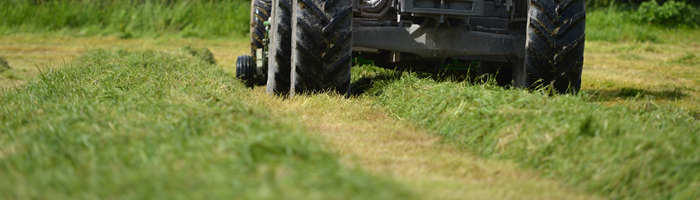
First cut is the best opportunity to make high quality silage, and every effort should be made to secure a sufficient supply of silage with >72% DMD feed value now.
To achieve this, cutting before the seed head emerges is key, as DMD will drop by about 0.5 units every day after seed head emergence, and even faster if the crop is lodged.
Delaying cutting to allow crops to bulk up will lead to a substantial drop in quality and is likely to also reduce second cut yields giving very little overall gain in tonnage harvested. Therefore, crops should be cut based on their growth stage and, due to the large variation across many farms this year, this may require staggering the first cut rather than harvesting all at once.
Nitrogen and cutting date
Many will be concerned whether there has been enough time for late applications of fertiliser nitrogen to be taken up.
Excess N levels in the grass plant increases its buffering capacity, making preservation more difficult. While the rule of thumb that 2 units of N will be used up on average every day is often quoted, this is highly variable and the only way to be sure of the N levels in the crop is to have a sample tested.
The importance of low N levels in grass before ensiling is often overstated, with sugar levels being of far more importance. Where adequate sugars are present, grass can be successfully ensiled with nitrate levels in excess of 600 ppm. Where N levels are found to be high, discuss with your advisor the options available to you such as wilting the crop or using additives, as delaying cutting date is likely to also result in a loss in silage quality.
The Dairy Edge Podcast
The Dairy Edge is Teagasc’s weekly dairy podcast for farmers. Presented by James Dunne and Stuart Childs, Teagasc Dairy Specialists, the podcasts will cover the latest information, insights and opinion to improve your dairy farm performance.
Listen to recent shows from the Dairy Edge podcast below:
Keep up to date with Teagasc
Teagasc offers a suite of digital products – ranging from insightful podcasts, trusted eNewsletters, social media, website and mobile app channels – to provide you with the latest news, information and knowledge.