
Grounds for concern: Silage quality on beef farms
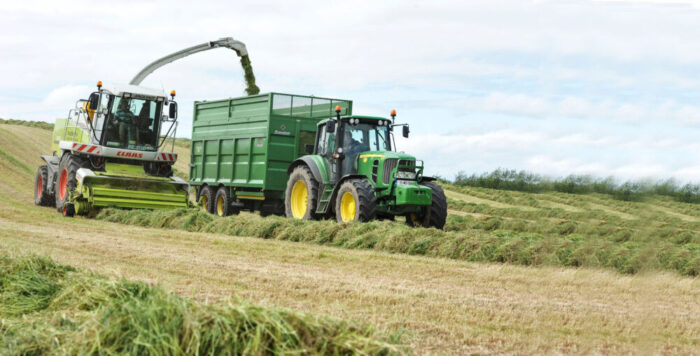
The quality of silage being made on beef farms nationally is a significant cause for concern, forcing beef farmers to spend out on additional meal or deal with lower levels of animal performance over the winter months.
That was a key message delivered by Teagasc Beef Specialist David Argue, when he presented on the recent Teagasc webinar: Gearing up for Silage 2026.
Through his presentation, the Teagasc Beef Specialist shared data from the silage testing campaign conducted through the Department of Agriculture, Food and the Marine’s National Beef Welfare Scheme in 2025.
From these results, Argue explained, only 11% of samples submitted were greater than 74% DMD, and a further 18% were between 70% DMD and 74% DMD. Worryingly from a beef performance perspective, 44% of the silage samples were between 65% and 69.9% DMD and again, 27% were less than 65% DMD.
“That is concerning knowing the fact we have a huge number of weanlings, store cattle and replacement animals to be fed on farms over the winter period,” Argue said, noting that 65% DMD silage will just about maintain body condition score on dry cows over the winter months.
Details were also shared on the crude protein contents of the silage tested, with 23% of samples being between 13.6% and 16.5% crude protein, 29% were between 12.1% and 13.5%, while almost half were less than 12% crude protein.
As to the importance of quality silage for beef production systems, Argue noted that every 5 unit drop in DMD will require an additional 1.5kg of concentrate to be fed to finishing steers, targeting a daily liveweight gain of 1kg/head/day, over the course of a 100-day finishing period.
“Moving from a 65% DMD silage to 75% DMD silage will save 3kg of concentrate per head per day for finishing steers, or at a meal cost of €340/t, that’s a saving of almost €100/head.”
Likewise for dairy-beef producers, Argue noted, significant savings can be made on concentrate spend when high-quality silage is prioritised over poorer quality material. For a dairy-beef farmer carrying 40 weanlings and 40 finishing animals, where high quality silage is available (74% DMD) versus low quality silage (66% DMD), the total difference in meal requirements is €5,018.
Concluding his presentation, Argue explained: “Farmers may assume silage cutting date needs to be adjusted this year with higher contractor and fertiliser costs, however, quality and quantity combined is still a priority.
“To maximise quality and quantity across the silage growing season, farmers should target to cut the crop in mid-late May to ensure both yield and quality targets are achieved across both first and second cuts.
“A quality first cut will help maximise margins next winter by reducing the cost of concentrates needed to supplement poorer quality feed and also by improving the daily liveweight gain on animals.”
For full insights, watch David Argue’s full presentation below:
Chaired by Teagasc Dairy Advisor Deirbhle Browne, the Gearing up for Silage 2026 Webinar featured also featured contributions from Dr. Peter Doyle, Grassland Researcher, Bernard Ging, a dairy farmer from Portlaoise, and Dave Davies, a UK based consultant with Silage Solutions Ltd.
A full recording of the webinar is available to view on YouTube.