
A new ewe?
Reducing agricultural greenhouse gas emissions remains a key challenge for Ireland. Research at Teagasc is exploring how sheep breeding systems can be optimised to balance productivity and environmental efficiency.
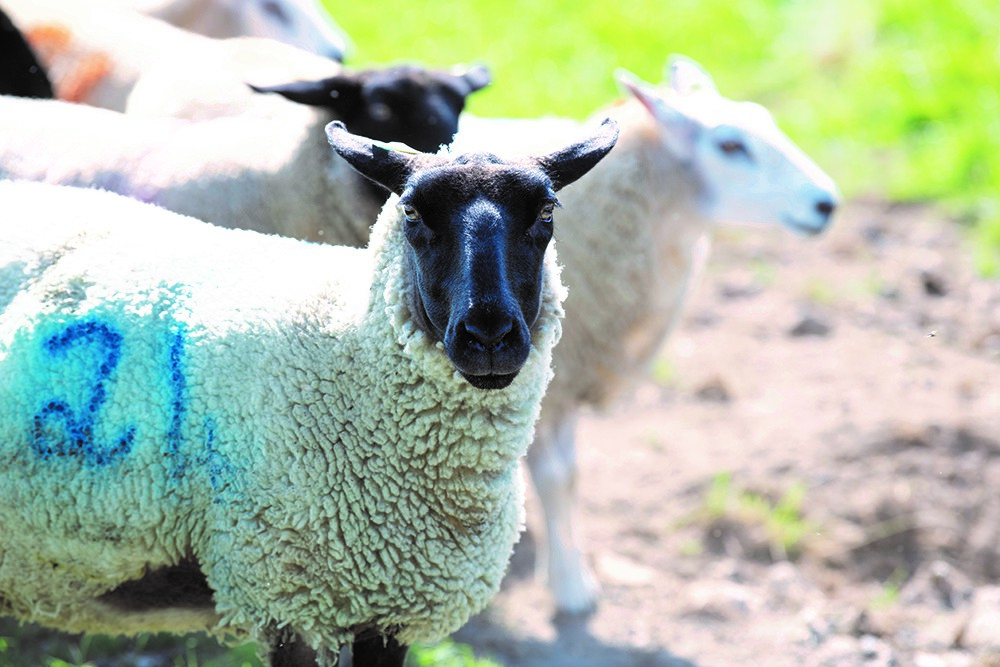
Agriculture is under increasing pressure to reduce greenhouse gas (GHG) emissions as Ireland strives to achieve its Climate Action Plan targets. As one of the largest contributors to agricultural GHG emissions, livestock production is a key focus of these targets. Breeding has been identified as a key mitigation strategy that is permanent, cumulative and cost-effective.
Traditionally, breeding programmes focused on production and profitability with little or no environmental consideration. In time, however, breeding programmes have evolved to become more environmentally focused; more recently, a carbon sub-index was incorporated into Ireland’s dairy and beef breeding objectives. However, despite sheep breeding also contributing substantially to GHG emissions, similar initiatives have not been implemented in this sector.
The Irish national sheep breeding programme is underpinned by two breeding indexes; a Terminal Index, focused on breeding animals for growth and meat-related traits, and a Replacement Index, focused on both maternal traits such as reproduction or ewe-related traits and meat-related traits.
Trait to the point
New research from Teagasc, carried out in collaboration with Munster Technological University and Sheep Ireland, has explored how environmental traits could be included in the Irish national sheep breeding objectives. Lucy Chipondoro, a Teagasc Walsh Scholar involved in this research, explains that the aim is to develop a carbon sub-index that allows farmers to select sheep that are not only productive and profitable but also produce less GHG emissions.
“Two approaches were investigated,” she says. “The first used a lifecycle assessment model to estimate all emissions associated with sheep production, including methane, nitrous oxide and carbon dioxide. The second approach combined methane estimated breeding values for individual animals with the lifecycle assessment model.”
Results from the study showed that most traits included in the carbon sub-index were complementary to existing production traits.
“This means that selecting animals with improved performance for many economically important traits can also result in reduced GHG emissions,” Lucy adds.
However, when the carbon sub-index was incorporated into the national breeding objectives, it redistributed the relative emphasis placed on different trait groups. In the Replacement Index, maternal traits continued to receive the greatest emphasis, while production traits received greater emphasis in the Terminal Index.
“Importantly, the inclusion of carbon traits did not shift the objective of the indexes, but allowed environmental performance to be considered alongside productivity and profitability,” says Lucy. “This shows the importance of multi-trait selection in accommodating new objectives, without compromising progress in other important traits.”
The research also examined how different carbon prices could influence the importance of carbon traits in breeding objectives. Increasing the assumed carbon price placed greater emphasis on carbon-related traits, although the rate of increase slowed at higher prices. This suggests that further increases in carbon price would have no substantial effect on the relative emphasis of the carbon sub-index in Irish sheep breeding.
An important step
Overall, the results demonstrate that it is possible to incorporate environmental traits into the Irish sheep breeding objectives. The updated economic values and carbon sub-index resulted in increased overall index economic response compared with the current indexes, indicating that GHG reduction can be achieved without sacrificing profitability.
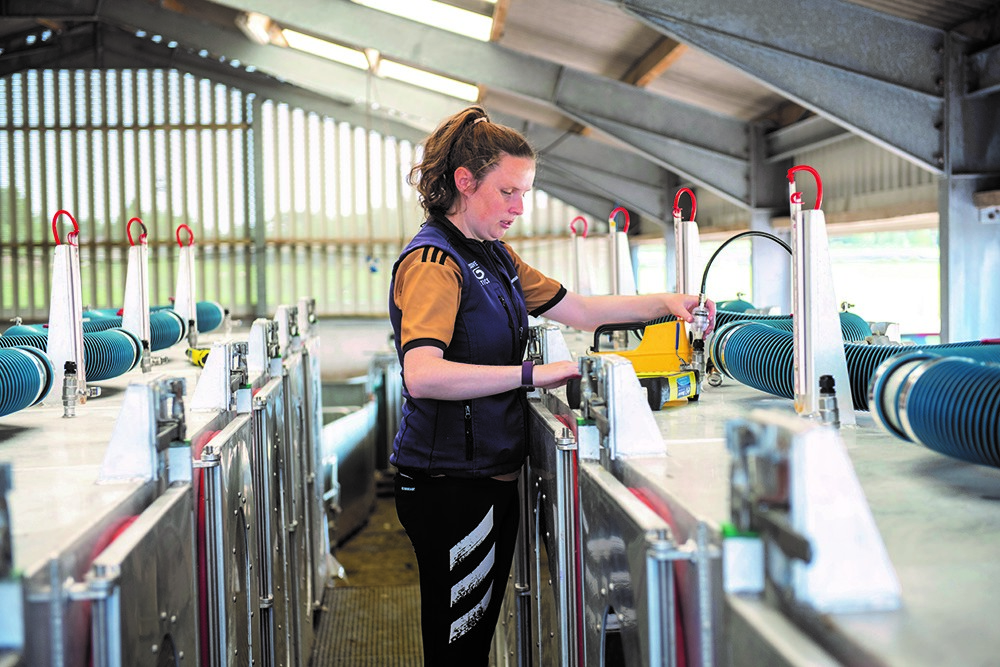
Understanding animals’ lifetime emissions is an important step in trait selection for breeding. Photo credit: Andrew Downes.
“Breeding is a permanent, cumulative and cost-effective strategy for reducing GHG emissions from livestock systems,” notes Lucy. “Incorporating carbon traits into the sheep breeding objectives facilitates selection for both profitability and environmental sustainability in Irish sheep production.”
As of December 2025, the carbon sub-index has been successfully incorporated into the Irish sheep breeding programme, marking an important step towards reducing GHG emissions from sheep production systems in Ireland.
At present, GHG mitigation has limited direct economic benefit to farmers, but this could soon change, suggests Lucy.
“In recent years we have seen the emergence of carbon farming as a potential new revenue source, whereby farmers will be paid for on-farm carbon removal and GHG mitigation based on a carbon trading value. Such initiatives could motivate farmers to place greater emphasis on environmental traits when selecting breeding animals.”
Funding
This research was funded by The Department of Agriculture, Food and the Marine’s (DAFM) 2022 IE-NZ Joint Call and supported by the Teagasc Walsh Scholars Programme. The Methane Roadmap project is funded by DAFM (2022IRLNZ129).
Contributors
Lucy Chipondoro, Teagasc Walsh Scholar, Teagasc Moorepark.
Jonathon Herron, Research Officer, Teagasc Moorepark.
Contact: jonathon.herron [at] teagasc.ie
Nóirín McHugh, Research Officer, Teagasc Moorepark.
Edel O’Connor, Post-doctoral Researcher, Teagasc Athenry.