
Adopt and survive
Integrated Pest Management (IPM) is a widely recognised framework for pesticide reduction, but adoption and application vary greatly. A Teagasc-led research project seeks to understand the IPM situation in Ireland and abroad to tailor implementation practices for growers.
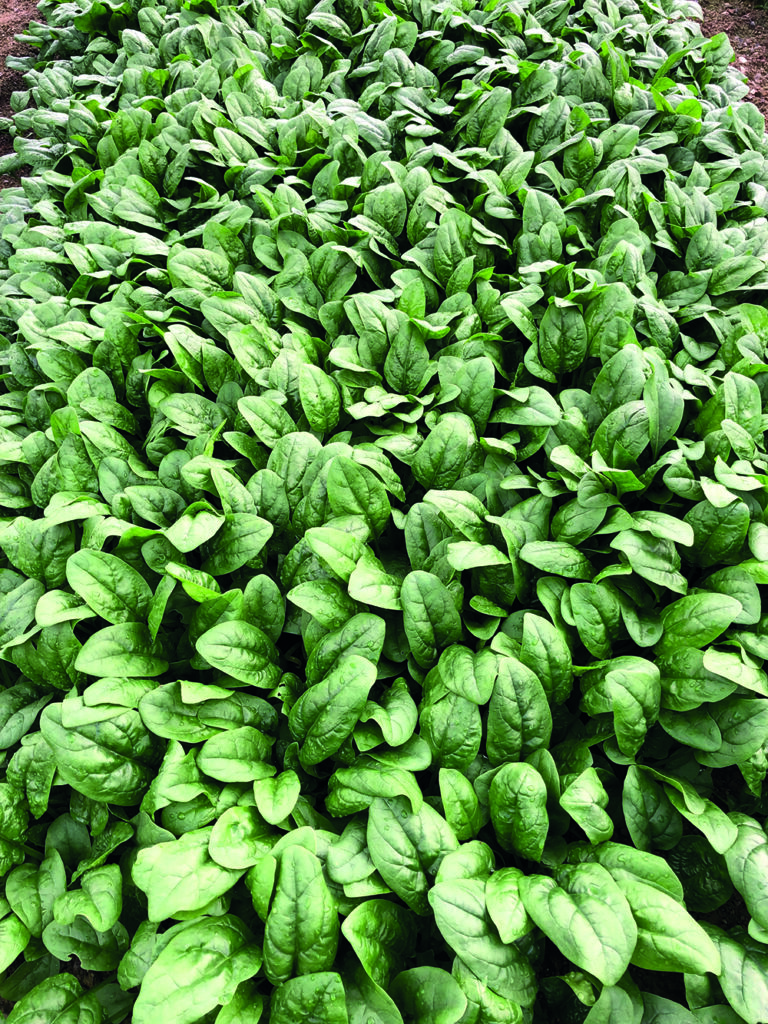
Integrated Pest Management could reduce reliance on pesticide and fertiliser use in the horticulture sector. Photo credit: Teagasc.
Integrated Pest Management (IPM) is the main framework used globally to achieve pesticide reduction, being recognised in policy, and implemented in practice. Yet, the ways in which it is applied, adopted and understood vary greatly in response to market and policy forces. Within conventional systems of agricultural crop production, the ultimate risk in reducing pesticide use is yield loss or poor quality, which leads to crop rejection. The visual appearance of crops is an important factor in consumers’ decisions to purchase fruit and vegetables.
A joint research project between Teagasc, the Warwick Crop Centre in England, and the University of the Highlands and Islands in Orkney, Scotland, known as the AgSustain Project, was conceived to address the impact of the EU Green Deals’ pesticide (50%) and fertiliser (30%) reduction targets on crops. Horticulture Research Officer Lael Walsh explains that there was a strong focus on the horticulture sector where crop quality and visual appearance is of particular importance.
“The main objective of the research was to get to understand how IPM, as the main pesticide reduction framework, is applied at the farm level and the reasons for the type and extent of its application.”
The collaboration between an Ireland-UK team of researchers and data sources was insightful. The UK and Ireland have very similar horticulture pest, weed and disease pressures, production systems, crop types, climate, soil conditions, land ownership structures, assurance schemes, and supply routes to the multiples (retailers). However, in Ireland this is consolidated to only five major retailers.
“One of the main areas of difference is in the policy and regulatory environment, which would certainly influence IPM adoption in these respective countries,” Lael adds.
A complex landscape
Using a mixed-method approach, the researchers found that IPM is widely adopted across Irish horticulture, although implementation is challenged by the highly crop-specific nature of management interventions. These are underpinned by a diverse range of personal and situational factors.
Teagasc Walsh Scholar Jennifer Byrne, who led the research, noted that in practice, growers function in a complex landscape, of which IPM represents just one farm management consideration.
“Despite growers’ stated perceptions of IPM as useful and easy to use, there were notable limitations to uptake, such as the knowledge and advice required for IPM adoption, and the associated financial costs,” Jennifer says.
Measuring adoption
Measuring IPM adoption is key to evaluating progress and helps identify interventions to support improvement. However, adoption is still challenged by the horticulture sector’s multifaceted nature and its diverse systems of production and crop types.
“Until now, a metric to measure IPM adoption has eluded researchers and practitioners. This research is both novel and impactful, having developed an IPM adoption metric, the first of its kind for food horticulture in Europe,” Lael explains.
The metric was based on the input of 30 growers and advisors in three Delphi-method workshops for the top fruit, field, and protected crop systems of food horticulture. This metric was trialled and tested with 100 Irish growers to evaluate their IPM adoption and further tested on a bigger data set of 480 farms, including UK farms. The opportunity to compare Irish growers to UK growers created a benchmarking and learning opportunity, while also validating the metric in a larger dataset.
Policy influence
The research showed that the policy and regulatory environments, and market and financial incentives, were found to be motivated towards IPM adoption, Lael notes.
“Data from the multi-country comparison shows the positive impact the Sustainable Farming Incentive scheme has had on IPM adoption in England, where growers emerged with the best scores. The scheme encourages IPM planning and paying farmers for environmentally sustainable and positive management practices.”
This is different to the situation in Ireland, where the European Parliament formally rejected the Sustainable Use Regulation, which was dismissed and withdrawn in 2024. This left IPM in EU member states, including Ireland, to abide by Directive 2009/128/EC with no financial incentive or reward for good IPM adoption.
Maintaining momentum
“We want to keep the momentum going from this research as we strive to deliver on the national strategy for horticulture. One of the key objectives in that strategy being better data for better insights,” Lael explains.
“As such, the team is forging ahead to build a prototype of an IPM adoption calculator that could be tested and improved in years to come and eventually deployed as a tool for growers.”
With recognition of a need to include the grower perspective and ensure the viability of farming into the future, tools like the IPM adoption calculator will be useful in gathering data from the farming community to understand their challenges and tailor supports.
This also meets objectives to measure and demonstrate environmental sustainability, she concludes.
“IPM adoption is synonymous with environmental sustainability, being closely linked to biodiversity protection, ecological function, greenhouse gas emissions reduction and reduced impacts to air, water and soil.”
Funding
This research was funded by the Teagasc Walsh Scholars Programme.
Acknowledgements
Henry Creissen (Director, Agronomy and Agriculture Institute, University of the Highlands and Islands, UHI Orkney), co-supervisor to this research.
Michael Gaffney, Eoin Sweetman, Shay Phelan and Steven Kildea as project collaborators, as well as Dermot Callaghan and other advisors in the Horticulture Development Department who contributed to this work.
Contributors
Lael Walsh, Senior Research Officer, Horticulture Development Department, Teagasc Ashtown. Email: lael.walsh [at] teagasc.ie
Fiona Thorne, Principal Research Officer, Rural Economy & Development Centre, Teagasc Ashtown.
Rob Lillywhite, Associate Professor, School of Life Sciences, University of Warwick.
Jennifer Byrne, Walsh Scholar, Teagasc Ashtown.