
Hull of promise
Oats are a staple of the Irish diet, but byproducts from their processing are often discarded or repurposed as livestock feed. Researchers at Teagasc Ashtown’s Food Research Centre are examining better ways to make use of this waste, explains Teagasc Walsh Scholar Divya Aggarwal.
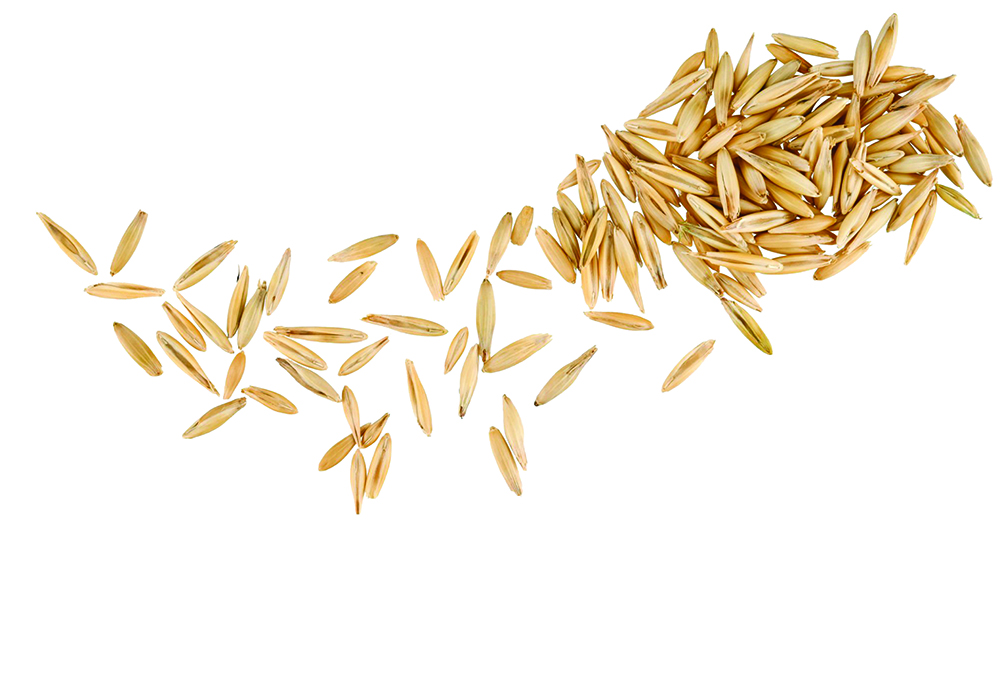
Oats have been a significant part of the Irish diet for generations, thanks to their nutritional profile and adaptation to Ireland’s temperate climate. Regular consumption of cooked oats has historically provided an accessible source of complex carbohydrates and essential micronutrients, making them a reliable and nutritionally beneficial start to the day.
Beyond traditional use, a growing proportion of oat intake now occurs through plant-based oat beverages, produced by converting oat solids into a smooth milk-like liquid. The food industry is tapped into the ongoing popularity of oats, repurposing them as convenient, ready-to-eat snacks like flapjacks and protein bars, highlighting their growing versatility and strong consumer appeal across age groups.
As a result of oats being enthusiastically explored and assessed for product formulation purposes, substantial processing side streams are generated. These are often overlooked, discarded or diverted to livestock feed, notes Divya Aggarwal, a Teagasc Walsh Scholar based at the Food Research Centre at Teagasc Ashtown.
“For researchers at Teagasc, these streams represent a significant opportunity to develop a more sustainable system for processing oats, using scientific innovation and cutting-edge technologies.”
Enhancing extraction
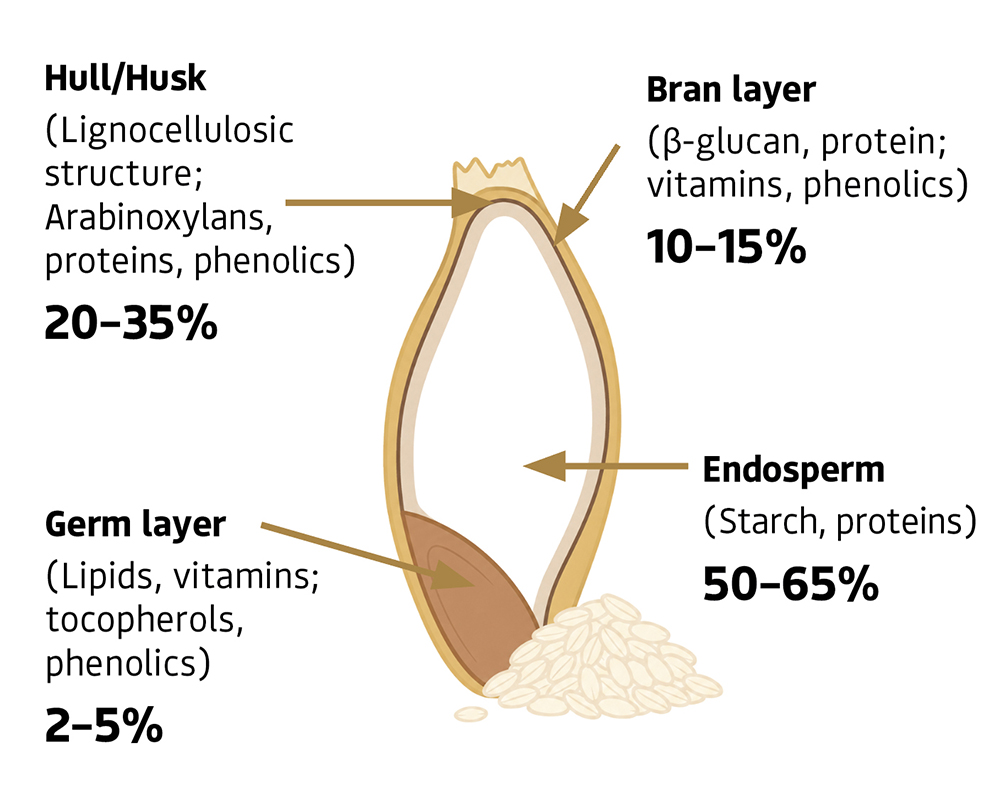
The first step in oat processing at any manufacturing site is dehulling. This removes the outer hulls or husks from the grain. Making up 20-35% of the grain’s overall composition, they represent a major primary byproduct.
Research has already explored valorising oat hulls into biomaterials including cellulose, biosorbents and biofuel. The current emphasis, though, is increasing towards the extraction of proteins, dietary fibre, bioactives, phenolics, and flavouring compounds like vanillin from oat hulls.
At Teagasc, ultrasonic and microwave-assisted technologies have shown excellent findings in extracting arabinoxylans (a hemicellulose) from oat hulls, creating opportunities for their application as versatile ingredients in food formulations.
“Future research will involve investigating green enzymatic-assisted processes coupled with novel pretreatment techniques,” says Divya. “The aim is to enhance the extraction yields of proteins and phenolics such as ferulic acid, a potent antioxidant with promising applications in functional foods and cosmetics.”
A new chapter for oats
Researchers have so far had great success in valorising processing side streams into functional ingredients such as starch, protein, and dietary fibre (β-glucans).
“These successes have prompted the idea of developing a zero-waste biorefinery setup for oat production and processing, which will be a key focus moving forward,” Divya notes.
Compared to other cereals, lipids constitute an important part of oats’ composition.
Laboratory experiments at Teagasc demonstrated high recovery of oat oil (~4-5%) using green solvents with high antioxidant capacities and minimal cytotoxicity.
Subsequently, oat starch (~40-50%) and protein (~10-12%) were obtained using novel extraction technologies like ultrasound, resulting in enhanced purities of around 60-70%.
“Our upcoming work will focus on scaling up laboratory trials to higher Technology Readiness Levels,” concludes Divya. “This is essential for optimising the processes and techniques we use, which will be critical for commercial adoption and contribution to the circular bioeconomy.”
Funding
This research is supported by the Teagasc Walsh Scholars programme and the HOPE project (Grant No. 2023RP1031), funded by the Department of Agriculture, Food and the Marine (DAFM).
Contributors
Divya Aggarwal, Teagasc Walsh Scholar, Food Research Centre, Teagasc Ashtown.
Shay Hannon, Manager, National Prepared Consumer Food Centre, Food Research Centre, Teagasc Ashtown.
Brijesh Tiwari, Research Officer, Food Research Centre, Teagasc Ashtown.
Correspondence: brijesh.tiwari[at]teagasc.ie