
Straw-some potential
Wheats and oats are two of the major cereal crops produced across Ireland’s agricultural sector, and their production leaves behind an oft-ignored byproduct: straw. However, research at Teagasc Ashtown suggests there may be more to straw than meets the eye.
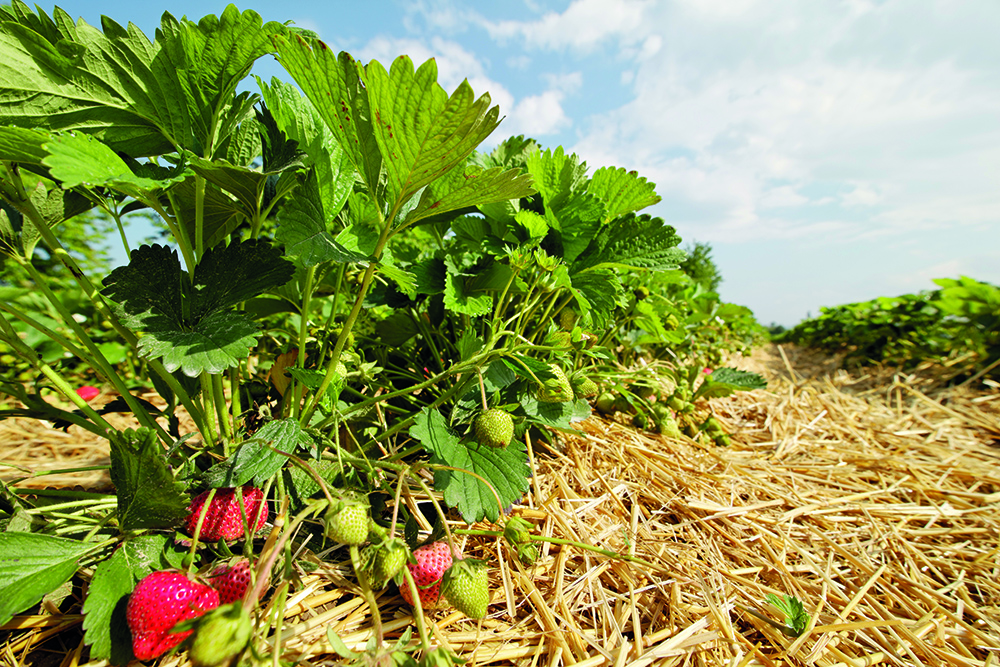
While often ignored as a byproduct, straw from cereal harvesting may hold great potential for sustainable packaging applications. Photo credit: AntiMartina/istockphoto.com
Ireland’s large annual production of cereal crops also produces large quantities of a common, unsung byproduct: straw, a local, renewable and low-cost feedstock. For generations, this cereal straw has been used mainly for bedding or mulching, or left to decompose.
Based at Teagasc Ashtown’s Food Research Centre, and funded by the Department of Agriculture, Food and the Marine, the SUSTAINPACK+ project is seeking to boost the profile of straw and highlight its greater potential for sustainable applications.
Hidden resource
Straw may appear simple, but chemically, it contains two valuable natural biopolymers: cellulose and lignin. Cellulose is the same building block found in trees and cotton that gives plants their strength. Lignin provides structural strength, rigidity and natural protection against UV light and microbes.
Teagasc Senior Research Officer, Shivani Pathania, has been examining how cellulose and lignin can best serve packaging applications. She explains that these components, when extracted and engineered correctly, can be transformed into films designed specifically for protecting fresh produce, all highly desirable traits for food packaging.
“Working with wheat and oat straw has shown me how something ordinary can become extraordinary through the right scientific lens. A material often treated as waste can help address one of the most pressing environmental challenges of our time,” Shivani explains.
“Instead of relying on imported bioplastics, Ireland could use its own agricultural by-products to create packaging solutions that are both sustainable and economically viable.”
A growing crisis
Plastic packaging has become deeply embedded in the fresh produce supply chain. From berries to leafy greens, almost every fruit or vegetable we buy spends part of its life wrapped in single-use plastic. While this packaging protects against spoilage, it also contributes to Europe’s mounting plastic waste problem.
According to 2025 data from Eurostat, the EU generated 79.7Mt of packaging waste in 2023, equivalent to 177.8kg per person. While this represents a small reduction compared with 2022, it is still 21kg higher than a decade ago, highlighting the scale of Europe’s packaging problem. Plastic remains a major contributor. On average, each EU resident generated 35.3kg of plastic packaging waste, yet only 14.8kg was recycled. Paper and cardboard made up the largest share of all packaging waste at 40%, followed by plastics (19.8%) and glass (18.8%).
“These figures underscore the urgent need for sustainable alternatives especially in sectors like fresh produce, where packaging use is high and recycling rates remain low,” notes Shivani.
“Fresh produce is particularly challenging: it requires flexible materials with controlled moisture, oxygen management, and physical strength to prevent bruising. Compostable alternatives exist, but many struggle with moisture sensitivity or poor mechanical properties. This is where straw-based packaging may offer a breakthrough.”
Extracting value from waste
In the lab, the journey of wheat and oat straw takes on a new purpose. What starts as leftover stalks from Irish farms becomes the raw material for making new, sustainable packaging.
“Instead of using strong chemicals and large amounts of water, we now use cleaner, low-impact methods to separate two useful parts of the straw: cellulose and lignin,” Shivani explains.
“Cellulose is then turned into nanocellulose, a very fine and very strong material. When this is added to biodegradable plastics like PLA or PCL, it makes packaging film stronger – improving oxygen and moisture barriers, helping fresh produce stay fresh for longer.”
Lignin, the other major part of straw, also brings valuable benefits. It naturally blocks UV light, slows down spoilage, and helps protect fruits like strawberries, raspberries and cherries from damage. When cellulose and lignin are combined, they create compostable packaging that is strong, protective and suitable for fresh food.
Early tests show that straw-based materials can perform better than many compostable films already on the market. They keep oxygen and moisture at the right levels and help fruits and vegetables stay fresh during storage and transport. These films can be used for everything from leafy greens to tomatoes.
This work also fits perfectly with Ireland’s sustainability goals, Shivani adds.
“Straw is produced in huge amounts across the country, and most of it has little value. Turning even a small portion into packaging could create a local, circular system, reducing the need for imported materials and giving farmers a new source of income. It also helps Ireland grow its bioeconomy and reduce plastic waste.”
Why this innovation matters
It has become essential to find plastic packaging alternatives that protect food effectively without harming the planet. Most retail packaging is single use, adding to Europe’s growing environmental challenges.
Unlike many biodegradable materials, straw-derived packaging doesn’t sacrifice performance. It can keep produce fresher for longer, maintain food quality during transport, and break down naturally after use. This makes it a promising option for reducing our reliance on petroleum-based plastics, Shivani explains.
“Straw-derived packaging offers a real, practical solution – it reduces plastic waste, creates new opportunities for farmers, and supports Ireland’s transition toward a circular, sustainable economy.”
Getting this packaging onto supermarket shelves takes time. The research project still needs to fine-tune the production process and test materials’ machine runnability, strength and biodegradability. The materials must also work with industry partners and meet regulatory requirements. However, if progress continues at this rate, pilot-scale production of straw-based packaging might not be far off.
“Most importantly, this work shows that meaningful climate solutions can come from simple ideas,” Shivani concludes.
“Instead of relying on rare materials or imported technology, Ireland can build a sustainable packaging system using something that grows in its own fields. A material once overlooked as waste now has the potential to protect both food and the environment.”
Funding
Funding support received from the Department of Agriculture, Food and the Marine under the SUSTAINPACK+ project (2023RP1012).
Acknowledgements
The authors thank Brijesh Tiwari at Teagasc Ashtown for his contributions to the project.
Contributors
Anirudh Madavankandy, Walsh Scholar, Teagasc Ashtown.
Swarna Jaiswal, Lecturer, Applied Microbiology, Technological University Dublin.
Amit K. Jaiswal, Senior Lecturer, Food Tech & Biotech, Technological University Dublin.
Shivani Pathania, Senior Research Officer, Teagasc Ashtown.
Contact: shivani.pathania [at] teagasc.ie