Suckler Performance
- Suckler breeding season in full swing
- Pre breeding scan complete ahead of breeding
- 100% ai sires used.

Suckler cows generally calve in August, September and early October on Edmond Curtin’s farm in Meelin Co Cork. The herd is predominately a limousine cross cow, and they have a euro star replacement index of €118. Bulls are sold from the suckler herd as weanlings in May, with the heifer calves kept for breeding and some surplus heifers sold also as weanlings.
Cows generally calve outdoors which results in a very healthy calf. This time of year, cows and their calves are housed and the cycle of breeding suckler cows has kicked off again. Autumn breeding season is in full swing – 100% AI is used on the farm. A pre breeding scan was done two-weeks pre breeding to identify any cows that may have issues. Two cows required attention ahead of breeding – these were treated. Most of the herd will be bred to limousine sires such as DRUMLINE S, SLIABH FELIM STERLING, BRONTEMOOR SALERING – using either a male or female sexed straw with these AI sires. CASTLEVIEW CASINO (LM) is being used along with BOLIDE (PT) and ORBI (CH).
Ed uses good observation during the breeding season to identify cows cycling. Cows are housed on rubber mats which helps to increase breeding activity compared to being housed on concrete slats alone. Replacement heifers are bred within the herd and calve down at 24 months of age. This year the replacement heifers are going to be synchronised to keep the breeding & calving compact. They will be bred to Angus Prime Lad AA4743
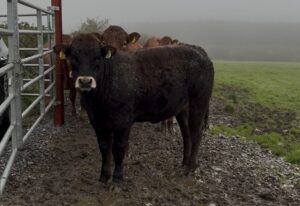
Figure 1 Weanling calves grazing close to the shed
Ed operates a calf to beef system alongside the suckler system. Continental dairy beef bulls are slaughtered under 16 months which consist of Charolais, Belgian blue and some Hereford. This year they were slaughtered in June and averaged 364 kg’s deadweight. There is also group of dairy beef steers currently being finished – these will be sent for slaughter the second week of November at 22 months of age. The steer group are predominately Aberdeen angus cattle. These cattle were housed early August and had an average weight of 520 kg’s at the start of the finishing period. They currently are on grass silage diet and 8-11 kg’s of concentrates per day. Ed is relatively tight on silage stocks, so he opted to increase the meal feeding to reduce his silage requirements. The target is to have this group of steers finished off the farm at 22 months and a carcase of 320 to 340 kgs deadweight.
When purchasing these calves in the springtime, Ed selects calves from Holstein Friesian dams and sires that have a very high carcase figure. Calves are sourced from dairy farms directly – 70 calves are purchased annually. Selecting calves with a high carcase figure results in a calf with a high CBV value and in turn an animal that will perform and achieve a high kill out weight at slaughter time.
Video 1 Beef steers in the shed
Ed built a new purpose-built calf rearing shed in the autumn of 2025 and the spring of 2026 was the first batch of dairy beef calves to be reared in the shed. The shed could also be adapted easily to house cattle on a straw bed if required.
The shed can accommodate 80 to 100 calves at any one time. Ed installed a JFC calf feeder along with four substations that feed each of the four pens within the shed. The calf feeder has reduced on the labour time associated with feeding calves and has been a major time saver on calf rearing. Two drainage channels run directly across the front on both sides of the shed and take effluent to a nearby slurry tank. The floor on each side of the shed is slopped into both these channels. There are roller doors on the gable end of the shed that can be open for cleaning out pens or to allow extra fresh air into the shed during warm weather. Overall, the shed is working very well on the farm and has helped reduced labour associated with rearing dairy beef calves.
Video 2 & 3 Ed’s new calf shed