
Winter Fodder Planning
- Winter fodder management
- Completing a fodder budget
- Planning to avoid a deficit
The prolonged winter of 2025/26 depleted fodder reserves on John Barry’s farm, requiring the purchase of additional silage during March and April. As a result, rebuilding winter feed stocks is a key priority for 2026.
The first step in preparing a fodder budget is estimating livestock numbers for the coming winter (Figures 1 & 2). Using these projected stock numbers, the PastureBase Ireland Fodder Budget Tool can be used to calculate total winter feed requirements and identify any potential deficits well in advance.
Based on planned stock numbers and an estimated 150-day winter housing period, approximately 265 tonnes of silage dry matter will be required for winter 2026/27 (Figure 3).
At present, the 200 bales produced are the only fodder reserves available on the farm. Following first-cut silage, John will reassess fodder stocks using the PastureBase Ireland fodder budget tool.
If a deficit is identified:
Completing a fodder budget now allows for better planning and reduces the risk of feed shortages next winter.
| Winter Animal Numbers | |||||||
| Animal Type | Oct 26 | Nov 26 | Dec 26 | Jan 27 | Feb 27 | Mar 27 | Average over winter |
| Suckler Cows | 85 | 85 | 85 | 72 | 75 | 79 | 80 |
| Total Cattle 0 – 6mths | 30 | 31 | 31 | 30 | 28 | 34 | 31 |
| Total Cattle 6 – 12mths | 64 | 62 | 62 | 42 | 44 | 46 | 53 |
| Total Cattle 12 – 24mths | 47 | 50 | 32 | 37 | 41 | 46 | 42 |
| Total Cattle 24 mths+ | 11 | 11 | 10 | 13 | 11 | 13 | 12 |
| Total | 238 | 240 | 221 | 194 | 199 | 218 | 218 |
Figure 1. Shows the planned livestock numbers for the coming winter 2026/2027
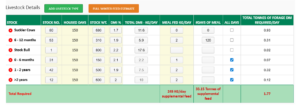
Figure 2. Shows the planned level of supplementary feed per livestock category and the intakes of each category.
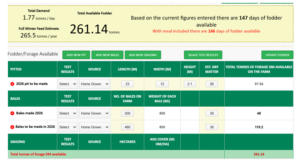
Figure 3. Planned silage making for 2026 showing 265.5 tonnes of dm required for a 150 day winter
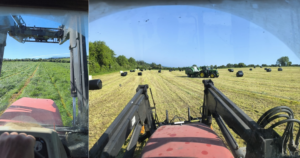
Figure 4. Silage being cut on John Barrys farm on the 24th of May and baled on the 26th of May 2026
Producing silage of the appropriate quality for each livestock category is central to John’s winter feeding strategy.
The aim is to produce:
Matching silage quality to animal requirements helps minimise concentrate feeding costs while maintaining animal performance.
Autumn-calving cows will receive high-quality silage (>70% DMD) along with 1.5 kg/day of a 14% crude protein concentrate to support milk production and encourage early cycling during the breeding season.
Their calves will receive 0.5–1.0 kg/day of a 15% crude protein creep feed.
The target winter performance for weanlings is an average daily gain of 0.6 kg/day or greater.
Dry cows will be offered 67–68% DMD silage to avoid excessive body condition gain before calving.
Where lower-quality silage (approximately 60% DMD) must be fed, cows will receive:
This supplementation helps improve both cow nutrition and colostrum quality prior to calving.

Figure 5. High DMD Silage produced in 2025 for feeding to weanlings and autumn calving suckler cows
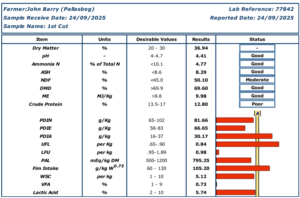
Figure 6. Moderate DMD Silage produced in 2025 for feeding to spring calving suckler cows
Following the first-cut harvest, John will apply slurry at a rate of 3000gals per acre to second-cut silage ground before being topped up with protected urea.
Previous slurry analysis results show that cattle slurry on the farm supplies significant levels of phosphorus (P) and potassium (K), helping to meet crop nutrient requirements. Typically, an application of 3,000 gallons per acre provides sufficient P and K for second-cut silage.
To maximise grass growth and silage yield, slurry applications are supplemented with 60–70 units of nitrogen per acre in the form of protected urea.
John is using his own farms slurry nutrient values to guide fertiliser decisions improves nutrient-use efficiency while reducing fertiliser costs (Figure 7 & 8)
| Slurry samples
|
pH | Dry Matter
% |
Available Nitrogen
(Units/1000 gallons) |
Phosphorus
(Units/1000 gallons) |
Potassium (Units/1000 gallons) |
| Fattening bulls 2022 | 6.8 | 10.23 | 15.8 | 8.36 | 32.79 |
| Cows (open tank ‘22) | 7.2 | 9.14 | 12 | 6.13 | 27.94 |
| Cows (open tank ’23) | 7.4 | 7.86 | 12.8 | 7.54 | 22 |
| Autumn cows 2023 | 7.2 | 9.66 | 13.6 | 10.8 | 42.3 |
Figure 7. The different levels of nutrients contained in each slurry category

Figure 8. Fertiliser recommendation from Teagasc for second cut silage
Breeding of the spring-calving herd commenced on 1 May, with clearly defined breeding dates in place to maintain a compact calving season.
The breeding programme consists of:
This approach is designed to deliver an 11–12 week calving spread, running from early February to late April.
A compact calving pattern improves labour efficiency, simplifies herd management and produces a more uniform batch of calves for sale.
Artificial insemination is focused on replacement heifers and the highest-performing cows to maximise genetic gain.
Replacement heifers:
Maternal sires such as LM8929 (Sliabh Felim Sterling) and LM9577 (Drumline S) are used to breed replacement females, while terminal Charolais and Belgian Blue sires are used to maximise carcass value and weanling sale performance (Figure 9).
Following the AI period, a 5-star terminal Limousin stock bull is used to serve repeat cows.
As John also works off-farm, labour efficiency during breeding is a key priority.
Heat detection is carried out three times daily for approximately 10 minutes, supported by a vasectomised teaser bull fitted with a chin-ball harness to identify cows in heat.
Maintaining cow body condition after calving is also critical. Cows are moved onto high-quality grass immediately after turnout, while PastureBase Ireland is used to maintain farm covers of 700–800 kg DM/ha, ensuring a consistent supply of quality grass throughout the breeding season.
A strict culling policy remains in place, with cows removed from the herd if they:
This policy supports long-term herd fertility and helps maintain a compact calving pattern.

Figure 9. Main sires used for breeding replacements and the Limousin stock bull