

Performance
- Review of Under 24 month heifer finishing system for 2025
- Carcass performance of the 2024 heifers finished to date
- Drafting animals for finish
- Feeding regime for finishing animals
- Using CBV Figured when purchasing calves

The performance of the 2023 born cattle that were finished in 2025 averaged 268kg and graded O=3+ and were finished at 25 months of age (see figure 1).
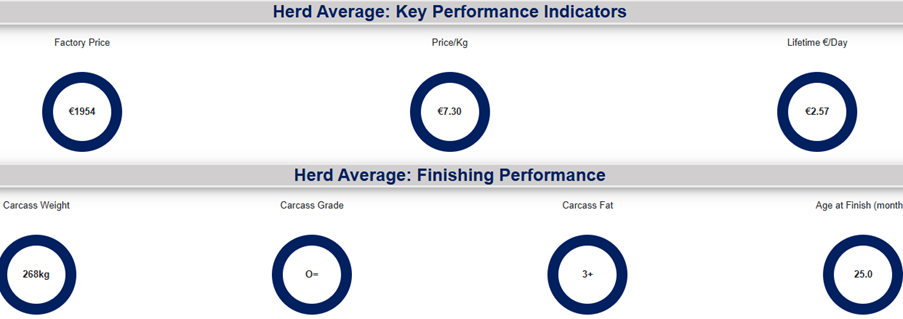
Figure 1: Beef finishing report for animals born in 2023 and finished in 2025
So far for the 2024 born animals the first load of cattle were drafted on the 8th of December and to date 19 animals have been drafted for slaughter. To date these animals have killed out with a 283kg carcass weight and graded 0=4- at 23 months of age (Figure 2).
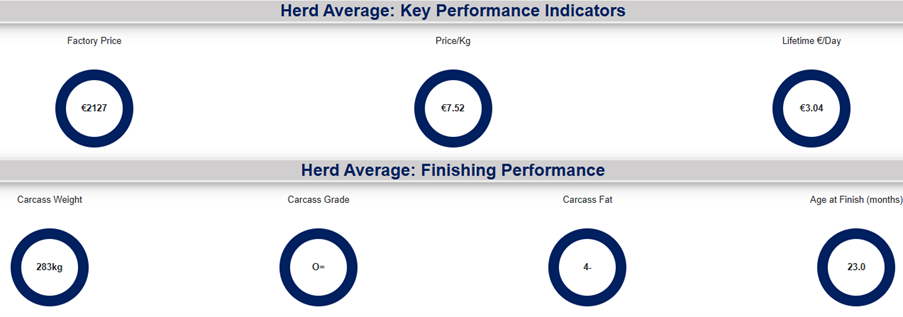
Figure 2. Beef finishing report for animals born in 2024 and finished in late 2025 and early Jan 2026
The remaining 2024 born heifers were weighed on the 14th of January and averaged 490kg liveweight the weights ranged from 393 kgs up to 586kg with over 75% of them weighing greater than 490kg. The heifers have gained 1.07kg since their last weighing in mid to late December where they average 459kg. The heifers nearing the end of their finishing period are being feed ad lib 69% DMD silage plus 6kg of a 13% crude protein ration split over 2 feeds. The lighter heifers were fed ad lib silage and 2-3kg of a 17% crude protein ration. These animals will switched to a finishing ration of 6kg of ration in March.
The 67 2025 born weanling heifers were weighed on the 17th of Jan and averaged 253kg. These heifers are getting 2-3 kg of a 17% crude protein ration split in 2 feeds between morning and evening. The weight range of these heifers is between 157kg and 331kg lwt. The heifers were housed from late October to mid-November and averaged 213kg at housing. 77% of these heifers were over 240kg in January. These heifers have gained 0.63kg since their last weighing. The plan with these heifers is to continue feeding the 2kg and as soon as ground conditions allow the heifers will be turned out to grass in 2 to 3 groups for management purposes. The heavier heifers will be targeted to be finished around the end of September. For these heifers to kill out at 280kg carcass weight at a 52% kill out they will need to average 540kg liveweight. For these heifers to hit this target they will need to gain over 1kg per day from turnout. With 256 days between the 17th of Jan (last weight) to the 30th September, a weight gain of 0.94kg/day is required to achieve an increase in liveweight from 300kg to 540kg lwt. The reason these heifers are being targeted to finish in September is that 72 calves will be purchased this spring, and to reduce the stocking rate in the sheds 15 heifers will have to be finished pre housing.
The CBV measures the potential the animal has for carcase weight, carcase conformation, carcase fat, feed intake and docility (all based on the breeding indexes of its parents). Put simply, cattle that have a high CBV will, on average, be faster growing, better shaped at slaughter, leaner and will not eat as much per kg liveweight gained. Pronnsias and Maire purchase from 3 different farms and have developed a great relationship with the dairy farmers involved. The CBV value is a new tool available for farmers to predict the potential profitability of the animal. If we look at the top 10 2025 born calves versus the bottom 10 calves for CBV the difference in average daily gain from birth was 0.66kg per day versus 0.63kg per day (Figure 3). This figure may appear small but over the lifetime of the animal in this case approx. 24 months (730days) this equates to 22kg liveweight or approx. 11.4kg carcass weight. At the price the Creedon’s achieved on the 2024 born cattle finished to date this year that equates to €86 euros extra per head (11.4kg carcass x €7.52/kg carcass weight). If this is multiplied across the herd it equates to an extra €5762 (€86 x 67 cattle finished). It’s almost impossible to predict the future performance of a dairy bred beef calf at 4 to 6 weeks of age so every tool should be used to in order to identify animals with the most desirable beef finishing traits.
|
Top 10 calves on CBV |
|
Bottom 10 calves on CBV | ||||
| Animal ID | CBV (€) | ADG from Birth | Animal ID | CBV (€) | ADG from Birth | |
| 5120 | 240 | 0.64 | 3553 | 74 | 0.61 | |
| 5148 | 218 | 0.62 | 4726 | 70 | 0.69 | |
| 5109 | 214 | 0.69 | 4740 | 52 | 0.49 | |
| 4926 | 211 | 0.53 | 3520 | 49 | 0.69 | |
| 5143 | 211 | 0.71 | 4881 | 43 | 0.64 | |
| 5113 | 190 | 0.63 | 3528 | 40 | 0.61 | |
| 4916 | 187 | 0.49 | 3549 | 38 | 0.71 | |
| 3546 | 185 | 0.63 | 3526 | 36 | 0.57 | |
| 4731 | 184 | 0.83 | 4872 | 23 | 0.58 | |
| 4769 | 161 | 0.82 | 3547 | 4 | 0.69 | |
| Average | 200 | 0.66 | 43 | 0.63 | ||
Figure 3. Comparison of top 10 versus bottom 10 2025 calves based on CBV from the weight profile on ICBF
Protocol for purchased calves on arrival
In order to maximise calf health and performance the Creedons place a large emphasis on calf health and in order to achieve this all sheds are power washed and disinfected well in advance of arrival of newly purchased calves. Also from arrival of the first newly purchased calves on the farm a strict biosecurity programme is put in place to avoid any transfer of disease from an outside source or from older animals within the herd. This includes using footbaths of disinfectant at each entrance and also working from the youngest to the oldest animals on the farm on a daily basis.
From a calf health point of view all calves are sourced from 3 local farms and purchased from the farm direct. The calves arrive on the farm at 5 weeks of age. All calves purchases are Aberdeen Angus X dairy or Hereford X dairy. The calves come from a variety of different feed systems including teat feeders, buckets and an automated calf feeding system. The calves on arrival receive a prebiotic dose and the following feeding protocol is operated for the first 3 days:
The calves start on 5 litres of milk replacer for week 1 and this is increased to 6 litres thereafter until a gradual reduction takes place pre weaning. Water is available ad-lib and calves are housed in a deep bed of straw. Straw is also available as a source of roughage for rumen development. A 17% crude protein ration is fed and calves are generally consuming over 2kg of ration at weaning .
The calves are housed in pens of 12 and remain in these groups through to weaning. A microclimate is set up in each pen in order to prevent chills to calves. 3 days after arrival calves are vaccinated for IBR, RSV and PI3 intransally. 2 weeks later calves are dosed for coccidiosis and again at 2 weeks post turnout. At all times hygiene and biosecurity are extremely important with footbaths available at all shed entrances. Visitors are kept to a necessary minimum.
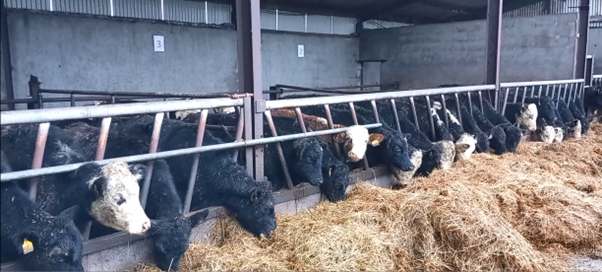
Photo 1: 2025 born heifer calves on ad lib silage and 2 kgs of a 17% CP ration