January 2026 Future Beef Newsletter
Sign up to receive the Teagasc Future Beef Newsletter
Technical Updates: Boosting Colostrum Quality for Calves | Preventing Scour in Newborn Calves | Future Beef Labour Saving Series
Farm Updates: Trevor Boland | Ger McSweeney
Upcoming Events | Top Tips | The Beef Edge Podcast
Wishing you and your families a happy and prosperous New Year.
From the Future Beef Programme Team.
Upcoming Event: A guide to a successful calving season 2026
Join us online on January 6 and 20 at 8.00pm for our pre-calving webinars. Click here to register.
- Tuesday, January 6 – Profit starts before calving: Reduce calf losses before they happen, featuring Prof. David Kenny, Teagasc, Dennis Howard, Munster Bovine and James Skehan, Future Beef farmer.
Topics:
o nutrition of the pregnant suckler cow – matching energy and protein supply to stage of pregnancy;
o minerals – how important are they? Identifying deficiencies, choosing the right supplementation and timing; and,
o vaccination programmes for suckler herds – controlling scour and pneumonia: which animals to vaccinate, which vaccines are appropriate, and when vaccines should be administered to protect the newborn calf.
- Tuesday, January 20 – A live calf at calving: A step-by-step guide to calving your cow and keeping that calf alive, featuring Dr John Donlon, ATU, and Wesley Browne, Future Beef farmer.
Topics:
o calving the suckler cow – recognising normal calving, managing difficult calvings, and knowing when to intervene; and,
o newborn calf management – colostrum management, hygiene, housing, and early disease prevention.
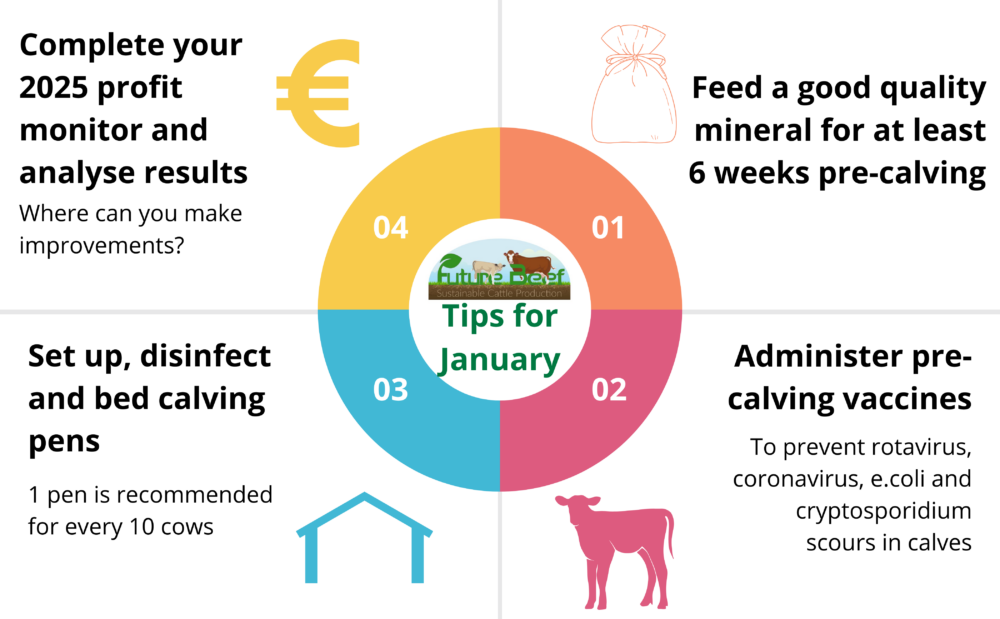
Top Tips for January
Technical Update – Boosting Colostrum Quality For Calves
Colostrum is the calf’s first and most important feed, providing antibodies (immunoglobulins), energy, vitamins and minerals. Newborn calves are born without immunity and rely entirely on colostrum for protection against scour, pneumonia and navel infections.
- Timing is critical: calves should receive 2 litres of colostrum within 2 hours of birth, when antibody absorption is at its highest.
- Colostrum quality varies between cows; heifers and thin cows often produce poorer quality colostrum.
- Use a Brix refractometer to test quality:
- 22% Brix or higher = good quality colostrum.
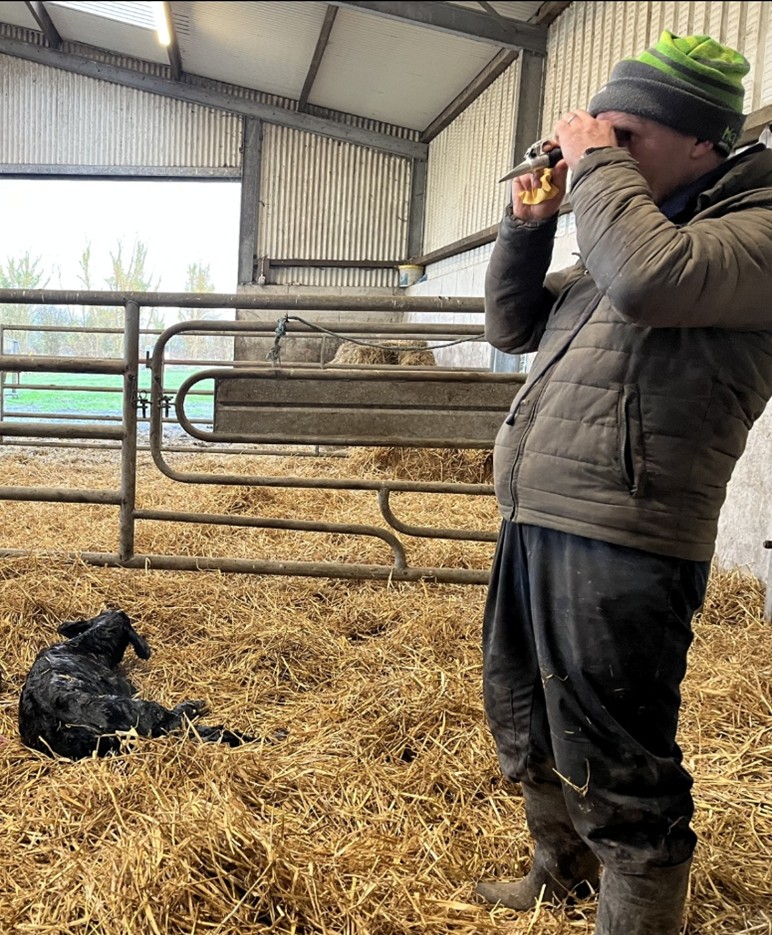
Aonghusa Fahy using a brix refractometer to test colostrum for a newborn calf
- Always ensure clean collection and feeding equipment to avoid introducing disease.
- Store surplus high-quality colostrum from mature cows:
- Refrigerate short-term or freeze for later use.
- Be prepared to assist or stomach-tube calves that are slow to suckle.
- Good colostrum management improves:
- Calf survival
- Early growth rates
- Lifetime performance
- Labour efficiency during calving
Good colostrum management is one of the most effective and low-cost ways to reduce calf losses on suckler beef farms. You can read more here.
Technical Update – Preventing Scour in Newborn Calves
Preventing scour in newborn suckler calves is critical to reducing early-life losses and improving herd performance on Irish beef farms. Scour and gut infections are the leading cause of death in calves under one month old, but simple on-farm actions can dramatically cut risk.

Prevention is always better than cure when it comes to calf scour
Common scour causes include E. coli, rotavirus, coronavirus, Salmonella, cryptosporidium and coccidiosis, each with distinct onset ages and symptoms. Pre-calving vaccination of cows against E. coli, rotavirus, coronavirus and cryptosporidium boosts antibody levels in colostrum and helps protect calves once they have ingested sufficient first milk.
- Colostrum management is vital: provide 2–3 litres within two hours of birth, check quality with a Brix refractometer and be ready to hand-feed or stomach tube calves that don’t suckle. High-quality colostrum stored for emergencies can be life-saving.
- Hygiene in calving pens and calf housing reduces pathogen exposure. Power-wash and disinfect pens, keep bedding clean and disinfect feeding equipment after every use. Sick calves should be isolated immediately to prevent spread.
Effective scour prevention combines pre-calving vaccines, excellent colostrum delivery, strong hygiene practices and early recognition of disease to improve survival and performance in suckler beef systems. You can read more here.
Technical Update – New: Future Beef Labour-Saving Series
The Future Beef Programme launched a video series featuring practical labour-saving ideas and technologies from beef farmers nationwide. Each short video highlights simple ways to boost efficiency, cut workload, and improve safety on farms. Watch the series on the Teagasc YouTube channel, with the latest two available below:
- Niall Biggins, Co. Mayo on the cryptosporidium vaccine
- Shane McGuinness, Newford Farm, Co. Roscommon on synchronising heifers
Farm Update: Preparing for the 2025 profit monitor with Trevor Boland

Trevor Boland
Sligo suckler farmer Trevor Boland runs a 45-cow autumn-calving herd on 45ha in Bunnafedia, Co. Sligo. Bulls are sold as yearlings, while heifers are kept or sold for breeding, or finished on the farm. Trevor also buys in heifers each year for grass finishing, helping maximise output from his system.
With Irish beef prices hitting record highs in 2025, Trevor is eager to complete his 2025 profit monitor, a key tool for any suckler beef farmer aiming to improve efficiency and profitability. The profit monitor allows him to:
- Benchmark his farm against similar suckler systems
- Get a clear picture of production costs
- Analyse beef output per livestock unit and per hectare
- Identify areas for improved performance in the year ahead
Trevor simply gathers his annual sales, purchases and input costs which are inputted into the Teagasc system. The detailed reports show exactly where the farm is performing well and where changes could deliver better margins. By comparing results with other farms in the Future Beef Programme and nationwide, he can confidently target improvements.
You can read more about this year’s calving season here.
Watch the video below where he outlines some of the key benefits and costs involved.
Farm Update: Ger McSweeney: Achieving One Calf per Cow per Year Through Enhanced Calf Health

Ger McSweeney
Ger McSweeney farms 25.31 hectares in Tooreenbawn, Millstreet, operating a spring-calving suckler-to-beef system with 40 cows. Male progeny are finished as under-16-month bulls, while non-replacement heifers are brought to finish at 20 to 21 months of age. Ger relies entirely on artificial insemination, enabling him to consistently select sires with superior genetics that match his breeding objectives.
A key performance indicator for profitable suckler enterprises is the ability to wean one healthy calf per cow per year. In 2025, Ger achieved exceptional results, recording 0% calf mortality at birth and up to 28 days of age. Strong calf health not only underpins animal welfare but also drives farm profitability through improved performance and greater output.
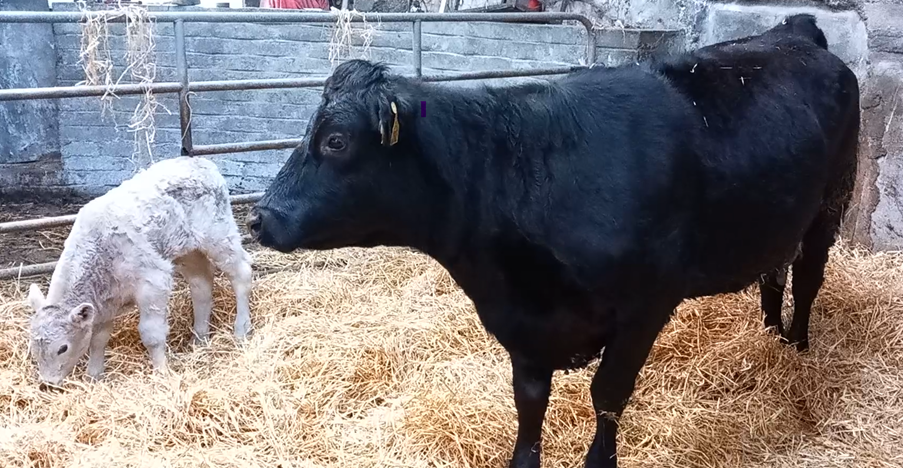
Newborn calf with cow in a calving pen on Ger’s farm
To deliver these outcomes, Ger places significant emphasis on selecting the most suitable sire for each cow to minimise calving difficulty. Once calves are born, his focus shifts to two critical areas:
- Ensuring rapid and adequate intake of high-quality colostrum, essential for immunity and early vigour.
- Maintaining excellent hygiene standards in both calving pens and calf-rearing facilities to reduce the risk of disease.
Ger’s disciplined approach highlights the impact that targeted management can have on calf survival, performance, and overall system profitability. You can read more here.
The Beef Edge Podcast
Keep up to date on all things beef on The Beef Edge Podcast weekly.