
Upgrading farm infrastructure to minimise nutrient loss to water


Summary
- A recent on-farm study involving 100 dairy farms, provided the first reliable dataset regarding current slurry and dairy soiled water volumes and showed that actual volumes produced are significantly higher than previously estimated.
- From 1st October 2028, dairy farms will face increased minimum storage requirements.
- As part of the on-farm study, a group of 12 farms were selected to evaluate the infrastructure required and costs of complying with increased storage requirements.
- On these 12 farms, average herd size was 216 cows and ranged from 70 to 590 cows
- The major works proposed included rainwater diversion, yard/tank roofing, dairy soiled water separation and new storage.
- The average (ex. VAT) cost associated with complying with a requirement for additional storage was €457/cow and ranged from €96 to €897/cow.
- Across farms, the average cost per m3 of rainfall diverted from storage was €345, while the average cost per m3 for new storage was €152.
- Adequate slurry storage is essential in achieving maximum value from the slurry. The nutrient value of slurry is known to increase when spread in ideal conditions (€34/1000 gallons) relative to poor conditions (€14/1000 gallons) due to differences in nutrient uptake capacity.
- Sufficient storage capacity drastically increases flexibility regarding timing and rate of spreading as lack of capacity alone does not dictate management
- The extra capacity created will lead to better slurry management and yield a financial return into the future
In late 2022, the Department of Agriculture, Food and the Marine (DAFM) requested that Teagasc outline a methodology to assess current volumes of dairy soiled water and slurry produced on dairy farms. In response to this, a survey of 100 dairy farms was carried out from 01/10/2022 to 31/03/2025. The project provided the first reliable dataset regarding current slurry and dairy soiled water volumes and revealed that actual volumes produced on farms are significantly higher than previously estimated. This evidence directly informed revisions to the 6th Nitrates Action Programme, guiding regulatory updates on storage requirements and farm management practices. From 1st October 2028, dairy farms will face increased minimum storage requirements. For dairy cows, the slurry storage requirement will increase from 0.33 to 0.40m3/cow/week. The dairy soiled water storage requirement will increase from 0.21 to 0.30 m3/cow/week; although there are practical changes to how the total soiled water requirement is calculated, including the number of cows milking during the relevant months and how this relates to the closed period (1-31 December). Storage requirements need to be calculated on an individual farm basis.
As part of the on-farm evaluations that were carried out prior to these changes a detailed analysis of a group of 12 of the study farms assessed each farmyard in totality regarding storage capacity and all contributing sources. This additional assessment was undertaken to evaluate the cost of complying with a 20% increase in storage requirements to allow cross farm comparisons. Proposed upgrades to storage and infrastructure were developed in collaboration with each farmer and included re-design of yards, roofing uncovered areas as well as additional storage tanks. On these 12 farms, herd sizes ranged from 70 to 590 cows with an average of 216 cows. The average ex. VAT cost associated with complying with a requirement for an additional 20% storage above current regulations was €457/cow with a range from €96 to €897/cow.
Table 1. Cost of upgrading farm infrastructure to meet increased storage requirements
| Farm | No. of Cows | Total (€) | Total/Cow (€) |
| 1 | 70 | 6700 | 96 |
| 2 | 70 | 33700 | 481 |
| 3 | 96 | 43300 | 451 |
| 4 | 100 | 87350 | 874 |
| 5 | 107 | 90750 | 848 |
| 6 | 117 | 51650 | 441 |
| 7 | 136 | 84300 | 620 |
| 8 | 203 | 182150 | 897 |
| 9 | 330 | 40895 | 124 |
| 10 | 350 | 53370 | 152 |
| 11 | 420 | 154080 | 367 |
| 12 | 590 | 78500 | 133 |
| Average | 216 | 75562 | 457 |
Key findings
One of the main purposes of this exercise was to highlight the specific challenges that are faced by farmyards at different scales and degrees of development in achieving compliance under additional storage demands. Each farmyard is unique and offers unique challenges and potential solutions to ensure compliance. In the future scenario where increased storage is needed, soiled water capacity deficits were common across farms, whereas slurry storage deficits varied significantly based on herd size and contributions from uncovered yards and other sources. There were significant “artificial” drivers of storage deficits-namely uncovered/unroofed yards and tanks and unsegregated soiled water. These contribute to increased volumes collected but, in many circumstances, these sources could be eliminated or re-directed.
Upgrade works
The major works proposed can be grouped into 3 main categories; 1. Rainwater diversion and yard/tank roofing, 2. Dairy soiled water separation and 3. Additional storage.
As examples, we use Farm 4 (100 cows) and Farm 11 (420 cows). In the case of Farm 4, the increased total storage requirement, amounted to approx. 1495m3, surpassing existing storage capacity and comprising approx. 81% slurry, 7% soiled water, 10% FYM and 2% rainfall. In this case a new soiled water tank at a cost of €14,850 and a new slatted tank at a cost of €72,500 would resolve storage issues.
In the case of Farm 11, the increased total storage requirement, amounted to approx. 5000m3 surpassing existing storage capacity and comprising approx. 79% slurry, 9% soiled water, 2% FYM and 10% rainfall. It this case roofing the collecting yard would divert 110m3 of rainfall from storage tanks, at a cost of €64,000, while roofing open cubicles would divert 370m3 of rainfall from storage tanks, at a cost of €90,000. These measures would resolve storage issues.
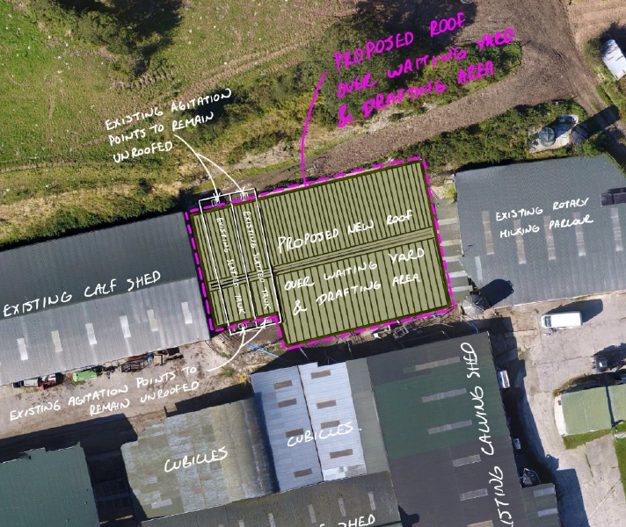
Figure 1. Proposed roof over collecting yard at Farm 11.
These cases highlight the significant contributions made by rainfall to storage requirements in some cases and the ranges in costs €874/cow, (Farm 4) versus €367/cow (Farm 11). Across farms the average cost per m3 of rainfall diverted from storage was €345, while the average cost per m3 for new storage was €152. The proportion of rainfall to total storage required ranged from 2 – 32%. Those farms with higher rainfall contributions are well justified in focusing on rainfall diversion to free up existing storage, while in other cases, any deficits will require additional storage capacity.
Benefits of additional storage
The value of slurry is dictated by its nutrient content and how we utilise this slurry on farm. Maximising the available nutrient value of slurry has never been more important due to the increasing costs of fertiliser. Sub-optimal management of slurry also represents a significant threat to water quality. We must ensure that application timings, locations and rates are optimised by considering storage capacity and management strategies. Adequate slurry storage is essential in achieving maximum value from the slurry. The nutrient value of slurry is known to increase when spread in ideal conditions (€34/1000 gallons) relative to poor conditions (€14/1000 gallons) due to differences in nutrient uptake capacity (Table 2). The ideal time to spread slurry is when soil temperatures start to rise, grass growth picks up, and conditions are drier such that potential losses are low and uptake by a growing crop is high. For dry soils, this could be late January in a warm dry spring, but for heavy soils, this could be early to mid-March. Sufficient storage capacity drastically increases flexibility regarding timing and rate of spreading as the lack of capacity alone does not dictate management.
Table 2. Euro value of slurry spread in ideal vs. poor conditions
|
Slurry |
€ Value of slurry | |
| Spread in ideal conditions | Spread in poor conditions | |
| 1,000 gallons | €34 | €14 |
| 100 cows’/18 weeks | €5,385 | €2,220 |
In this context, slurry should be viewed as a valuable resource. It remains the cheapest source of nutrients and every kg of grass that can be produced from slurry, reduces the need for chemical fertiliser in the system. Over the winter period, when grass growth is low, the uptake of nutrients is also very low. Surplus nutrients are easily lost by runoff (P) or through leaching (N). There can be a lot of criticism of farming by the calendar, but this tends to miss the point in relation to nutrient uptake and the impact of out of season spreading on the quality of water in our nearby streams and lakes and estuaries. Out of season spreading brings the amount of slurry storage available on the farm and the management of that storage very much into the limelight. While increased storage capacity comes at a cost, it provides a clear benefit by allowing improved use of nutrients on the farm and optimising overall farm sustainability. The extra capacity created will lead to better slurry management and yield a financial return into the future.
The above was produced as part of Teagasc Water Quality Conference 2026. For more information and additional reading from the Teagasc Water Quality Conference, visit here.