
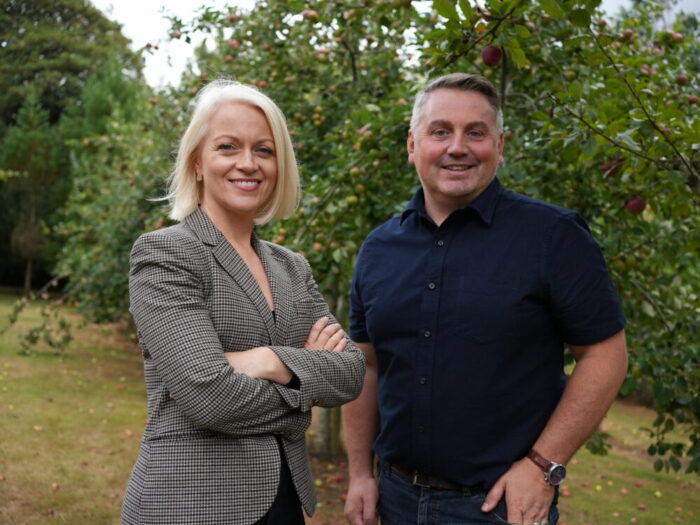
The discovery of Asian Hornets in Cork earlier this year raised concerns about the threat invasive species pose to Ireland’s wildlife. Tonight on 10 Things to Know About…, researchers examine nests to uncover more about these invasive insects.
Earlier this year, the discovery of Asian Hornets in Cork made headline news and sparked nationwide conversations about the significant threat invasive species pose to Ireland. They can alter ecosystems and habitats, disrupt natural processes, and some introduce diseases that can have catastrophic impacts on nature, wildlife, and human health.
On tonight’s episode of the television series 10 Things to Know About…, on RTÉ One television, presenters have exclusive access to the lab and researcher tasked with the job of freezing, dissecting and analysing the nests to determine the Queen’s DNA origins, looking into the hornets’ nest and discussing the potential implications for Ireland’s pollinators.
Invasive insects can damage and destroy crops and one of the worst offenders across Europe is the brown marmorated stink bug, which is particularly problematic for tree fruits like pears and apples, but can also invade people’s homes and emit foul odours. For producers, insect and pest monitoring is critical, but traditional methods are time-consuming and labour intensive. The presenters of 10 Things to Know About… meet the researchers working to automate and accelerate the pest identification process, protect food systems, and keep the smell of the stink bug out of Ireland.
Dr Michael Gaffney, Acting Head of Teagasc’s Horticulture Development Department, explains: “Monitoring of crop pests is the foundation of integrated pest management (IPM) systems and invasive species surveillance. Automated systems offer the potential to streamline this task, providing real time information on insect populations. There is a very broad range of potential invasive insects that threaten Ireland, and these systems offer the potential to increase our monitoring and surveillance ability.”
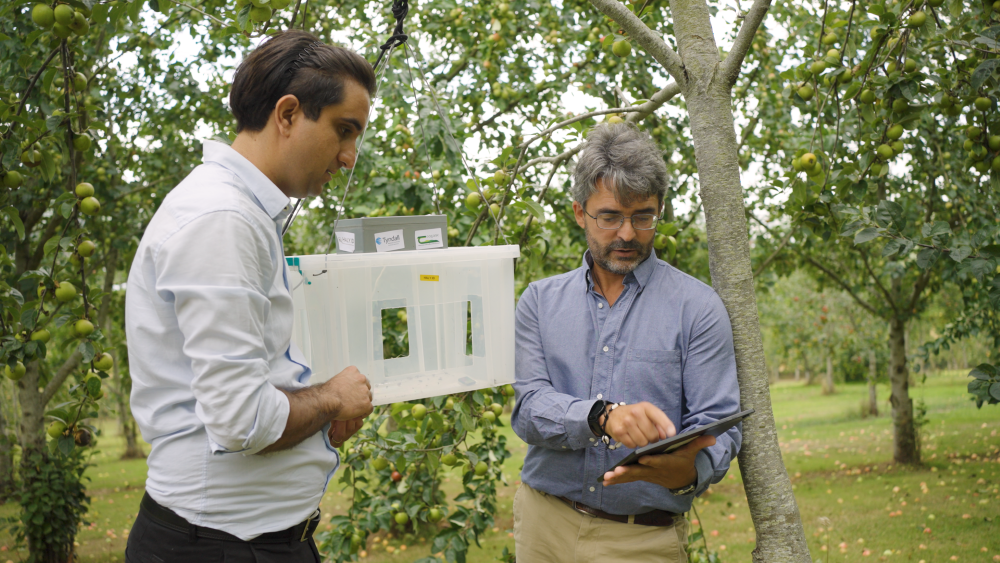
Amin Kargar, Teagasc/Tyndall Walsh Scholar and Professor Brendan O’Flynn, Tyndall, UCC
Amin Kargar, who recently won the 2025 AI Ireland Award for Best Application of AI in a Student Project for his work on this project adds: “We are delivering Artificial Intelligence (AI) in the field, sustainably, by bringing it out of the labs and placing it directly in orchards. These low power Edge AI devices monitor insect activity onsite. This real-time awareness helps farmers act early, cut unnecessary treatments, improve crop quality and yield, protect pollinators, and support biodiversity.”
Amin Kargar is a Teagasc PhD Walsh Scholar at Tyndall National Institute, based at University College Cork (UCC), co-supervised by Michael Gaffney and Brendan O’Flynn, Senior Head of Group, Wireless Sensor Networks, Tyndall.
Brendan O’Flynn comments: “Using what is known as Edge AI in imaging systems helps farmers make smarter decisions by analysing biodiversity, insect populations, crop, and soil data directly on site, without the need for cloud processing or human intervention. Tyndall’s deep tech innovations enable real time monitoring of plant health, water use and pests, reducing waste and chemicals.”
Also in this episode, 10 Things to Know… visits Lough Neagh, where millions of invasive zebra mussels are disrupting the food web and unintentionally promoting toxic algal blooms that threaten wildlife, pets, and humans. This episode investigates the latest technology being developed to monitor these contaminants and improve early detection to make our lakes and watercourses safer for all.
Meanwhile in the ‘Curious Chronicles’ segment of this episode, presenter Fergus McAuliffe charts the rise of the rabbits that inadvertently led to a full-scale war on a beloved national icon of Australia.
Tune into Monday’s episode of 10 Things to Know About… Invasive Species at 8.30pm on RTÉ One.