
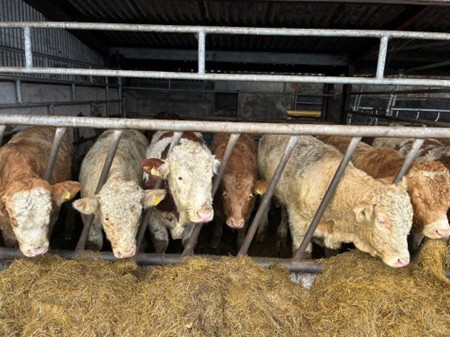
Winter housing is a vital part of livestock management on farms and careful preparation will pay off, Richard Gill, B&T Drystock Advisor at Teagasc Galway/Clare tells us more, examining the topics of space allowances, parasite control, fodder budgeting and safety.
As winter approaches farmers are turning their attention to winter housing for cattle. While housing offers shelter and protection from the elements, it also presents management challenges that must be addressed to maintain animal health, performance and welfare.
1). Space
One of the most important things to look at prior to housing is to ensure that there is sufficient lying space for the stock. Overcrowding is one of the most common issues during winter housing, which can lead to stress, poor growth rates and increased disease risk. It is recommended that store cattle on slatted housing have around 2.0 to 2.5m2 per head. Weanlings may require slightly less, while finishing cattle or suckler cows may need more, particularly in straw-bedded sheds.
As part of a recent Beef Edge podcast, Teagasc Cattle Specialist, Niall Kerins joined Catherine Egan, podcast host, to discuss the importance of winter housing. Listen in below:
2). Parasite control
Parasite control is another critical job at the time of housing. Bringing cattle indoors creates an opportunity to treat for both internal and external parasites in a controlled environment.
Internal parasites such as lungworm, stomach worms and liver fluke are the main concerns. These parasites can severely reduce feed conversion efficiency and weight gain. Cattle should be treated shortly after housing with a suitable product, ensuring that the chosen product is effective against the various stages of the parasites. For example, many flukicides do not kill immature liver fluke, so a second dose may be needed 5–7 weeks later, depending on the product used.
External parasites, including lice and mange mites, also thrive in housed conditions. To prevent outbreaks, farmers are advised to monitor cattle closely for signs of irritation and treat with pour-on or injectable products as needed.
A useful preventive measure is clipping the backs and tails of cattle at housing. This will help to keep animals cleaner when housed and enhances the effectiveness of pour-on treatments by allowing better skin contact. Clipping helps reduce the warm, moist environment that parasites thrive in.
Clipping the backs of cattle will also allow them to regulate body heat easier when housed. A good parasite control programme, designed with veterinary advice, can prevent setbacks in animal performance and reduce the spread of disease in housed cattle.
In the below video, Shane and Oliver O’Hara, Future Beef Programme participants, provide an overview of their clipping routine when preparing to house cattle for the winter:
Maintaining good hygiene in housing facilities is also very important. Before animals are housed, sheds should be thoroughly cleaned out, power-washed and ideally disinfected. Removing old bedding and feed residues reduces the carryover of bacteria, viruses and parasites from one season to the next. Once housing begins, regular cleaning of feeding areas, water troughs and passages helps to reduce the disease burden. In straw-bedded systems, bedding should be topped up regularly to keep animals dry and clean.
3). Fodder budgeting and silage testing
Another key aspect of winter preparation is fodder budgeting. Ensuring there is enough silage or other forage on hand to last through the winter is essential. Farmers should calculate the amount of fodder available and compare it to the expected demand based on the number of animals and the length of the housing period. A simple fodder budget helps identify shortfalls early, allowing time to purchase additional feed if required.
Silage testing is also recommended before animals are housed. Silage testing can provide valuable information on dry matter, protein, and energy levels. Where silage quality is low, additional concentrates may be needed to maintain growth or condition, especially in weanlings or finishing cattle.
James Strain, a Nutritionist with Inishowen Co-op, features on this episode of the Beef Edge podcast covering this very topic. Listen in below:
4). Farm safety
Farm safety should never be overlooked when preparing housing facilities, particularly around livestock handling, slurry storage and machinery use during the winter months. Gates and barriers should be secure and allow for safe movement of animals and people. Lighting should be adequate, both in sheds and around the yard, especially as daylight hours shorten. Slatted floors should be checked for wear or damage and replaced if necessary. Animal handling facilities should also be checked to ensure they are fit for purpose as they will be used a lot as cattle are being housed.