
17 November 2024
4 key winter housing considerations
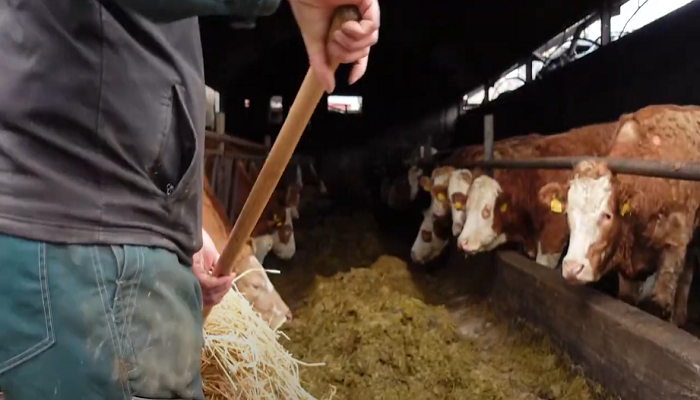
Niall Kerins, Beef Specialist at Teagasc, outlines the key considerations and best practices for providing effective winter housing for cattle.
There are numerous beef systems on farms across the country. Some farmers operate a few systems; from weanlings recently housed, finishing beef cattle, suckler cows due to calve down next February – the list is endless. Despite the system, there are many common trends farmers can take on board to maintain animal’s performance while indoors. Proper winter housing is essential to ensure the health, comfort and productivity of cattle while indoors.
1). Fodder budget
To ensure enough silage is available to get you through the winter period, a fodder budget should be complete at this stage, if not previously done. It is a quick and simple task and completing it now may help alleviate any shortfall you may find yourself experiencing later during the housing period.
A fodder budget will give a good indication of fodder available and, by working on the projected stock numbers, you can quickly identify if the farm is in a surplus or deficit situation. A fodder budget needs to be updated again two-three months into housing just to ensure reserves are available to see you through the housing period.
Weanlings for example, which are gaining body weight daily, will have an increased forage intake as they grow. This may result in extra fodder consumed and action may need to be taken on farm. The below table is a useful guide to calculate your fodder demand and availability:
Table 1: Calculate the fodder demand on your farm
| Stock type |
Number of stock (A) |
Winter months (B) |
Tonnes of fresh weight silage required per month (C) |
Total required (A x B x C) |
|---|---|---|---|---|
| Suckler cows | 1.4 | |||
| 2+ year olds | 1.3 | |||
| 1-2 year olds | 1.3 | |||
| Weanlings | 0.7 | |||
| Total tonnes of fodder required | ||||
Points to note:
- When measuring the fresh weight in tonnes in your silage pit, measure length X width X height in meters and divide your answer by 1.4 (this is allowing for a silage pit at 22% dry matter)
- Fresh weight of bales can vary from farm to farm – as a guide allow 750kg fresh weight per bale when completing your calculations.
2). Indoor nutrition
There are many sources of fodder that can be used in diets for cattle. Diets can be tailored for growing young cattle, finishing animals or to maintain current body condition in suckler cows. Fodder types range from beet, whole crop, grass silage, concentrates, straw and the list continues.
Speak to a nutritionist if there are a few ingredients in the diet. This is to ensure that an animal’s requirement in terms of energy (UFVs), protein, minerals and other dietary requirements are met on a daily basis. Cattle consuming too much of one fodder source may cause a dietary imbalance elsewhere and result in under performance in cattle.
Grass silage over the winter period is often the main source of forage used to make up the diets on beef farms. Silage quality can vary and with weather patterns in 2024 creating its own challenges when it came to harvesting silage, the quality of silage varies as a result.
The start of housing period is where diets for cattle are formulated. Some diets will need to be supplemented with concentrates so animals achieve their daily liveweight target. Silage quality needs to be analysed through a local laboratory and diets then tailored to suit the dietary needs of cattle. Weigh cattle, monitor their performance so daily liveweight gain is achieved. Table 2 below indicates meal required for daily liveweight gain based on silage quality available on farm.
Table 2: Concentrate supplementation required based on silage quality
| Silage quality | 66 DMD | 70 DMD | 74 DMD |
|---|---|---|---|
| Finishing cattle target (1kg ADG) | 7kg | 5.5kg | 4kg |
| Store cattle target (0.6kg ADG) | 2kg | 1.25kg | 0.5kg |
| Weanling target (0.6kg ADG) | 3kg | 2kg | 1kg |
3). Water requirements
Cattle on a high dry matter diet can consume large volumes of water daily. Fresh water plays a critical role in maximising performance, the overall health, productivity and well-being of cattle. The majority of water intakes occur after the animal has foraged for a period of time. This is where adequate trough size and water pressure play a fundamental role in meeting water requirements. Cattle can drink up to 15 litres of water for 100kg of liveweight. For example, a 500kg finishing steer could consume up to 75 litres of water daily – especially when foraging on a high dry matter diet.
Water in troughs can become stale, contaminated with feed and as a result cattle are less likely to drink from them. Cattle flicking water at troughs with their tongue sometimes is an indication that the water has a foul taste from it. The next time you look at water in a trough, ask yourself would you make your tea with it? If the answer is no, well then get the trough cleaned thoroughly!
4). Have your cattle enough space for lying down in their pens?
It is essential for daily liveweight performance that animals are comfortable and not overstocked in pens. Where cattle are overstocked in pens there will be a big impact on their performance over the winter. It is not uncommon to see pens of cattle that need to have two or three cattle removed to meet the optimum space requirements.
Table 3 outlines the recommendations for lying space required in both slatted and straw-bedded pens for different groups of stock. Don’t guess the dimensions of your pens. Take out a measuring tape and calculate exactly what number of stock each pen can hold. Don’t forget to make an allowance for the size the stock will be by the time they are leaving the pen.
Table 3: Recommended space allowance (m2/animal)
| Animal type |
Feed space (mm) |
Slatted floors (m2) |
Straw bedded (m2) |
|---|---|---|---|
| Suckler cows | 500-700 | 2.5-3.0 | 5.0 |
| Cattle 220-330kg | 300-400 | 1.2-1.5 | 1.8-3.0 |
| Cattle 310-450kg | 400-600 | 1.5-2.0 | 2.4-3.0 |
| Finishing cattle 500-750kg | 600-700 | 2.2-2.7 | 4.0 |
The housing period can be the most expensive period on farms. While it isn’t simple to reduce some of these costs, there are steps which can enhance animals’ performance while indoors. These measures will indirectly reduce the time an animal spends on farm or indoors, which invariably reduces the associated costs of the housing period. It is the measures outlined about that if are overlooked sometimes will impact animal performance and result in the difference of making a financial return or otherwise.
The above article was adapted for use on Teagasc Daily from a piece Niall Kerins supplied to the autumn edition of the Beef HealthCheck Newsletter. Access the full Beef HealthCheck Programme newsletter (PDF) here.
Also read: Meeting the ‘in-spec’ criteria for finishing cattle
Also read: Higher levels of liver fluke in factory cattle
Diary date – Teagasc National Beef Conference
The Teagasc National Beef Conference 2024 takes place on Tuesday, 19 November at 5pm in the Landmark Hotel, Carrick-on-Shannon, Co. Leitrim, N41 N9W4.
The theme of the conference is ‘Sustainable Beef Farming: Pathways to a greener future’
Also read: Setting the scene for the Teagasc National Beef Conference