
5 practical steps to improve water quality on your farm this July
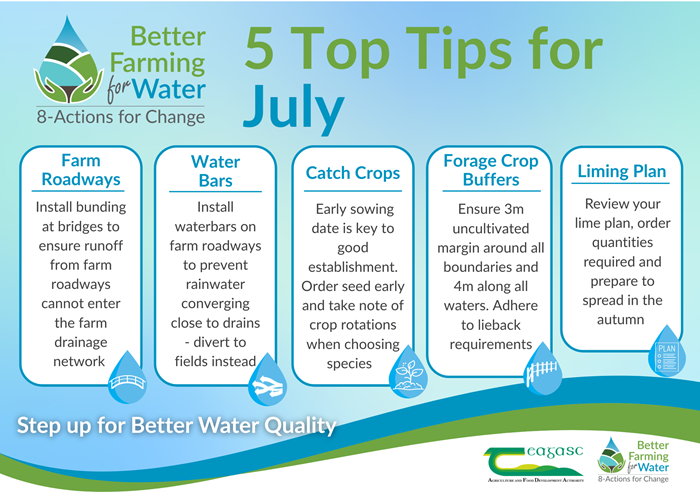
From the correct management of catch and forage crops to liming and farm roadway maintenance, the Teagasc Better Farming for Water Campaign shares 5 top tips to protect water quality on your farm this July.
Protecting water quality is ever important for farmers, not only to meet environmental requirements but also to safeguard the long-term productivity and sustainability of their land. Small changes in farm management can make a significant difference in reducing nutrient losses and protecting local waterways. This July, farmers should focus on five key actions that can help improve water quality while maintaining efficient farm operations.
1). Establish catch crops early
Catch crops are an effective way to reduce nutrient losses from tillage fields post-harvest. Fast growing catch crops can ‘mop up’ residual nitrogen left in the soil after the main crop has been harvested. They also provide valuable cover to soils over the winter, protecting them from being washed into rivers, streams and groundwater during periods of heavy rainfall.
Early sowing is essential to ensure good crop establishment and maximum nutrient uptake. Farmers should order seed in good time and carefully consider crop rotation requirements when selecting suitable species. Well-established catch crops can deliver both environmental and soil health benefits.
2). Maintain forage crop buffers
When grazing forage crops in situ, it is important to be aware of the required buffer margins to be maintained. These buffer strips act as natural filters, slowing surface runoff and trapping nutrients before they can enter drains, streams or rivers.
An uncultivated margin of at least three metres around field boundaries and four metres alongside all waterbodies is required (late-harvested crops such as beet, maize and potatoes require a 6m buffer).
Lieback areas are required where these catch crops are to be grazed in-situ. Speak to your advisor prior to sowing to ensure you are compliant with all requirements.
3). Review your liming plan
Correct soil pH is fundamental to efficient nutrient use. Fields with low pH often require more fertiliser to achieve the same level of production, increasing costs to the farmer and also the risk of nutrient losses to water.
July is an ideal time to review soil test results, assess lime requirements and plan autumn applications. Ordering lime early can help avoid supply issues later in the season.
By maintaining optimum soil pH, farmers can improve nutrient availability, reduce fertiliser waste and support healthier crop growth while minimising environmental impacts.
4). Prevent runoff from farm roadways
Farm roadways are in full use at the minute on most farms and consequently can become a significant source of runoff, particularly during periods of heavy rainfall.
Water flowing along road surfaces can carry sediment, nutrients and organic matter directly into drainage systems and nearby watercourses.
Installing bunding at bridge crossings and other critical locations can help prevent runoff from entering the farm drainage network. Redirecting this water away from drains and into suitable vegetated areas allows natural filtration to occur, reducing the risk of water pollution.
5). Install water bars on roadways
Water bars are a simple but highly effective tool for managing rainfall on farm roadways. They intercept and divert runoff before it can concentrate and flow towards drains or watercourses.
Properly installed water bars channel water into adjacent fields where it can infiltrate into the soil naturally. This reduces erosion, protects roadway surfaces and prevents contaminated runoff from reaching nearby streams and rivers.
By implementing these five practical measures, farmers can play a vital role in protecting water quality while improving the efficiency and sustainability of their farming systems. Small actions taken today can deliver lasting benefits for both the farm and the wider environment.
For more on the Teagasc Better Farming for Water Campaign, visit here.