
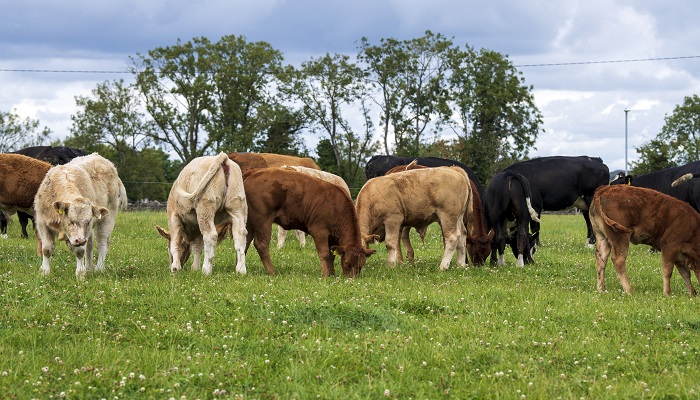
Maintaining grass quality has become a huge challenge in recent weeks, writes Teagasc Beef Specialist, Catherine Egan who shares practical tips on getting grass quality back in check.
As you drive around the country, it is evident maintaining grass quality on farms has become a huge challenge in recent weeks. In many cases, sward stem content has increased, rotation length is extended to graze out paddocks and grass covers stock are going into are on the increase. It’s a vicious circle.
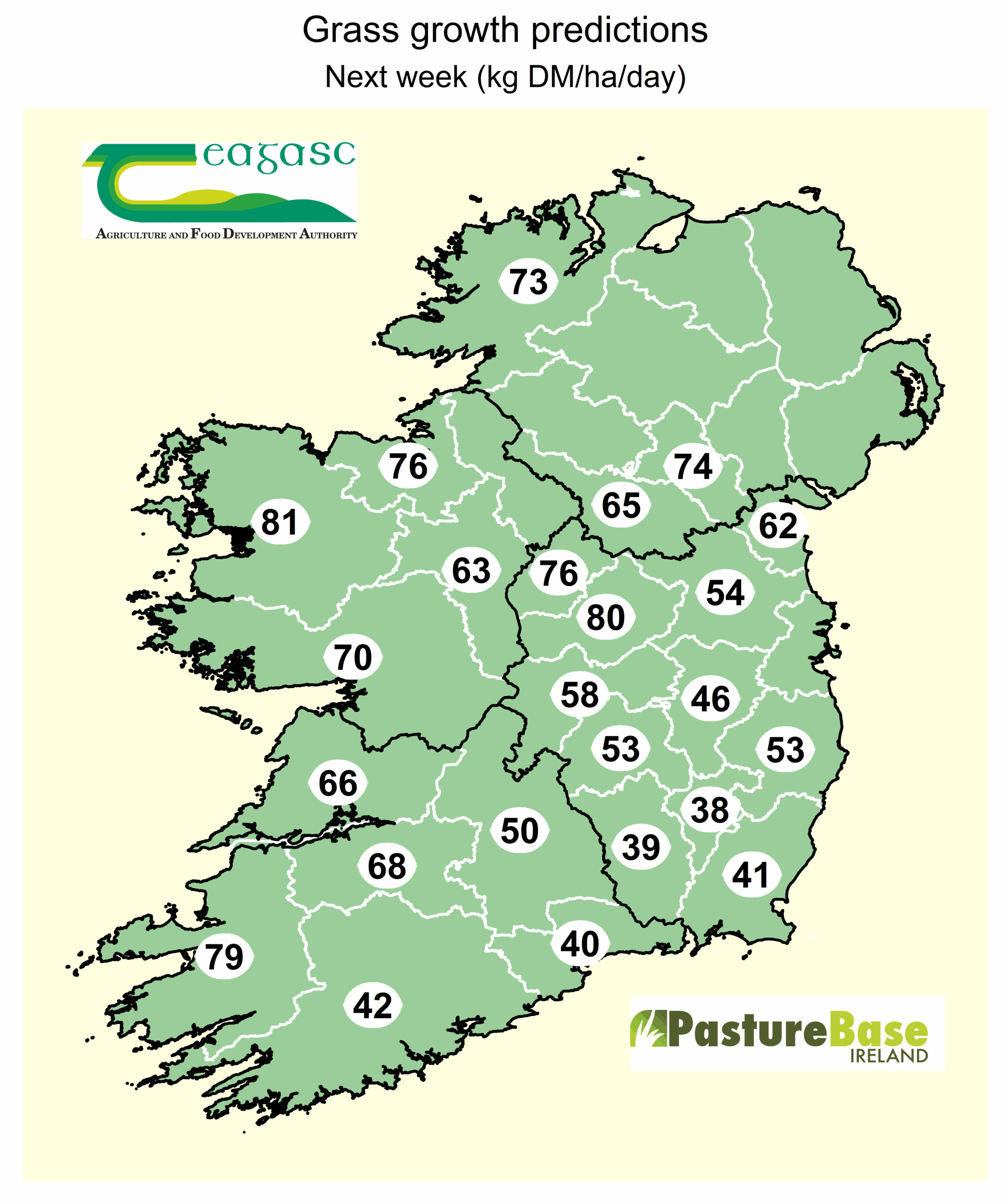
As part of its weekly newsletter, published each week, the Grass10 team present current grass growth rates and predicted grass growth rates for the week ahead. See this week’s figures below.
Figure 1: Current grass growth as record on PastureBase Ireland farms (week of July 8)
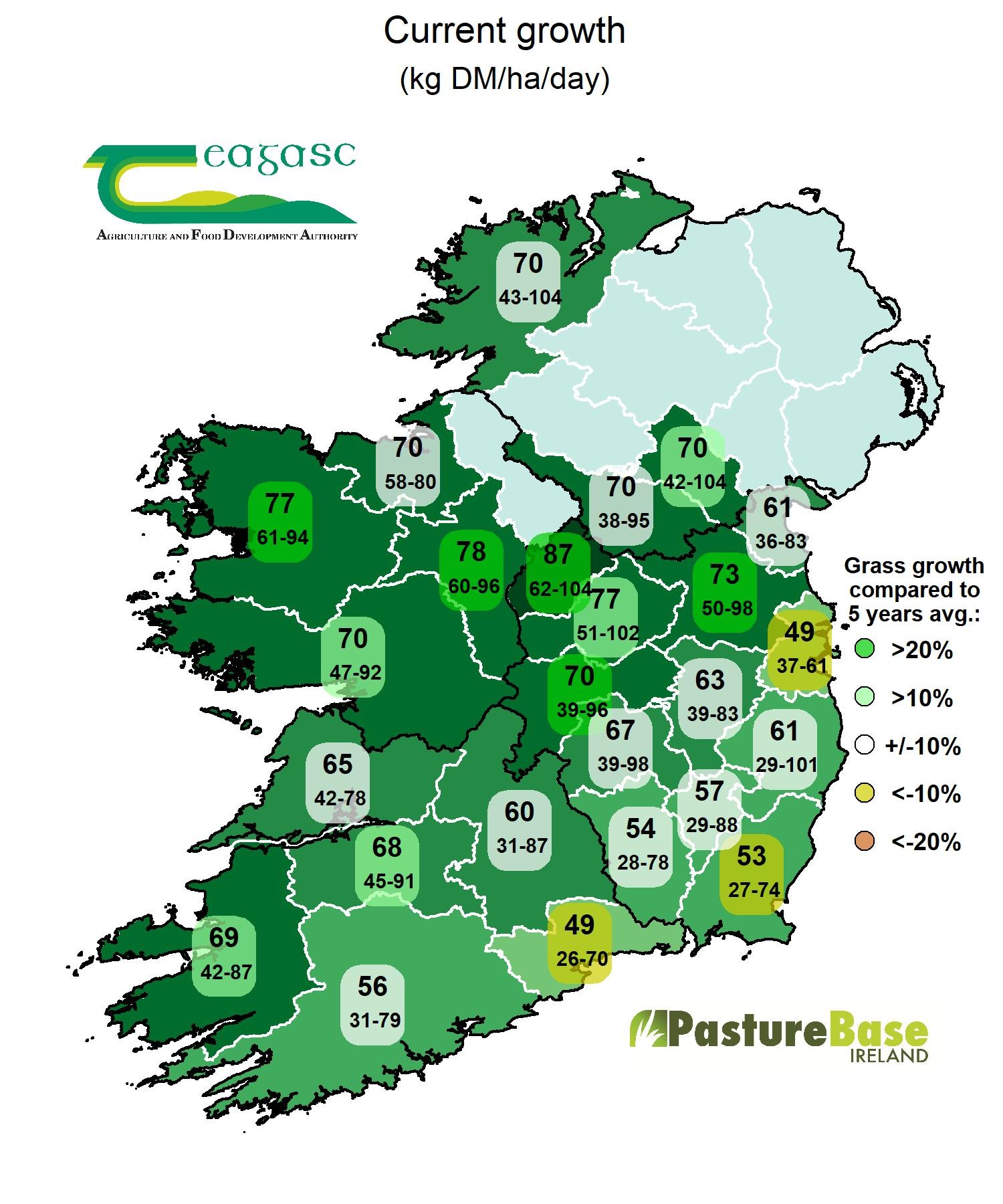
Figure 2: Predicted grass growth rates for the week ahead as published by the Grass10 team
According to Grass10 analysis of farmers measuring grass on Pasturebase Ireland, 49% of all farms are in a grass surplus this week and pre-grazing yield is on the high side (1,514kg DM/ha). This is having a knock-on effect, reducing animal performance and resulting in poorer clean outs. This will also impact future grazing rotations.
So, what can be done now?
1). Walk the farm – assess what grass is currently available
Review stock numbers on the farm. Assess what is the demand for grass now based on what’s available and stock demand, can surplus paddocks be removed?
2). How long are cattle spending in fields/paddocks
If the intended 3 days grazing has increased to 5 days or in some cases 5 days grazing has increased to 7 days, this is going to have an impact on regrowth and animal performance. Action can be taken to use temporary reels to sub divide paddocks to ensure reduced time spent in paddocks grazing. Alternatively, at this stage of the year, can the number of grazing groups be reduced? This would result in a larger group helping increase grazing demand, thus allowing paddocks to be grazed in 3 days.
3). Dealing with stem content
Due to high stem content on some farms currently, topping may be needed to remove excess stemmy grass. Top the sward down to under 4-5cm. Where possible, removing surpluses as bales will reduce the need for topping.
4). Grass quality for the remainder of the season
The other focus is to ensure that grass quality is corrected for the rest of the grazing season, particularly before we start building covers into the autumn. Depending on farm demand, the nutrient management plan should be reviewed to know how much is left to be applied and this should be allocated accordingly.
5). Organic manures
Other options, such as slurry and farmyard manure, should be assessed. Make a plan for these organic manures now. Additionally, review your nutrient management plan, there may be a possibility – if required – to apply lime on paddocks in the coming weeks.
For more tips and advice on grassland management, visit here.
More from Teagasc Daily: Protected urea continues to deliver across multiple sites