
5 tips for better stock bull management
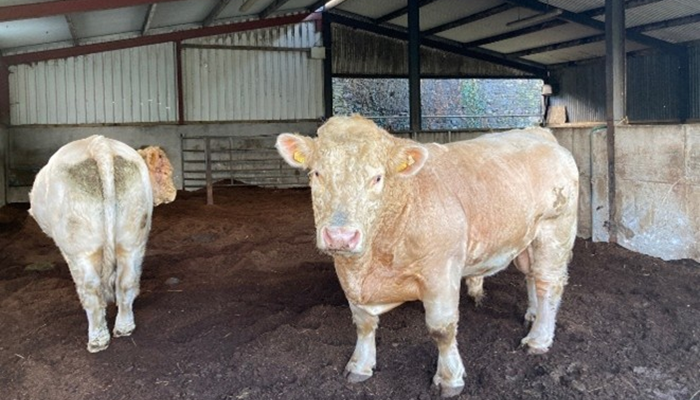
Winter is a critical time for beef stock bulls, writes Future Beef Programme Advisor, James Mullane who shares five key tips for better stock bull management over the winter period.
While increasing the use of artificial insemination (AI) in suckler herds is always encouraged, stock bulls sire the majority of calves on suckler farms, making them a vital component of the breeding season.
The stock bull is often the most valuable animal on suckler farms. However, he is often overlooked during the winter housing period, with priority given to finishing cattle, weanlings and cows.
Winter is a critical time for beef stock bulls, as breeding performance in the spring depends on a bull’s body condition, fertility and fitness after winter. Therefore, careful management during the housed period is essential. Poor winter management can lead to poorer semen quality, lameness or reduced ability to serve cows, all of which have major financial consequences. Outlined are 5 tips for managing stock bulls during the housed period:
1). Body condition management and nutrition
Bulls should not enter the winter period overfat or under conditioned. Bulls need to be kept lean and in fit condition as overfat bulls are prone to lameness, reduced libido and lower fertility. On the flip side, poorly conditioned bulls may struggle to gain weight over the housing period with negative knock-on effects for the next breeding season. It is important therefore to assess body condition regularly and adjust the diet to avoid large condition swings.
For mature bulls, the focus should be to maintain condition rather than push growth, so 69% DMD silage would suffice. For younger bulls, better quality silage should be fed plus additional concentrates depending on body condition in order to promote skeletal growth.
As winter moves on, the bull can have body condition built up in preparation for the breeding season by introducing concentrates around February or March. Avoid feeding high starch diets that could cause laminitis. A balanced mineral bucket or powdered mineral should be fed and should contain selenium, zinc, copper and vitamin E, as these trace elements and vitamins support semen quality and hoof integrity as well as boosting the immune system.
Bulls require constant access to clean water daily and troughs should be protected by guard rails to prevent damage by neck scratching etc.
2). Housing and space requirements for the stock bull
Bulls require a spacious, well-ventilated house for exercise and to reduce respiratory disease risk. Given that stock bulls can weigh anywhere from 800kg to 1,100kg, careful consideration needs to be given to both space allocation and floor type/bedding material. Using the rule of thumb of 1m2 per 200kg body weight, an 800kg younger stock bull requires 4m2 lying space versus 5.5m2 for an 1,100kg mature bull. Calving pens are often used on farms and sometimes they can be too small, reducing the bull’s exercise. Bulls need exercise to keep them correct on their legs and feet.
A single space locking barrier could be provided to allow for handling of the bull over the housed period or for retaining the animal while pens are being cleaned out and bedded. Bulls should be handled as little as possible but assessed safely when needed.
The bedding material for the floor is also an important consideration due to the weight of stock bulls. Prolonged standing on concrete floors in a confined space can create issues with feet. A deep dry bedded floor with straw will help prevent hock lesions, improve comfort and reduce slipping. Providing a concrete surface alongside a straw bed or rubber mattress will help wear down hoof claws and prevent overgrowth.
Also, when deciding on where to house the stock bull, avoid housing the bull next to maiden heifers or empty cows as these animals will be coming into heat regularly and may lead to more aggressive behaviour. Avoid housing bulls with in-calf cows as this could lead to injuries to heavily pregnant cows, but there is also a safety issue around calving time when drafting out cows for calving etc. There is also the issue with the feed barrier division being too narrow for a bull’s head to feed.
3). Health Management
The stock bull should be included in the overall herd health plan. Keep up with vaccination protocols for IBR, BVD, Leptospirosis and clostridial vaccinations. Ensure boosters are given before the bull joins breeding females. For parasite control, treat for internal parasites as required based on herd history and faecal testing results. Lungworm monitoring is important for young bulls. Bulls should also be treated for external parasites such as lice.
Regularly inspect bull’s hoofs for signs of overgrowth, infection and lameness and trim feet if necessary 2-3 months before breeding. The winter period might also be a good time to schedule a bull for a fertility test, especially if there were any concerns with regards to his fertility in the previous season. Your veterinarian surgeon can test for semen quality and check scrotal circumference and structural and hoof soundness.
4). Preparing the stock bull for the breeding season
Six weeks before the breeding season, increase concentrate feeding slightly in order to boost energy reserves. It’s also good practice to re-check hooves, body condition and overall fitness. Semen test results should be reviewed if available and any issues should be addressed early.
Two weeks before the breeding season carry out any final health checks.
5). Safety with bulls
Always keep safety in mind when housing bulls in isolation from other animals. Winter confinement can increase aggression in some bulls. Maintain consistent handling routines. It is important to never trust a bull and always have escape routes planned and work behind barriers where possible.
James Mullane is an Advisor on the Teagasc Future Beef Programme.
More from Teagasc Daily: Getting winter ready on the Kingston farm
More from Teagasc Daily: Labour savings: Small changes can make a big difference
More from Teagasc Daily: Considerations for grazing forage crops this winter