
6 reasons suckler farmers should consider heat synchronisation

09 April 2025 6 reasons suckler farmers should consider heat synchronisation Manager of the Teagasc Future Beef Programme, Martina Harrington takes a closer look at heat synchronisation, a potential tool to increase the usage of artificial insemination (AI) in suckler beef herds. In Ireland, less than 20% of calves in beef herds are bred […]
09 April 2025
6 reasons suckler farmers should consider heat synchronisation

Manager of the Teagasc Future Beef Programme, Martina Harrington takes a closer look at heat synchronisation, a potential tool to increase the usage of artificial insemination (AI) in suckler beef herds.
In Ireland, less than 20% of calves in beef herds are bred through AI. Despite the clear benefits of AI, such low usage is often due to the difficulty and labour-intensive nature of heat detection, assembling cows for insemination and the issue of land fragmentation. However, a solution is available that can simplify this process and help farmers improve efficiency – synchronisation.
What is heat synchronisation?
Heat synchronisation is a process that uses synthetic hormones to manipulate the heat (oestrous) cycle of cows, ensuring that they all come into heat at the same time. This allows for better planning and management of the timing of breeding, along with a significant reduction in labour, thus allowing for more efficient AI to take place.
Why should farmers consider synchronisation?
1). Labour efficiency
With synchronisation, farmers can plan breeding dates to fit the farm’s labour availability, reducing the strain of constant heat detection.
2). Timed AI
All cows can be bred on a predetermined day, regardless of whether they show heat naturally. This eliminates the need for individual heat detection for every cow. However, conception rate maybe slightly lower.
3). Inducing heat in anoestrous cows
Synchronisation can also induce heat in cows that have not yet resumed normal heat cycles. While the conception rate in these cows may be slightly lower, subsequent heats typically result in normal fertility.
4). Improved breeding programme
By increasing AI use, farmers can implement a more targeted breeding policy. This allows them to use bulls of higher genetic merit and achieve better quality offspring.
5). Shortened breeding season
Synchronisation helps shorten the breeding season, resulting in a more compact calving season. This can lead to a more predictable cash flow and a better-managed herd.
6). Reduced need for natural service bulls
For larger herds, synchronisation reduces the need for multiple natural service bulls, lowering the associated costs while improving the overall quality of the herd.
How does synchronisation work?
To ensure synchronisation is effective in Irish suckler beef herds, Teagasc conducted an extensive trial across 85 herds, involving over 2,200 cows. The results showed that synchronisation can achieve a pregnancy rate of 55% to timed insemination, with 80% of synchronised cows pregnant within the first three weeks of the breeding season. This is a significant improvement for herd fertility and calving interval.
The recommended synchronisation regimen for beef cows at least 35 days calved involves several key steps, such as the insertion of a progesterone device and the administration of synthetic hormones at precise intervals. The timing of insemination is critical, and careful heat detection is necessary to ensure the highest conception rates. (See table 1)
Table 1: Recommended synchronisation regime for beef cows ≥35 days calved at time of treatment
| Day | Action |
|---|---|
| Day 0, am
(Monday) |
Progesterone device insertion + GnRH at insertion |
| Day 7, am
(Monday) |
Progesterone device removal + prostaglandin + 400 iu eCG (also known as PMSG) i.m. at time of removal (Ideally tail paint cows or affix heat detection patches to cows |
| Day 8
(Wednesday) |
Cows will start to show standing heats late pm and through the night. Record cows in heat and active |
| Day 9
(Thursday) |
Most heats expected. Inseminate all cows observed in heat in the evening of Day 9 and on Day 10. Heat check cows and record all cows active or in heat (if required). Alternatively, inseminate all cows at 72 hours following progesterone insert removal and administer GnRH to cows not yet observed in heat |
| Day 10
(Friday) |
Continue heat detection and inseminate cows observed in heat. Alternatively, inseminate all cows not observed in heat at 72 hours post Progesterone device removal and administer GnRH to these cows at time of insemination. If heat detection is not possible, all treated cows can be inseminated |
Table notes:
- All drugs are Prescription Only Medicines (POMs) and are under veterinary control.
- Dosage of drugs: will vary according to drug and drug formulation.
- Inadvertent administration of prostaglandin to a cow/heifer during the first 3-4 months of pregnancy will cause abortion.
Key points for successful synchronisation
- Cows should be in a moderate body condition score (BCS) of 2.5 to 3.0 at the time of treatment and must be on a good plane of nutrition, particularly a plentiful supply of grass, for at least 3-4 weeks prior to treatment.
- Heat detection skills are crucial: Successful synchronisation requires good heat detection practices to ensure that cows in heat are inseminated at the right time. If this is not feasible, a bull can be used in the herd to serve cows after the initial insemination.
- Fertility of semen and competence of the inseminator: For best results, high-quality semen should be used, and the inseminator must be highly skilled to ensure the proper deposition of semen in the uterus.
Synchronisation for replacement heifers
For replacement heifers, a prostaglandin-based regimen is typically used (Figure1 or table 2). This method is cost-effective and works well for ensuring that heifers are bred at the right time in their first breeding season. The key is to detect heat for six days, inseminate those in heat, and treat non-responders with prostaglandin. This ensures that 80% of heifers are successfully bred.
Figure 1: Alternative prostaglandin-based regimen for replacement heifers
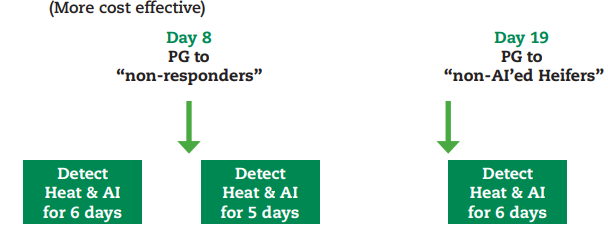
Table 2: Alternative prostaglandin-based regimen for replacement heifers
| Monday – Monday | Tuesday | Thursday – Saturday | Saturday | Monday | |
|---|---|---|---|---|---|
| Day 0-7 | Day 8 | Day 10-12 |
Day 19 | Day 21 | |
| Detect heat and inseminate as normal | Inject heifers not seen in heat with PG | Detect heat and inseminate for five days | Heifer should respond to PG injection in 2-4 days | Inject all heifers not seen in heat or inseminated already | Detect heat and inseminate for 6 days |
| Conception rates of 65-70% expected | 80% of heifers should respond to either or injections | ||||
| Inject Prostaglandin (PG) | Inject Prostaglandin (PG) | Fixed time AI 72 and 96 hours | |||
It’s crucial that replacement heifers are well-grown (typically 350-400 kg depending on breed) and are regularly cyclic. The use of easy-calving sires is recommended to reduce calving difficulties, which can be more common in heifers than in mature cows.
For more detailed information or to explore heat synchronisation further, contact your local Teagasc advisor or Oestrous Synchronisation or Timed Insemination.
The latest technologies and how to use them properly
In advance of the suckler breeding season, the Teagasc Future Beef team hosted a series of webinars as part of its ‘A Farmer’s Guide to Suckler Breeding’ Series.
‘The Latest Technologies and How to Use Them Properly’ webinar, which was chaired by Aisling Molloy, Teagasc Future Beef Advisor, covered topics such as synchronisation in cattle breeding, sexed semen, embryo transfer, and a real-world experience with AI and synchronisation.
What was discussed:
- Synchronisation in Cattle Breeding – Why use synchronisation? The benefits, animal selection, timing, procedures, costs, and success rates were discussed by Professor David Kenny, Head of Animal & Bioscience Department, Teagasc.
- Sexed Semen – Should you reduce the number of heifers bred or maximise the number of bulls? The facts on optimising your breeding strategy were discussed.
- Embryo Transfer – What is embryo transfer? The pros, cons, pitfalls and costs were detailed by expert Daire Markham from Embryos Ireland.
- Real-World Experience with AI and Synchronisation – Billy Fraher, Teagasc Kildalton Technician, shared his 20+ years of experience in AI, synchronisation and sexed semen usage at Kildalton College and his own farm.