
6 steps to good navel care in calves
10 February 2025 6 steps to good navel care in calves The Teagasc Future Beef team have complied six steps for good navel care in calves. By following these steps, you can significantly reduce the incidence of navel ill in calves, ensuring healthier livestock and a more successful calving season. While in the womb, […]
10 February 2025
6 steps to good navel care in calves
The Teagasc Future Beef team have complied six steps for good navel care in calves. By following these steps, you can significantly reduce the incidence of navel ill in calves, ensuring healthier livestock and a more successful calving season.
While in the womb, the umbilical cord is the vital link providing nutrition from the mother to the foetus. However, once the calf is born and on the ground the navel is probably its greatest threat. The navel is a gateway for bacteria and disease that exist in the calf’s environment to enter the calf’s body. From there, it can enter the bloodstream and spread throughout the body.
The fact calves are born without a developed immune system does not help. They depend on getting the antibodies provided in their mother’s colostrum to fight off infection until they start to develop their own immune system at 3-4 weeks of age. Therefore, to avoid navel ill in calves we have to reduce the chance of the navel being infected while also ensuring the calf gets enough colostrum packed full of antibodies to help it fight of infection. So hygiene and colostrum management are key.
1). Clean housing
The calf’s environment needs to be as clean and dry as possible. From the calving pen where the calf spends the first couple of hours of life, to the loose house/lie back area to slats, anywhere the calf has access to needs to be clean.
- Calving pens: Clean between each calving, apply lime and use ample straw bedding.
- Loose housing/slatted areas: Regularly lime and maintain cleanliness to prevent the build-up of harmful bacteria.
- Bedding: Ensure bedding is dry and replenished frequently to create a hygienic lying area.
2). Clean cows
A dirty cow increases the risk of contamination for newborn calves.
- Trim tails and flanks of dirty cows 2–3 weeks before calving. When your calf starts to suck you don’t want it to suck in dirt.
- Move cows to clean calving pens 2–3 days before calving to allow them to shed dirt.
- Housing hygiene: Keep slatted and straw-bedded areas clean and dry to reduce exposure to pathogens.
3). Clean farmer
Farmers play a significant role in controlling infections during calf handling.
- Wear clean overalls or disposable clothing.
- Wash hands thoroughly or wear disposable gloves when handling navels.
- Disinfect equipment and materials used during calving.
4). Navel dipping/spraying
Navel dips serve two primary purposes:
- Disinfecting the navel.
- Promoting the drying and healing of the umbilical cord.
Apply the dip within 15 minutes of birth and, ideally, again 1-2 hours later. Ensure thorough coverage of the navel, especially at the severed end of the cord. The aim is to encourage the navel to dry and close quickly, preventing infection.
Products
Iodine (7-10%) or Chlorhexidine are both effective if stored and applied correctly. Containers should remain sealed and free of contamination. If one product proves ineffective, consider switching to the other.
Dip vs Spray
- Both methods work effectively if used properly. Ensure full coverage of the navel from the cord’s end to the belly and use ample product.
- Dips may risk contamination if the same container is reused without proper cleaning. Disposable cups or non-return teat dip cups can minimise this risk.
- Sprays often miss parts of the cord or use insufficient product. Always ensure comprehensive coverage.
If you do find one is not working change to the other. Some may find cows licking the navel when iodine is used and be fearful she will damage the calf, if this is the case, switch to the chlorhexidine and check your cows to see if you have an iodine deficiency.
5). Colostrum
A calf’s immune system at birth is underdeveloped, and it relies on its mother’s colostrum for antibodies to fight infections.
For effective protection:
- Ensure colostrum quality is high.
- Feed the calf two-three litres of colostrum within two hours of birth.
Timing
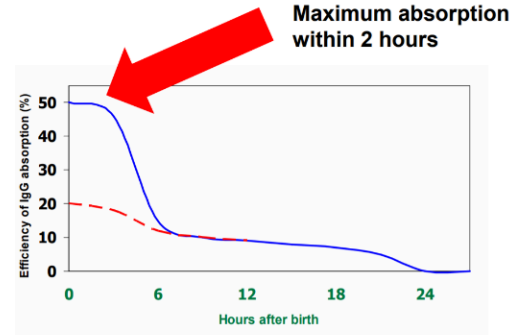
The gut lining is most porous in the first two hours of life, allowing antibodies to pass through. This permeability sharply declines after six hours and closes entirely within 24 hours. As the cow produces more milk, the concentration of antibodies in the colostrum decreases. Adhering to the 1-2-3 rule of colostrum (“1” within “2” hours, “3” litres) is essential. Hygiene during feeding is also critical to minimise bacterial exposure.
Pro tip: Remember, if the lining is porous to allow the antibodies through, bacteria can also pass through, so again hygiene is key here to reduce the build-up of bugs in the calf’s environment.
Figure 1: How soon should colostrum be fed?
6). Monitoring
It is hard to see if you have an issue with navel ill without handling the calf. While being safe, using a clean hand check the navel. See if it is painful to touch, if it is enlarged or if there is pus coming from it, if so, you have an issue.
Treatment is usually a 5-7 day course of penicillin but you will need to talk to your vet. The extent of your issue will depend on if you have one calf or several calves with navel ill and at what stage of the calving season you are. You will then have to assess the hygiene in your shed and your colostrum management with your vet or advisor.
The above was prepared as part of a series of technical updates by the Future Beef Programme to prepare suckler farmers for the upcoming calving season.
Other factsheets updates include: Colostrum quality for calves and preventing scour in newborn calves.
Click here to access the full suite of factsheets from the Future Beef team.
Also read: Scour – limiting its impact