
24 May 2024
A Brief Look at Forestry in Argentina
Christian FitzGerald, Teagasc Forestry Advisor, discusses Argentina’s forestry resources, the extent of forest plantations and native forests, their economic significance, the potential for expansion and sustainability.
Argentina is a country rich in forest resources. It has 1.3 million hectares of forest plantations (0.44% of the world’s forest plantations) and almost 54 million hectares of native forests. At the same time, according to public and private estimates, it has at least 3.7 million hectares of land is deemed suitable to expand forest plantations while not affecting sites of high conservation value, nor compete with native forests or crops.
Forest timber extractions come from cultivated forests on the “Litoral”, where the provinces of Misiones, Corrientes and Entre Ríos account for 92% of commercial wood production. Forest production based on native tree species, meanwhile, is focused in the provinces of Chaco, Formosa and Santiago del Estero and to a lesser extent the east of Salta, which together concentrate 80% of native forest production.
Two-thirds of total wood production and 90% of processed roundwood production (with uses for wood products, pulp and paper) arise from forest plantations, which take pressure off native forests and enhance them as a source of biodiversity. Native forests make up the remaining third, 80% of native forests product focuses on firewood, charcoal and, to a lesser extent, on the extraction of tannins. The manufacture of furniture completes the uses of native wood for productive purposes.
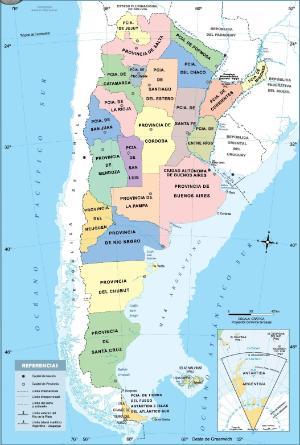
It is in Argentine Mesopotamia where the areas of highest commercial forest productivity are concentrated. These have harvest cycles of 9 to 15 years on average (while in the northern hemisphere countries, this average is between 30 to 45 years).. Introduced species of pine and eucalyptus predominate the forests of this area, given the growth rates and commercial demand they present, which are much higher than those of the native species. The characteristics of these introduced species such as good fibre quality and homogenous stands, among others, make them the best choice to grow.
All this resource, with its favourable growth conditions, positions the country as a potential competitor in the international forest-based market, not in a leading role but with prospects in market segments that present opportunities. Analysis by the Food and Agriculture Organization (FAO) of the United Nations and private sources agree that there will be a growing demand for forest-based commercial products in the coming years, with growth prospects of 37% by 2050 in terms of volume of wood products:
- Wooden panels, construction panels and elements of construction systems made of wood, sawn wood and cellulose will lead this process, driven by the growth of the urban population.
- The expansion of online commerce that will require more paper-based packaging and;
- Climate change mitigation and sustainability measures that promote the substitution of carbon-intensive and non-renewable products will encourage this growth.
In this sense, the FAO points out that, compared to other products made from non-renewable materials or that produce high emissions; products of forest origin have significantly fewer carbon emissions of greenhouse gases throughout their entire life cycles. For every kilogram of carbon from wood products used in construction to replace non-wood products, on average around 0.9 kg of carbon emissions are avoided (FAO, 2022b).
Likewise, just as the demand for traditional forest-based products (sawn wood, boards, biofuels – chips and pellets – cellulose and paper) will increase, so will the demand for developing markets, such as those for lignin derivatives, applications to carbon fiber, nanocellulose, biotextiles and nanomedicine. The key in these segments is to progress in technical complexity and technological development to position the industry in the global market.
About 75% of all annual commercial roundwood production is processed in the northern and “Litoral” provinces mentioned above. Another 18% is processed in the province of Buenos Aires.
Approximately 70% of annual commercial roundwood production goes to the sawmill sector (10.6 million cubic metres (m3)) and 26% (3.9 million m3) to the pulp and paper sector (National Directorate of Industrial Forest Development, 2022).
The processed solid wood segment currently produces around 4 million m3 of product, of which approximately 75% is sawn wood and 25% is wood panels.
The potential of the Argentine forestry-industrial value chain is beyond question, but economic stability and a coherent forestry strategy are key elements required to encourage investments and encourage a progressive forest sector.
References
- FAO (2021a). Evaluación de los recursos forestales mundiales 2020 – Informe principal.
- FAO (2021b). Pulp and paper capacities, survey 2020–2025. https://doi.org/10.4060/cb7300t
- FAO (2022a). Global forest sector outlook 2050: Assessing future demand and sources of timber for a sustainable economy. Documento de trabajo Nº 31.
- Mora Alfonsín, L. (2023). La foresto-industria en Argentina. Oportunidades, desafíos y líneas de acción para una estrategia productiva sectorial. Documentos del Plan Argentina Productiva 2030, Nº38, febrero, 2023