
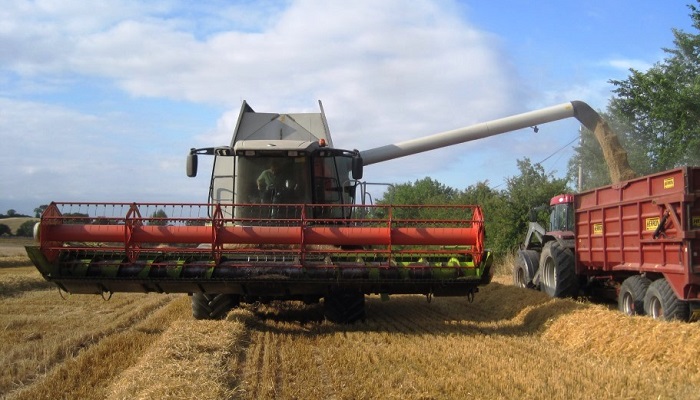
With the spring cereal harvest underway, organic tillage farmers are being encouraged to consider the advantages of saving their own seed, Organic Tillage Specialist at Teagasc, Martin Bourke tells us more.
While most varieties grown in Ireland come from the official Recommended List, these selections are often tailored to conventional farming systems. For organic tillage farmers, this can limit options, especially for crops like peas, where traits such as straw strength are critical to ensure a successful harvest.
Instead of paying a premium for organically certified seed, where suitable crops and conditions allow, farmers can save their own seed and pay royalties if they identify varieties that suit their farming system, land type and location. It may prove a good financial decision rather than spending €1,000-1,500/t on organically certified seed.
Home-saving seed can also be a valuable risk management strategy. Organic cereal and legume seed production depends heavily on successful harvests, which can be jeopardised by unpredictable weather. This risk was evident during the 2025 cropping season, when poor weather in 2024 led to challenges in seed availability.
Getting set up for home-saved seed starts with having the right machinery and building infrastructure on the farm. A reliable combine or contractor and grain handling setup are key to bringing in crops dry enough to store safely for next season’s sowing. On-farm seed cleaning equipment is also essential to remove weed seeds and reduce the risk of spreading problem weeds within fields, helping to maintain both crop purity and farm biosecurity.
That said, certified seed has many advantages – it comes with guaranteed varietal purity, high germination rates, and freedom from troublesome weed seeds. It also gives growers access to the latest varieties, with ongoing improvements from plant breeders in traits such as yield, disease resistance and standing power. Even if you mainly use home-saved seed, regularly introducing newer certified varieties can help keep your crops competitive and your farm resilient.
The importance of rotations
Organic cereal growers also need to start planning rotations for the winter and spring cropping seasons ahead. Like conventional tillage systems, rotations are critically important in organic farming systems.
Diversity in crop rotations supports better disease control and soil health. One such benefit is being able to establish cover crops early after winter crops – allowing for greater soil nitrogen capture and the incorporation of organic matter back into the soil when establishing subsequent crops.
Additionally, where spring crops are continuously sown, the opportunity for weed control may become limited. Primarily occurring as many of the tillage weeds associated with organic farming are spring germinating. Adding a winter crop into the rotation mix offers the opportunity to control weeds.
One such winter cropping option might be winter barley. However, until recently, winter barley was often a less preferred crop due to Barley Yellow Dwarf Virus (BYDV). Investment by seed companies in breeding varieties more tolerant to this aphid-vectored disease means winter barley could play an important role in organic farming systems in the future.
In terms of area, oats have been the most widely sown organic cereal crop, primarily driven by leading buyers in the human-grade market. However, with the increase in organic tillage farmers and the resulting demand for high-energy winter feed, organic barley could be one crop to meet this market need.