
17 November 2022
A day in the life of a Walsh Scholar with Ali Sultan Khan
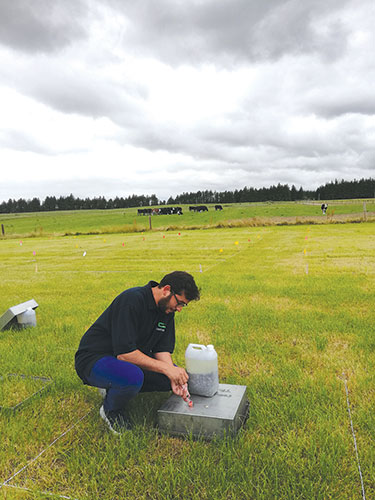
Ali is from Islamabad, Pakistan, where he completed a Bachelor of Science with agronomy majors at Pir Mehr Ali Shah Arid Agriculture University. During the Covid-19 pandemic, Ali started a PhD at Teagasc Johnstown Castle Environment Research Centre.
I was born in Islamabad, Pakistan and did my initial schooling from Islamabad Model College for Boys, F-7/3. For my higher education, I did my bachelors of agriculture with agronomy majors in Pir Mehr Ali Shah Arid Agriculture University, Rawalpindi. During my bachelors, I did my internship with Crop sciences Institute of National Agriculture research centre, Islamabad. Soon after my bachelors, I got a scholarship for a Master’s degree from Kyungpook National University, South Korea. I worked as a research assistant with my master’s studies and worked on several projects ranging from grazing grasslands to ruminal methane emissions from goats. During the COVID pandemic, I got the opportunity to do my PhD with Teagasc in Johnstown Castle as a Teagasc Walsh Scholar, where I am working on “Environmental and Economic sustainability of biogas/bio methane production in Ireland through anaerobic digestion of slurry and various grass feed stocks”. Moreover, I have a keen interest in ruminant nutrition, so I am also working on some side projects related to “methane reduction potential of multi-species swards”.
What made you decide to undertake a PhD?
Coming from one of the most hardly hit countries by climate change, I always had interest in climate change.
Teagasc’s tremendous previous and current research initiatives regrading climate change mitigation strategies attracted me to apply for this Walsh scholarship.
How did you find out about Teagasc and the Walsh Scholarship programme?
During my Master’s dissertation, I came across the research work from Teagasc and was closely following the current and future research projects in Teagasc.
What does your research focus on?
My work focuses on the sustainability of biogas and biomethane production in Ireland through anaerobic digestion of slurry and various grass feed stocks.
What does your typical day look like?
Since my childhood, I am an early morning person, so I usually wake-up around five or 6 AM and arrive in the office between eight to half past 8 in the morning. Between 8:30AM and 9 AM, I line-up all my tasks for the day priority and time-sensitivity wise. My main work is usually field-based, so normally I will be in the field from 10 AM to 12:30 AM. After that, I take a lunch and prayer break until 2 PM and then come back to office for desk-based work i.e., reading literature, writing, data analysis, planning for upcoming programs and events regarding research or knowledge transfer. I leave the office around 5 PM and on a good-weather day go for a walk at the beach or nearby hiking trails after dinner.
What do you enjoy most about doing a PhD? And least?
The thing I enjoy the most about doing the PhD is we get new challenges every day, and I like facing challenges and bringing out-of-the-box solutions on the table. The thing I enjoy the least about PhD is un-expected delays in the work caused by the factors not in my hands.
What are your future career goals?
After completing Ph.D. with Teagasc I’m quite hopeful that I’ll have better understanding of climate change and possible mitigation strategies and will be part of the research community working towards climate change mitigation, which will enable me to contribute my 10-cents in that research area.
What advice would you have for anyone considering a PhD?
Seek out as much information as you can
Develop time management skills as much as you can
Learn as much research skills you can and take advantage of training courses available
Where are you based while doing your Walsh Scholarship? Who are your supervisors and host organisations?
I am based in Teagasc Johnstown Castle, Co. Wexford. My teagasc supervisors are Dr. Dominika Krol and Dr. John Finn. My academic supervisor from University of Galway is Dr. Alexandre De Menezes.
Teagasc invites you to join us for an unmissable series of virtual and in-person events for Science Week 2022 as part of ‘The Festival of Farming and Food’ November 13-20, 2022.
The festival is an educational, inspiring and fun week, packed full of amazing science activities, experiences, talks and exhibitions, for children and grown-ups alike.
We’d love to hear from you. Be part of The Festival of Farming and Food journey on Social Media:
@Teagasc @ScienceWeek #FestFarmFood #ScienceWeek