
Lakeland Dairies Signpost farmer, Kieran McDermott tells us of his plans for soil sampling and the actions he’s taken to reduce cow lameness.
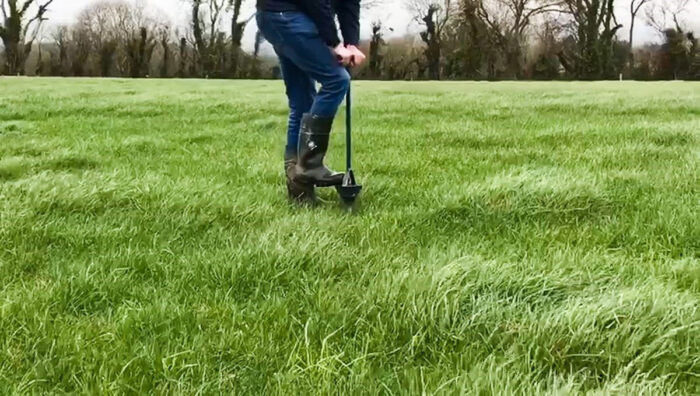
I have booked in to have the farm soil sampled this winter. It was two years since I got the last soil samples done. I like to sample the farm the same way my paddocks are mapped out. I will ask the soil sampler to take one sample per paddock on the milking block. The reason for this is I can see clearly what each paddock needs in terms of fertiliser and lime. It is easy to create a fertiliser map for the farm when I soil sample this way. I may be spending some extra money on soil samples, but I will be saving it on fertiliser in the long run. When the soil samples results are back, my advisor will create visual fertiliser plan for me that I can hang in the dairy. I find this very useful for myself and for my dad when we are spreading fertiliser on the farm or when we order lime.
Foot bathing cows and roadway improvements
Cows are in full time since the 31st of October. I closed the farm with a grass cover of 600 kg DM/ha. Once a week, I foot bath the cows morning and evening. This will be carried out until they will be dried off. I find the concrete is hard and even though I have scrapers, there is a still a level of dirt in the shed.
I find when I footbath once a week as a preventative, it does help eliminate the spread of Mortellaro. I bought a footbath specifically for the job. I know the exact amount of water it holds, and I put in the recommended solution for the size of the footbath. I change the solution after the morning milking, and I have a fresh solution made up for the evening milking. I would recommend anyone with lameness issues to invest in a good footbath for the cows. The farmer’s return on investment will be fewer lame cows and more milk in the tank.
I have done some maintenance work on the cow lanes. I am resurfacing some of the lanes with 804 stone. The cows tend to walk on the same part of the lane all year round and this tends to create a track that fills up with water. It is a job that can be done at ease this time of the year when the cows are in the shed.
The above was first published in the Farming Independent as part of a Signpost Programme update.