
A Teagasc Roadmap for Forestry
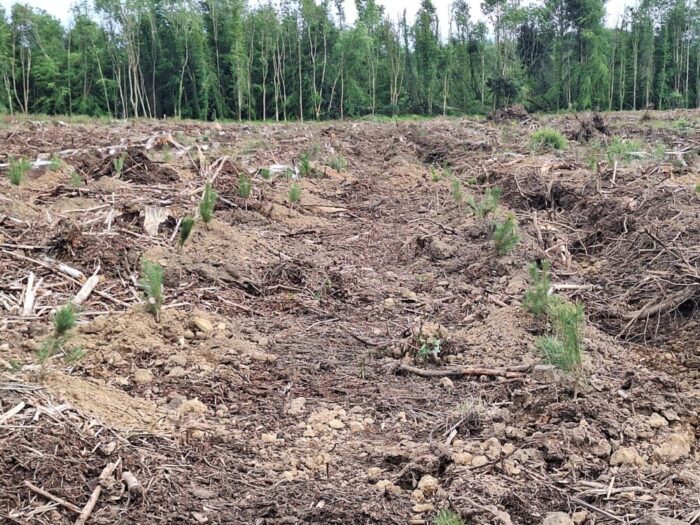
As part of its new series of recently published Enterprise Roadmaps, Teagasc has completed its Forestry Roadmap to 2030. This provides a ‘best estimate’ projection of where the forestry sector is heading based on the current mix of economic, social and policy drivers. The Teagasc Forestry Roadmap focuses on supporting key challenges and opportunities within the industry, Tom Houlihan of the Teagasc Forestry Development Department tells us more.
Current sector profile
The Teagasc Forestry Roadmap to 2030 describes the current sectoral profile within the Irish forestry sector which continues to evolve and represents an increasingly important resource for rural economies and at national level.
The national forestry area extends to an estimated 815,000 hectares (ha), representing 11.8% of the total land area, with an even distribution between public and private forest ownership.
Since 1980, over 24,200 individual private forest owners have accessed grant aid to establish their forests with 82% of the new forests established by farmers.
Results of a mid-term review of the current Forestry Programme 2023-2027 by the Department of Agriculture Food and the Marine (DAFM) are imminent. Work is now commencing on the development of the next Forestry Programme post 2027 and strategic input to which will also be key for the sector going forward.
Significant employment and job opportunities
The supply of sustainable raw materials for our timber industry provides the basis for significant employment and job opportunities with approximately 9,500 jobs created predominantly in rural areas. In terms of sectoral value, the 2024 Gross Value Added (GVA) of the Forestry and Logging sector at factor prices was €158.7 million while the equivalent value for the Wood and Wood Products sector was €540.0 million. Together, these sectors produced €699.2 million of GVA in 2024.
Key sectoral challenges
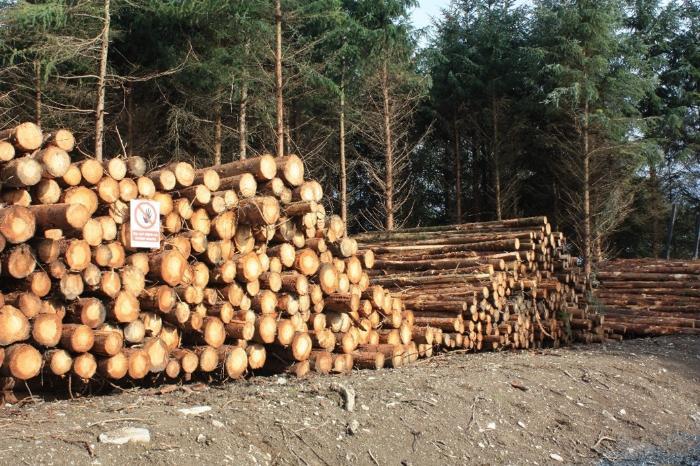
The Irish forest sector has seen some very significant challenges in recent years, including those posed by major storm events and ash dieback disease. Navigating such challenges requires increased focus and support on harvest planning, timber marketing, species selection and forest reconstitution. These challenges will continue to require ongoing support and collaborative efforts during 2026 and into 2027.
In line with Ireland’s Climate Action Plan 2025, an expanded and sustained afforestation programme of 8,000 ha or more per annum is necessary to improve the future sink capacity of the forest estate. The overall planting level of 2,527 ha (paid at first grant stage) in 2025, an increase of over 60% on 2024 levels represents welcome progress that will need to be significantly built upon in 2026 and future years.
Achieving forest potential
Amongst other challenges, the roadmap also identifies the need for active and sustainable management of existing forests to achieve their potential, appropriate timber mobilisation and support for private forest certification in order to meet future market and consumer demands. For example, it highlights the significant level of required certified timber (1.6 million cubic metres) to meet the key 70% threshold requirement by the processing sector by 2030.
Teagasc responses to forest sectoral challenges and opportunities
The roadmap outlines mechanisms where Teagasc will provide a very significant role in supporting the forest sector in meeting the challenges set out from now to 2030. It also highlights the importance of collaboration and provision of support for significant sectoral initiatives.
Through a targeted range of initiatives and supports, Teagasc will work towards improving forest productivity, competitiveness and resilience in the sector. Well planned and sustainably managed forests can provide a range of important co-benefits including carbon sequestration, protection of water quality and biodiversity.
Science-based knowledge
Teagasc will continue to leverage its capacity to provide science-based knowledge via forestry advisory, education and training to the sector, delivered through a range of forestry events and in collaborations with wider Teagasc activities and functions.
Advisory and knowledge sharing is supported by applied research across a range of key areas including forest carbon research, adaptation to climate change, forest protection, genetic conservation of tree species, tree improvement and breeding for disease resistance, conifer and broadleaf silviculture, continuous cover forestry approaches, agroforestry and agroecological practices.
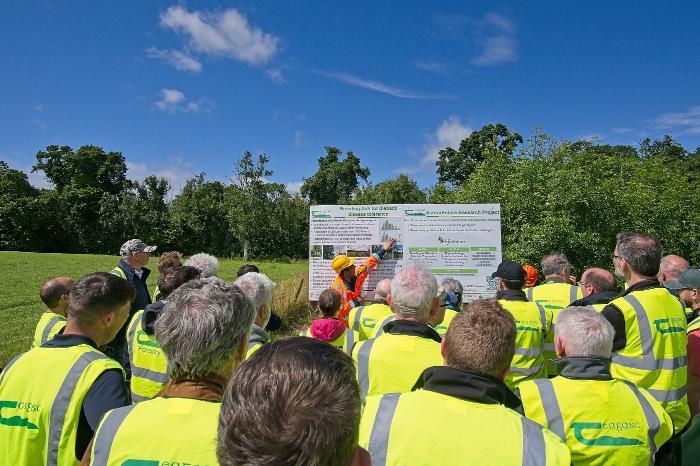
Teagasc will raise awareness, share knowledge on certification benefits, and promote and support initiatives to increase its availability and uptake. We will support the rollout of forestry support Department of Agriculture, Food and the Marine (DAFM) schemes such as iPLAN. The latter offers financial support to forest owners to prepare Forest Management Plans to enable easier access to forest certification. Teagasc will also support activities of the industry-led National Group Forest Certification Board in developing pathways and measure to scale up the area of private forests that are certified nationally.
Research
Teagasc research is investigating how climate change and land management impact carbon cycling and is building knowledge of carbon sequestration and greenhouse gas emissions in terms of afforestation, forest management and climate change.
Teagasc forestry will continue to share existing and emerging knowledge on forest carbon and support the development of emerging opportunities within carbon farming through direct stakeholder engagement and through supporting technologies such as the Forest Carbon Tool.
Collaborations
Teagasc will also continue to enhance capacity through very positive collaborations both nationally and internationally. The Horizon-funded FORADVISE project, for example, is working to build a strong network of forest advisory and knowledge sharing organisations and stakeholders both at national and EU level. It is currently working via thematic learning groups to support collaborative sharing of technical knowledge, good forest practice and advisory methods to support capacity building.
Further information on all aspects of forestry is available on the Teagasc Forestry webpage or via your local Teagasc forestry staff.