
13 September 2024
A twist in the tail
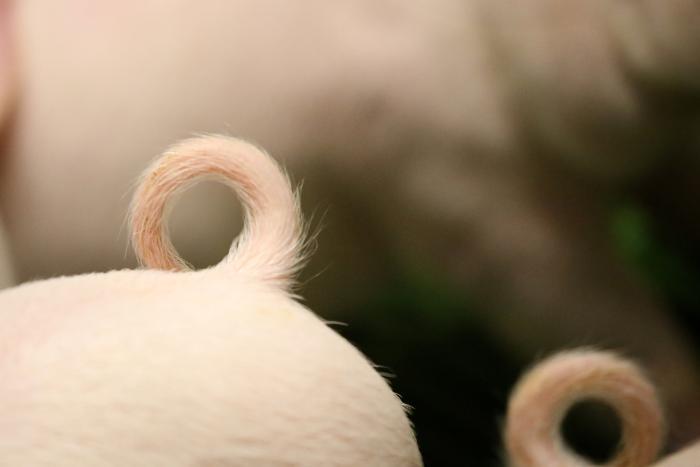
Keelin O’Driscoll and Roberta D’Alessio write about the tail-biting risk assessment scheme for Irish pig farms, aimed at identifying farm-specific risk factors, and how efforts are underway to refine the tool for improved accuracy.
Since 2019 Animal Health Ireland (AHI) have managed a tail biting risk assessment scheme which all producers in Ireland have the opportunity to avail of free of charge. This was in response to European Recommendation 336 (2016) which required that each EU Member State ensures that tail-biting risk assessments are carried out on farms, and that corrective measures for each identified risk factor are recorded. This is because tail biting has many different risk factors, and the triggers can be farm specific; thus to identify where these triggers are, it is necessary to examine each farm individually, rather than just applying general advice.
Development of the risk assessment tool
The assessment tool that is currently in use by AHI was developed by a team from DAFM and Teagasc. It was adapted from a pre-existing published tool that was developed in the UK – the Husbandry Advisory Tool. This is published online and provides guidance on the main risks associated with tail biting, with many links to further information available on the website. Because UK pig systems differ considerably from Irish, the team refined and cut down the length of the tool, so that only measurements relevant to Irish systems were included. Following this, all Irish pig private veterinary practitioners (assessors) underwent training on how to carry out the assessments. Each time they complete an assessment, the results are then uploaded to the AHI database.
The risk assessment protocol
Six pens are assessed during the assessment (two early stage weaner pens, two late stage weaner pens, and two finisher pens), which was designed to only take 15 minutes per pen. The first part of the assessment considers pig housing and management; pen area, the proportion of solid flooring, the sex of the pigs, the estimated weight of the pigs, tail length (docked, undocked or mixed length), whether pigs can all feed at the same time, the number of drinkers, and whether the assessor considered the vaccination protocol to be appropriate. The type and amount of environmental enrichment present is also recorded.
Following this the assessor counted the pigs, and then counted the number of pigs that had injured tails, injured ears, flank lesions, and aggression lesions. They also counted the number of pigs with dirty flanks and tucked tails. Finally, they observed the pen for the following pig behaviours for 5 minutes: tail biting, ear biting, damaging biting of other parts of the body, investigation of fixture and fittings, investigation of enrichment material, and aggressive biting.
At this stage the assessor determined whether or not they considered there was an overall risk of tail biting occurring in the pen (Yes/No). They also considered in more detail the level of tail biting risk in relation to six risk categories: 1) the enrichment materials provided; 2) cleanliness; 3) thermal comfort and air quality; 4) health status; 5) competition for food and space; 6) diet.
What we measured
To evaluate how well the results of the assessment reflected the risks for tail biting, Dr. Roberta D’Alessio, who carried out her PhD with Teagasc and UCD, followed up 27 risk assessments with a trip to the slaughterhouse to determine the level of tail damage on a batch of pigs from these farms, during 2020-2022. She then compared the level of tail damage on each farm with the risks that were identified using the tool.
Farm management data
The results of the assessments allowed us to get an average picture of environmental conditions on the 27 farms assessed. Overall, the assessments identified that the main areas requiring improvement on farm were inadequate enrichment provision and space allowance. All producers should assess these factors on a continual basis, as the benefit of provision of ample space and enrichment is well documented from both an increased production and welfare standpoint.
Tail damage and level of risk on farm
Overall, 58% of pens were classified as being at risk for tail biting. Of the six risk assessment categories, in the majority of cases enrichment provision was determined to be a major risk. However, the other 5 categories were most often assigned as ‘minor risk’. A positive result was that the proportion of tail injuries observed at farm correlated with the proportion of each batch in the abattoir that were categorised as severely damaged (partial or complete tail loss, or an open wound). This indicates that even given the difficulty of assessing tail damage from outside the pen, the assessors were correctly identifying when there was a severe level of damage on farm.
Tail damage at slaughter
Positively, we found that just under 70% of the pig tails presented no tail damage. Minor damage was observed in just over 15% of tails, 11% had evidence of teeth marks, 3% had moderate damage (broken skin with redness and swelling), and under 1% presented severe tail skin damage.
Farm management and pig behaviour
In general, enrichment directed behaviour increased as the number of enrichment items provided increased – this demonstrates how sufficient enrichment can absorb pig exploratory behaviour. There was also less exploration of ‘fixtures and fittings’ as the number of enrichment items increased. We also found that as the proportion of drinkers per pig increased, so did exploratory behaviour. Thus adequate enrichment provision also has important implications for issues such as pigs dominating use of drinkers in particular, which has knock on effects for water wastage.
Relationship between risk level and tail condition
In all cases assessors consistently reported that all 6 pens on each farm were either at risk, or not at risk, for tail biting. Thus each farm was classified as being either at risk or not. Unfortunately, we found that there was no difference in tail damage at the factory between farms considered at risk, or not at risk of tail biting.
Take home message
Overall, the tail biting risk assessment tool that is currently in use provides valuable insight into conditions on Irish farms; we found that our results from this selection of farms are similarly reflected in the wider database that AHI has collected. However, unfortunately the tool does not appear to support assessors in accurately determining the actual level of risk on each farm, or where these risks lie, relative to the evidence of tail biting observed at the factory. This is likely due to the subjective nature of some of the measurements, and the lack of detail involved. A novel tool has been developed and is currently undergoing refinement to address this issue.
For any further questions on this project you can contact Keelin O’Driscoll by email at keelin.odriscoll@teagasc.ie.