
30 August 2024
All you need to know about weeds
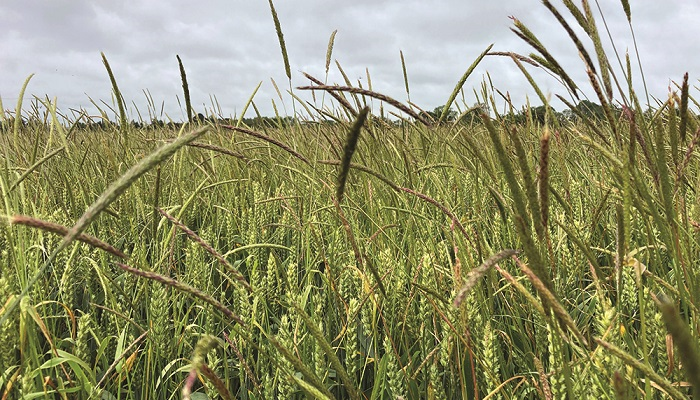
Vijaya Bhaskar A.V., Dermot Forristal and Michael Hennessy, discuss the challenges of managing herbicide-resistant weeds in Irish tillage farming, emphasizing the need for integrated weed management strategies to combat the growing resistance, which threatens crop yields and farming sustainability.
Irish agriculture occupies 4.5 million hectares with 92% devoted to grassland and 8% to the production of tillage crops. Over the past 50 years, tillage crop production has evolved from a mixed enterprise farming base, where spring cereals were grown in rotation as a part of grassland systems, to today’s specialised rotations dominated entirely by annual crops.
Tillage crop production is mostly concentrated in the southeast (Louth-Wexford-Cork triangle), where there is a relatively drier climate than other parts of the country. The three most dominant tillage crops are spring barley (used for malting), winter wheat (feed) and winter barley (feed). Spring wheat (mostly feed), spring and winter oats (food and feed), oilseed rape (oil and feed) and beans/peas (food and feed) are all gaining in popularity.
Tell us about these weeds
We have a mild wet climate due to the influence of the Atlantic Ocean, which is conducive to the rapid growth of weeds. Weeds are basically plants growing where we don’t want them. Volunteer crop plants can also become weeds if they reappear in subsequent crops.
Weeds grow alongside crops competing for light, water and nutrients, which will impact crop yields, as well as interfere with harvest and contaminate the grain sample. Nearly all tillage farms manage weed infestations to ensure high-yielding and good-quality crops. Uncontrolled weeds can result in an increasing bank of weed seeds in the soil that can cause problems for decades.
A range of annual or perennial grass and broadleaf weed populations infest tillage fields. Grass weeds are generally more competitive than broadleaf weeds, and some species are more aggressive than others. Traits of aggressive weeds include high germination, prolific seed production and rapid seedbank turnover (i.e. lower dormancy and more replenishment). Additionally, those weeds that maintain high genetic diversity within the field population through cross-pollination pose the greatest threat as they are prone to the rapid development of herbicide-resistance.
Grass weeds such as meadow grasses, spring wild oats, bromes, lesser canary grass, blackgrass and Italian ryegrass; as well as broadleaf weeds such as chickweed, poppy, corn marigold, speedwell, groundsel, may weed, charlock and fat hen present control problems in tillage crop production.
What’s the story with herbicides?
Today’s specialised cropping systems are susceptible to pest challenges and tillage growers adopt a variety of control tactics to manage pests. These include cultural (soil cultivations, crop rotation etc), non-chemical (hand rogueing etc) and chemical (herbicides) methods.
Use of selective herbicides have been the most convenient and effective method to manage weeds within crops for generations. The selective herbicides are designed to kill grass and/or broadleaf weeds but not crops, which have natural tolerance to these products. Until recently, the herbicide-based strategy has enabled our growers to achieve amongst the highest cereal yields in the world, despite having a wetter climate.
But there is an associated problem. When herbicides are used, they can select for herbicide-resistant plants in the varied population and these can then proliferate. Resistance develops more quickly in fields where herbicide products with the same modes of action are continuously used. As a result, the herbicides used are no longer effective, making weed control difficult or impossible and costly.
Effect of herbicide on black-grass
Resistance is not a new phenomenon. We see it in antibiotics in human and animal medicine, in fungicides and insecticides for crop and pest control in agriculture, and now in herbicides in agriculture. Globally, a total of 273 species of weeds (156 broadleaf and 117 grass) in 101 crops have been identified as herbicide-resistant.
The mechanisms underpinning herbicide resistance are broadly classified into: target-site resistance (TSR) – where a plant changes the structure of its herbicide-binding site due to mutation(s) and this blocks herbicide activity; and, non-target-site resistance (NTSR) which includes other mechanisms of resistance that stop it being effective such as: reduced penetration or translocation, enhanced metabolism, etc., which prevents the herbicide achieving its binding-site with sufficient quantity to cause plant death.
Weed watch
To confirm the presence of herbicide-resistant weeds in Ireland, weed populations that tillage growers or tillage advisors suspect as being resistant are submitted via the Teagasc weed monitoring network prior to harvesting the crop each year. The suspect and sensitive reference weed populations were grown in a glasshouse and tested with the most commonly-used herbicides at the recommended label rate to determine their sensitivity. Resistance was confirmed by further dose-response studies on populations that showed less sensitivity. Genetic analysis was then used to determine the TSR mutations that were responsible for any resistance recorded.
Herbicide resistance in Italian rye-grass
This stepwise approach is essential to give an understanding of resistance evolution and the knowledge gained is central to developing integrated weed management (IWM) strategies that are essential for crop production sustainability. This is what we have found from our testing to date:
- 63% of black-grass (46 samples) tested were herbicide-resistant, mostly due to TSR but also NTSR
- 75% of Italian rye-grass (36 samples) tested were herbicide-resistant associated with TSR and/or NTSR
We have also identified resistance in meadow grasses and spring wild oats, as well as in some broadleaf weeds such as chickweed, poppy, speedwell, and corn marigold.
Increased vigilance, resistance testing and a zero-tolerance approach are critical to combat the resistance threat. It is essential to develop logical cultural and non-chemical IWM strategies (which include manipulating sowing time, using competitive cultivars, using higher than the normal seeding rates, stale seedbed etc) suited for our climate and production systems, to reduce our dependence on herbicides. Some components of Integrated Weed Management are being developed in EVOLVE, a new research project funded by the Department of Agriculture, Food and the Marine.
This article was first published on RTÉ Brainstorm