
Amino Acid requirements change with on-farm hygiene level
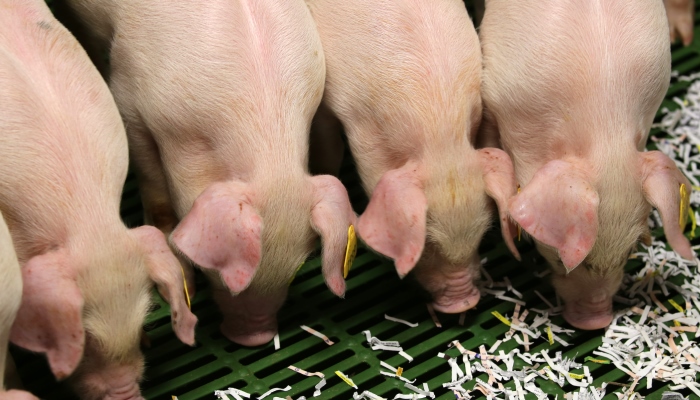
Pigs need amino acids, the building blocks of protein, rather than crude protein itself. Peadar Lawlor, Teagasc Research Officer, tells us how amino acid requirements can change depending on farm hygiene levels.
Pig diets must balance 10 essential amino acids (lysine, methionine, threonine, tryptophan. valine, isoleucine, leucine, histidine, phenylalanine, and arginine) because pigs cannot make them in amounts high enough for optimum health, growth, and milk production. We normally think of amino acid requirements in terms of quantities required for muscle/lean growth and formulate diets with balanced quantities for this purpose. However, many amino acids are also important with regard to pig health and in particular gut health.
Focussing in on just a few of these with gut health promoting effects:
Threonine is critical for mucin (protective layer of mucus which acts as a frontline defence in the gut) production. Approximately 60% of dietary threonine is used for intestinal mucosal proteins and a deficiency in it will reduce villous height and therefore digestive and absorptive capacity in the gut leading to chronic diarrhoea in piglets.
Sulfur-containing amino acids (methionine, cysteine) help maintain intestinal structure (e.g. villous height), increase Lactobacillus (good bacteria) and reduce E. coli abundance in the gut.
Tryptophan has consistently been found to reduce diarrhoea in weaned-piglets. It acts via metabolites (it’s breakdown products) that improve immunity and gut-barrier function.
Weaning often involves the mixing of piglets from different origins and exposure to suboptimal housing hygiene. Such stressors reduce growth performance, partly because of immune activation and inflammation redirecting amino acids (AAs) away from muscle/lean growth and toward expensive immune activation. In such cases, the dietary requirements for threonine, methionine, and tryptophan are most likely higher under poor hygiene conditions.
A recent study by Penteado Rosa Gonçalves and colleagues, tested this in weaned pigs which were housed in accommodation with either good or poor hygiene. Both groups were then fed two diets, the first meeting standard (NRC) requirements for amino acids and the second with Threonine:Lysine, Methionine+Cysteine:Lysine, and Tryptophan:Lysine ratios raised 20% above those in the first diet.
The main results were that under good hygiene conditions, the increased amino acid diet produced no performance benefits in the piglets. However, under poor management and hygiene conditions, piglets fed the increased amino acid diet had greater final body weight, average daily feed intake, and average daily gain than piglets fed the normal level of amino acids in their diet. Looking further into this the authors found that where the increased amino acid diet was fed less skeletal muscle was broken down to release amino acids into the bloodstream and there was improved amino acid utilisation compared when the normal amino acid diet was fed. This indicated that the additional amino acid supply from the increased amino acid diet was sufficient to meet the requirements for maintenance of intestinal tissue and immune activation without negatively affecting the supply for muscle and pig growth.
The authors recommend supplementing Threonine, Methionine, and Tryptophan at 20% above standard Lysine ratios in post-weaning diets for piglets facing mixed-management or poor-hygiene conditions. However, in well-managed herds with good hygiene conditions this should not be the case so as to avoid surplus supplementation, where feed cost would be raised but with no return.