
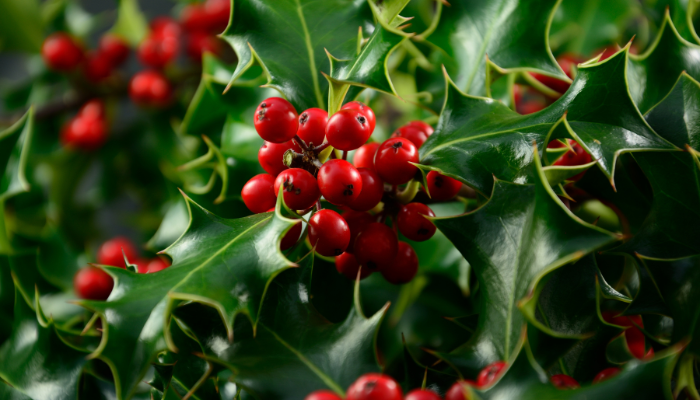
Holly (Ilex aquilium) is one of our most familiar and easily recognisable native trees and has deep roots in Irish folklore and Celtic tradition. Tom Houlihan, Teagasc Forestry Development Department, tells us some more about this popular native tree species.
With is glossy green foliage and radiant red berries, holly is a popular species, with sprays used to decorate homes during the festive season. It has long been associated with magical powers, protection and purification. It has also been a symbol of life during winter, and its symbolic and decorative uses extend back to pre-Christian times.
A resilient native tree
Holly can grow in a range of soils but does best in well drained, slightly acidic soils. It is a fairly slow growing, long-lived tree resilient in exposed growing conditions. It is very well adapted to growing in partial shade. Due to this very useful faculty, holly is an important component in some of our oldest native woodlands, often found under the main tree canopy. Certain woodland tree species live together in harmony. These common, Irish ecologically valid mixtures often include holly and the following:
- Oak, birch with holly and rowan
- Oak, ash with hazel, hawthorn, holly, spindle
- Oak, ash, alder with willow, hazel, holly
- Birch with holly and rowan
While holly is tolerant of shade, berry production is best when the tree has access to reasonable sunlight. In heavy shade, plants may grow well but berry production may be limited.
Holly in our countryside
The holly tree isn’t just a favourite at Christmas time; it is a small evergreen providing valuable supports to many species. Holly trees are widely distributed in the countryside, as components in rural hedges and as individual trees. Holly flowers are a rich and important source of nectar and pollen in early summer for a range of pollinators including a number of bee species. The caterpillars of the Holly Blue Butterfly rely on the flower buds of holly as a primary food source in spring. The larval stage of the Holly Leaf Miner Fly is the only species of fly in Ireland whose larvae mine and feed on holly leaves, creating distinctive blotches. Various moth species also feed happily on holly leaves. These include the larvae of the Holly Tortrix and the Yellow-barred Brindle Moth.
As a hardy evergreen, holly provides excellent shelter and refuge for birds such as robins and wrens as well as small mammals. The dense branches of holly provide natural protection from the elements and nesting/roosting sites for birds. Its winter berries provide a nutritious food source for birds such as thrushes and blackbirds, particularly when winter frosts have made the berries soft and palatable. Visiting thrush species such as redwings arrive from northern Europe and feed on fruits and berries including those of holly. This feeding, in turn helps to disperse the seeds within the berries via their droppings, aiding the plants reproduction.
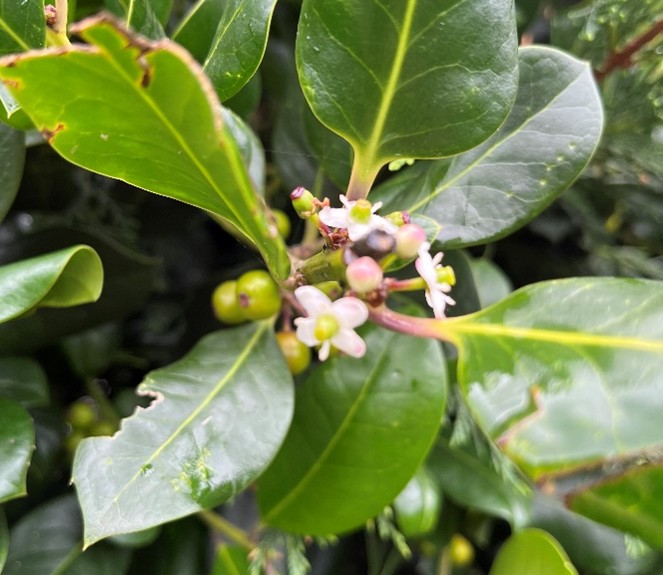
Figure 1: Female flower with green central raised pistil
Holly in the garden
I have a strong grá for holly as a tree species having planted it as a striking, dense, low maintenance evergreen hedge in my own garden, with the foliage and fruit of individual specimens also providing interest in a raised planting area. The hedge contains a good mix of both male and female holly trees. Holly is one of the few native tree species that is dioecious, that is, individual plants are either male, or female. Only the female plants produce the bright red berries, and a separate male plant is required in the vicinity to produce the pollen for fertilisation. My hedge contains a good mix of both, and this allows me to cut some sprigs that are well furnished with berries for decorative purposes each year in a sustainable way without compromising the integrity of the plant.
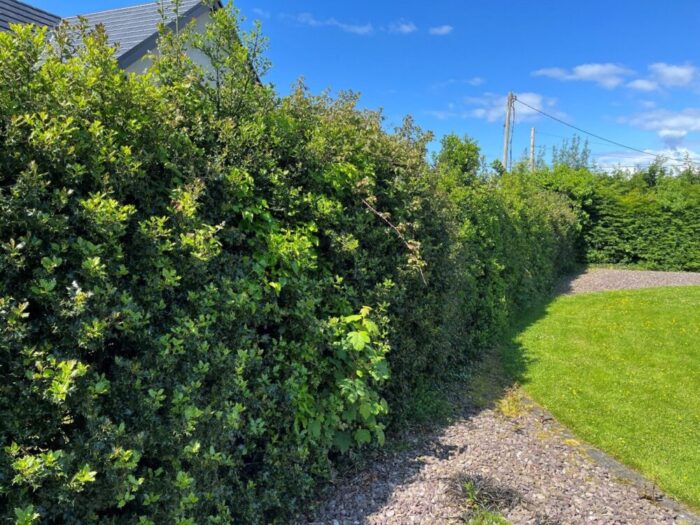
Figure 2: Holly forms an attractive dense hedge
Growing holly from seed
Growing holly from seed requires a level of patience. Berries can be collected over the winter. Following removal of the flesh, which can be challenging, the resultant seeds should be stratified in damp sand and stored in a cool location for about a year. Stratification simply mimics our typical wintry conditions and provides the seed with a cool, dark period of storage, allowing time to prepare for germination.
Following stratification, the holly seed can then be sown in the second spring. Seed should be sown thinly in rows (up to 20 cm apart) and covered for protection against birds or rodents. In the following year, transplant the seedlings to grow on for a further two years before planting in their final location. Holly can be somewhat challenging to establish, and plants must be lifted when the roots are actively growing. In this regard it is recommended to transplant seedlings into pots (or plugs) in these two years to make the final planting easier.
A few interesting facts on holly:
- Of our 28 native trees, holly is one of our few evergreen broadleaf trees and the only evergreen that does not bear cones.
- Under favourable conditions, holly can reach a height of up to 18 metres.
- The Old Irish Tree List, dating from the eight century, included holly as Class 1 (of 4 classes). These are the ‘Nobles of the Wood’ and the most prominent in terms of individual sacred trees
- The Irish word for holly, Cuileann, is found in many placenames, including Glencullen (Valley of the Holly) in Dublin . Moycullen (Plain of the Holly) in Galway and Kilcullen (Church of the Holly) in Kildare
- Holly wood is page pale, hard and fine grained and is valued for wood carving, engraving turning and inlay work
- Holly was used as a source of fodder for animals such as goats and pigs in olden days
- It is also reported in old Irish folklore that the leaves of holly (specifically male holly) contain an antidote power that may be effective against the fungal spores of Ringworm. Having holly boughs hanging from the roof of stock sheds over where they are feeding is a still practice on some farm.
Wishing all a happy festive season and the very best for 2026, from all in the Teagasc Forestry Development Department!