
Analysing the first milk recording of the year
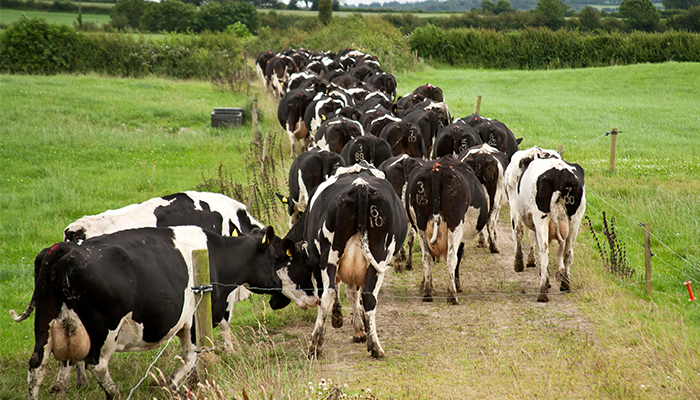
Pádraig O Connor, Teagasc Dairy Technician discusses the importance of analysing the first milk recording of the year to assess herd health and identify mastitis early.
Milk recording is a key tool available to dairy farmers for effective mastitis control. It is recommended that farmers complete a minimum of four milk recordings per lactation, with six recordings being preferable for optimal herd management.
For spring-calving herds with a start date of 1st February, the first milk recording should be completed within 60 days of calving. At this stage in the season, completing that first recording is both timely and critical.
Carrying out a milk recording within this 60-day window allows farmers to:
- Assess how well the dry period was managed
- Identify cows with high somatic cell counts (SCC) and take appropriate action
Assessing Dry Period Performance
The first report to review is the CellCheck Farm Summary Report.
Page 1 provides an overview of herd SCC performance and tracks the monthly bulk tank SCC average. As this is the first recording of the year, metrics such as Recent Infection Rate and Percentage of Cows with Persistent Infections will not yet be available.
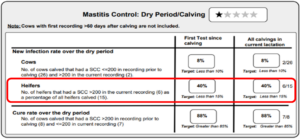
Page 2 of this report evaluates mastitis control during the dry period and around calving. This analysis focuses on three key areas as outlined in Table 1
- Cows that picked up infections during the dry period
- Heifers with high SCC at first recording
- Number of cows cured over the dry period
In the example provided, there is a clear issue with heifers: 6 out of 15 (40%) recorded high SCC levels at the first milk recording. This is highlighted as a concern. These animals should be treated in consultation with your vet. Additionally, heifer management practices during the dry period should be reviewed ahead of the next housing season.
On a positive note, the number of cows that picked up infections, as well as the number successfully cured during the dry period, indicates good performance in those areas.
Table1. Mastitis Control
Identifying Problem Cows
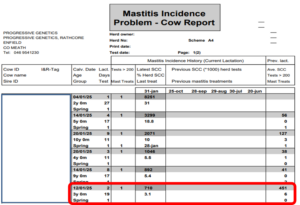
The second report to analyse is the Problem Cow Report outlined in Table 2. This highlights any cows that were over 200,000 cells per ml in this lactation and how much they contribute to the overall herd SCC. This report also highlights the average SCC for these cows for the previous lactation. In this example the last cow on the list highlighted in red should be on the culling list. She had an average SCC of 451,000 for her previous lactation, had six counts over 200,000 and is now at 710,000 after going through dry cow treatment. This pattern indicates a chronic issue with limited likelihood of recovery.
Table 2. Problem Cow Report
How to deal with High SCC cows
Culling is often the most effective solution for cows with chronic or persistent infections. However, where culling is not feasible, alternative strategies should be considered.
The next option is to identify which quarter is causing the high SCC as it’s usually only one quarter. This is completed using a Californian Mastitis test (CMT). You may opt to treat some of these infected quarters, but this should be done in consultation with your vet. Carrying out a culture and sensitivity test on some of these quarters is a very worthwhile exercise to identify the bacteria causing the infection. The other option is to stop milking these high SCC quarters and allow them to dry up naturally.
Containing the spread of infection from these infected cows is critical. The best solution if it’s practical is to milk these infected cows last. However, if this isn’t possible, the cluster will need to be disinfected in a peracetic solution after milking the infected cow. If the cluster isn’t disinfected, it has the potential to infect the next five to six cows milked with that cluster. Cluster dipping is one solution but needs to be carried out correctly and hygienically with the proper concentration of peracetic acid and dumped after every six to seven dips. This can also be completed automatically with additional technology incorporated into the milking parlour to disinfect liners. Some farmers opt to leave these high SCC cows with the main herd, draft them out without milking them with an auto drafter and then bring them back in at the end of milking to milk them last. It’s critical to break the transfer of infection from the infected cow to the uninfected cow
A good milking routine is essential also. Having clean cows with tails clipped, wearing nitrile disposable gloves, attaching and detaching clusters correctly and applying sufficient teat spray correctly (15mls/cow/milking) are all important points in terms of keeping on top of mastitis.
Summary
The first milk recording of the year is an extra job to be completed at a busy time of year, but the importance of completing it in a timely manner cannot be over emphasized. Allow extra time and help to complete this job on the day of recording to ease the workload on everybody involved. The data generated from milk recording is significant in terms of managing SCC in your herd. Farmers who take early action on infected cows, benefit from improved outcomes later in the lactation. Ignoring high SCC cows can lead to significant negative impacts across the herd.
If you need help with analysing the milk recording results, contact your Advisor, Vet, Co-op Milk Quality Advisor or Milk Recording Organisation.