
AshforFuture project – breeding common ash for dieback disease tolerance
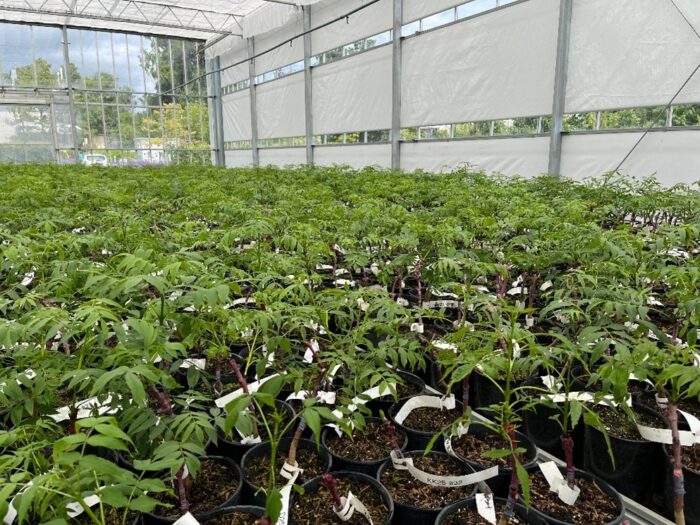
Ricardo Pimenta, Postdoctoral Fellow, and Dheeraj Rathore, Research Officer, provide an update on progress in the AshforFuture project.
Over the past 15 years, common ash (Fraxinus excelsior) in Ireland has been severely impacted by ash dieback, caused by the fungus Hymenoscyphus fraxineus. While most trees show significant damage, a small proportion appear to have a higher level of tolerance. These trees offer an important opportunity for recovery and management.
The AshforFuture research project, launched in November 2024, is an all-island initiative funded by the Department of Agriculture, Food and the Marine (DAFM) and the Department of Agriculture, Environment and Rural Affairs (DAERA) in Northern Ireland. It brings together research across four areas: communication (AshComm), genetics (AshGen), silviculture (AshSilva) and plant pathology (AshPath), all aimed at supporting the long-term future of ash in Ireland.
Citizen science supporting tree selection
Public engagement is an important part of the AshforFuture project. Through outreach activities, the team has raised awareness of ash dieback and encouraged people to report healthy ash trees through a citizen science initiative. Teagasc sincerely thanks all who have and continue to respond.
Since the project began, over 400 ash trees have been reported across the country. These reports supported scion wood collection during the winters of 2024/25 and 2025/26. In the first season, just over 200 ash genotypes were collected, resulting in approximately 2,400 successful grafts. A further 190 genotypes were sampled in 2025/26, producing around 1,700 grafts.
These grafted plants are currently being monitored in Teagasc facilities. Once established, they will be used in future field trials to assess disease tolerance.
Genetic work underway
Work is ongoing to better understand the genetic basis of tolerance to ash dieback. Alongside Irish material, a broader European collection is being analysed.
Whole-genome DNA sequencing data has been generated for nearly 200 ash genotypes from 15 countries. This is being used to examine their genetic diversity and identify markers linked to tolerance. In parallel, these trees have been assessed in field trials over the past four years, with regular scoring of disease severity across seasons.
These datasets will help build a clearer picture of how tolerance is expressed and how it can be used in breeding programmes.
Exploring management options
The project is also examining how forest management can reduce the impact of ash dieback.
Clonal trials have been established at three locations, including a site in Co. Dublin in 2024 and additional plantings in Wexford and Cavan in 2026. These trials will allow comparison of different genotypes under field conditions.
An admixed species trial is also being developed. This will assess whether growing ash alongside other tree species can influences disease progression. In addition, several ash regeneration hotspots identified in 2025 are being monitored to better understand natural regeneration under disease pressure.
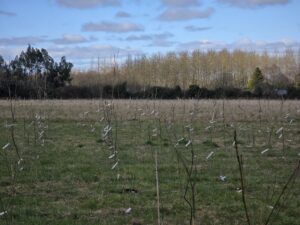
Ash clonal trial established in Co. Dublin in 2024
Understanding the pathogen
A key element of the research focuses on the ash dieback fungus itself and how it varies across Ireland.
Samples have been collected from multiple locations, with over 30 isolates confirmed through molecular analysis. Additional isolates from European collaborators are being included to support comparison.
Early observations suggest difference in virulence between isolates. This may be important when testing ash material for tolerance under controlled conditions.
Next steps
Over the coming year, work will continue on analysing sequencing data alongside field trial assessments to improve understanding of tolerance.
Monitoring of existing trials will continue, alongside further public engagement to support the reporting of healthy trees. Another round of scion sampling is planned for the coming winter, followed by grafting.
Additional clonal and mixed-species trials are also expected to be established, supporting future field evaluation of ash under Irish conditions.