
Autumn disease control in winter oilseed rape
The area of winter oilseed rape has increased significantly this season. Early sowing, available soil mineral nitrogen and good responses to organic manures have resulted in large canopies in many fields. While crops are well established, it is important to monitor for light leaf spot and phoma stem canker this autumn. Ciaran Collins tells us more.
Light leaf spot
Light leaf spot is the most damaging disease of winter oilseed rape in Ireland, with yield losses of up to 1t/ha possible in susceptible varieties. Resistance in recommended list varieties has improved. Ambassador has a rating of 6, Aurelia 7 while LG Aviron, LG Auckland and provisionally recommended LG Armada are rated 8. However, good resistance does not remove the need for crop monitoring and control.
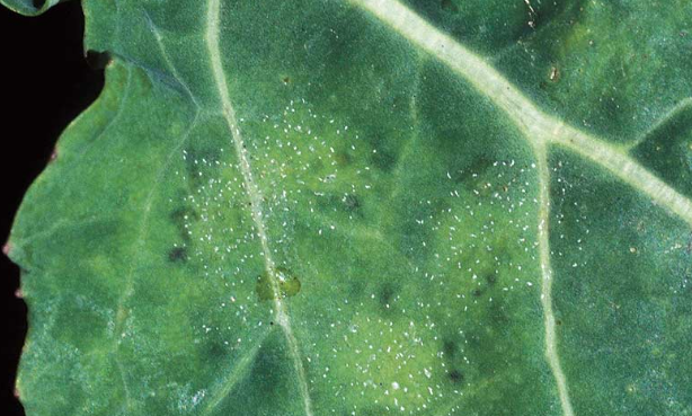
Symptoms are hard to see at this time of year. Look for small white spots, resembling grains of salt, around affected areas of the leaf. As infection develops, leaves can curl, become brittle and crack. Where identification is difficult, place leaves in a plastic bag in a warm room for one to two days to encourage sporulation.
Figure 1. Light leaf spot
Early sown crops with large canopies warrant particular attention. Mild, wet conditions favour disease development, with rain splash spreading infection within the crop. Cold weather slows development, but disease can increase rapidly when conditions become favourable.
For crops at risk, a two-spray programme targeting late October/November and early spring provides the basis for control. The autumn treatment aims to suppress infection and reduce the number of disease cycles. A prothioconazole based fungicide at 75-100% of the recommended label rate, depending on disease pressure, will provide good control and will also target phoma. Tebuconazole offers limited LLS control and any impact from a plant growth regulatory perspective is limited as temperatures drop and growth slows.
Where canopies are excessively big (early sowing/organic manure) an application of Caryx 0.7L/ha can help to manage the canopy but best results from Caryx will come from an application in the spring when growth takes off.
Continue checking crops through the winter. Assess the need for a follow-up treatment in February and apply as soon as light leaf spot is present.
Phoma stem canker
Phoma produces greyish leaf spots containing small black dots called pycnidia. The main damage occurs when infection moves through the leaf stalk into the stem, causing cankers that restrict water and nutrient movement and lead to premature ripening.
Larger plants have an advantage because infection takes longer to reach the stem. Small crops require closer attention, particularly in mild weather. Use a treatment threshold of 10-20% of plants affected, towards the lower end for small crops while larger canopies can justify a higher threshold. Where phoma reaches the treatment threshold before the planned light leaf spot spray, bring treatment forward.
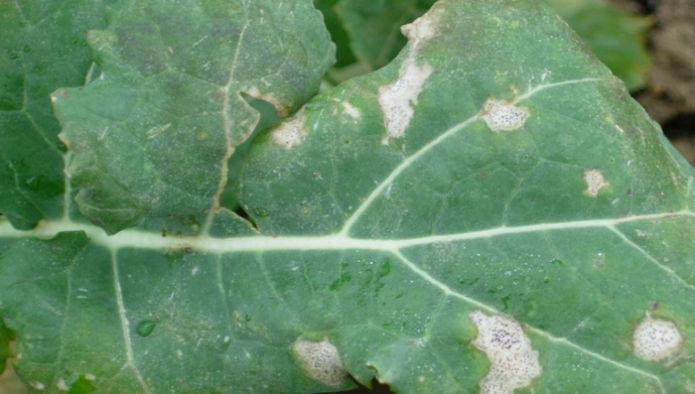
Figure 2. Phoma stem canker