
13 February 2023
Beans and the new Protein Payment Scheme
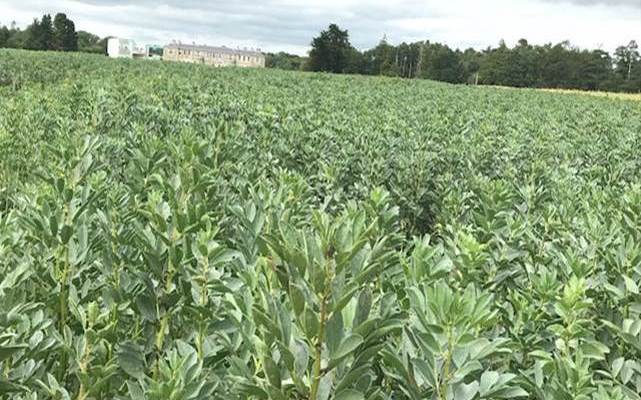
The new Protein Payment Scheme 2023, which has an increased budget of €7m, will make beans and other protein crops much more attractive to tillage farmers this year, Shay Phelan, Tillage Specialist tells us more.
In 2022, approximately 11,000ha of protein crops were grown. This year it is hoped to increase this to somewhere near 14,000ha, which would give a payment of 500 per ha. When this is added into the margins in the recently published Teagasc Costs and Returns booklet, we can see that at target yields beans compare very favourably with other combinable crops (Table 1). The Costs and Returns booklet is available at: https://www.teagasc.ie/publications/. When you compare the potential gross margins from all the crops, only winter oilseed rape (WOSR) performs better than beans. Malting barley is the next best.
The performance of beans has been variable on many farms over the last few years but some farms seem to get consistently good yields. Beans like moisture-retentive soils or soils that don’t dry out during the spring or summer. Soils that are drought prone rarely perform well unless we get a damp summer. In lighter soils, peas can often perform better, but they are risky to harvest.
Table 1: 2023 Teagasc gross margin per ha at target yields ( /ha).
| Crop | Winter wheat | Winter barley | Spring barley | Malting | Winter oats | WOSR | Beans | Peas |
| Gross margin at target yields | 690 | 626 | 501 | 706 | 558 | 828 | 768 | 755 |
Beans perform well where the soil indices for phosphorus (P) and potassium (K) are high. Trials from Oak Park have clearly shown that where beans are sown in index 1 or 2 soils for P and K, they never yield as well as those sown in index 3 soils, regardless of how much fertiliser is used. Ideally, beans should only be drilled in the same field every five to six years, and from a disease point of view, the longer between crops the better. Plan to drill as early as conditions allow; however, soil conditions are as important as planting date, especially if you are using a direct drill or min-till system. Drilling into wet soils can reduce root development and nutrient uptake. Aim to establish 30 plants/m² and try to complete drilling by early to mid March, as beans don’t perform well when planted late in the season, i.e., in April. Remember, later planting also results in later harvesting, which can cause a number of problems, such as increased moisture and reduced quality.
This article was published in the Teagasc Tillage Newsletter – February 2023.
Download Full Publication (PDF)