
27 November 2024
Beef cattle finishing age reductions have stalled
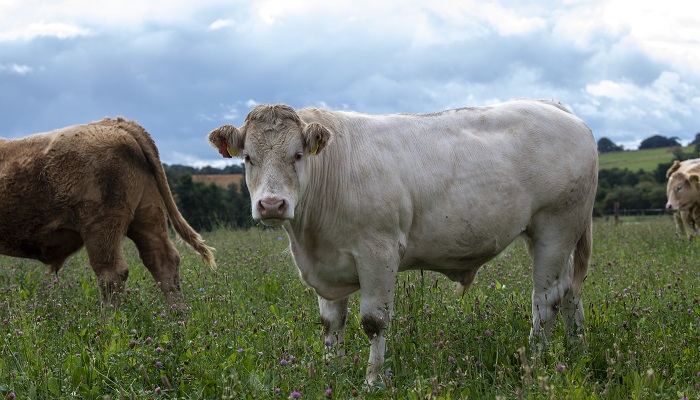
Supported by strong evidence, reducing the average age of finish for beef cattle is an essential element for Irish agriculture to meet its greenhouse gas emission reduction targets. Worryingly, however, much of the progress that had been made in previous years stalled in 2023.
Addressing the Teagasc Signpost Conference and General Assembly on November 21, Dr. Paul Crosson, Beef Enterprise Leader at Teagasc, Grange, highlighted the importance of this measure.
He noted that success in bringing down the average age of finish will not only result in lower emissions from beef production – primarily through lower methane emissions, as the shorter the lifetime of a beef animal, the less methane that is invariably emitted – but will also allow for better economic returns for beef farmers, on account of lower feed and overhead costs.
On the former, Dr. Crosson explained that enteric methane – the methane produced through the digestion process of ruminant animals – accounts for 65% of total emissions from beef production and, when combined with the methane emitted from manure management, this stretches to almost two-thirds.
As dictated by climate policy, Irish agriculture is required to reduce greenhouse gas emissions by 25% by 2030. To identify the most appropriate actions to achieve this, Teagasc has developed the Marginal Abatement Cost Curve (MACC), with Dr. Crosson commenting: “Finishing age is one of our biggest measures within the MACC curve and if we put it in the context of our 2030 targets, reducing finishing age can account for up to the equivalent to 13% of our total requirement.”
Age of finish
An overview of the finishing ages of Irish beef cattle for the period 2012 to 2021 was also provided by Dr. Crosson. He noted that the average age of finish decreased by an average of close to one week per year over the course of this 10-year period.
He commented: “There was very strong progress being made up to 2021 in terms of live weight performance on farm. The trait or definition is age of finishing, but the manifestation of that at farm level is better live weight performance.
“Fundamentally, every beef farmer wants their animals to grow better and to optimise performance over their lifetime. If we look at 2012 to 2021, age of finish reduced by nine days per year in the first half of the decade, before falling to four days per year in the latter half. Importantly, these reductions were achieved without impacting on beef output which actually increased over this time period.”
If we look specifically at 2018, the base year for our climate reduction targets, the average finishing age of prime beef cattle was 26 months of age. This was reduced to 25.5 months in 2022, however, in 2023 finishing age increased to approximately the same levels as 2018. Dr. Crosson pointed to two potential causes – poor weather conditions over 2023 and a move away from bull systems.
Dr. Crosson explained: “Levels of on-farm live weight performance really struggled in the second half of last year due to the very challenging weather conditions and that’s really coming through in our finishing age statistics. We would anticipate that would probably kick into this year as well because the performance of calves last year and indeed into the first half of this year was impacted.”
The move away from bull systems nationally was also discussed, with Dr. Crosson explaining that bulls accounted for 23% of male prime cattle throughput in 2018 before falling to ~14% last year.
He said: “If you move from a steer finishing system to a bull finishing system, you are going to reduce average finishing age. In reverse, average finishing age increases. That’s our quickest way of reducing age of finish but obviously it is an easy one to reverse as well if market demand for bulls decrease. If we had the same proportion of bulls in 2023 as we had in 2018, that finishing age would be 25.6 months.”
Given the importance of age of finish to achieve greenhouse gas emissions reductions, Dr. Crosson concluded by saying it is critical that reduced finishing age is achieved on farm, but something needs to change for it to occur – that’s either a policy or an industry measure.
“This needs to be economically viable and attractive at farm level. There is a lot more work needed across all stakeholders from the farm sector to policy-makers and right through to industry to drive this measure forward.”
Dr. Crosson also provided an overview of Beef-Quest, a major new project underway that is funded by the Department of Agriculture, Food and the Marine, and is looking at the age of finish within the national herd.
Through this project, he explained: “We want to see in detail where we are losing ground in terms of live weight performance on farms. We know the measures that will drive improvements in live weight on farms but we need to delve a little deeper to see what measures are practical at farm level, as well as being economically viable.”
Find out more about the BeefQuest Project here.