
Beef finishing: Pick a system and stick to it
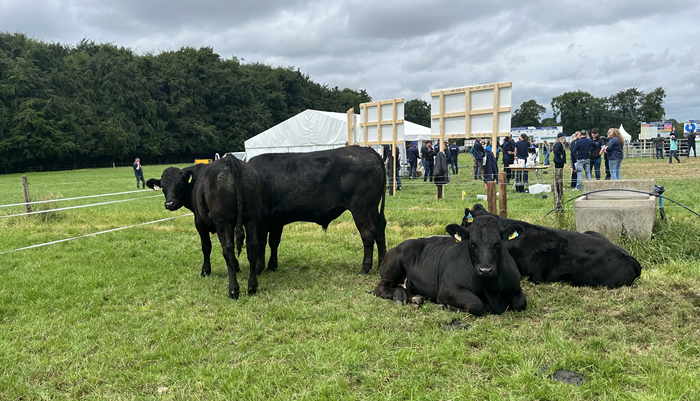
Beef farmers should focus on optimising nutrition within their chosen beef system rather than moving between different systems in reaction to short-term changes in market prices.
That’s according to Dr. Emily Roskam, Ruminant Nutrition Research Officer at Teagasc, Grange, who spoke to farmers from Ireland and further afield at today’s BEEF2026 Open Day in Teagasc, Grange.
“The most sustainable and profitable systems are those that consistently optimise grass and silage quality, align nutrition with animal requirements, and calculate budgets within a clearly defined production system,” Dr. Roskam explained.
Grazed grass and conserved grass silage will form the forage basis of most finishing systems, with concentrates supplemented to compensate for the deficit in nutrient supply from forage. By consistently providing high quality forage through good grassland and silage management, animals will perform better with less concentrate input.
“Research carried out by colleague Dr. Peter Doyle has shown that incorporating white clover into grazing swards and red clover into silage swards not only reduces artificial fertiliser N requirements while growing the same about of grass, but it can increase individual carcass weight by 10kg.”
An area often lacking on Irish beef farms is the quality of silage available, with Dr. Roskam explaining: “Grass silage feed value is estimated by its dry matter digestibility or DMD percentage, which is primarily determined by harvest date relative to heading date. Every week delay post heading date will result in silage DMD decreasing by ~3.3%, resulting in lower quality silage and reduced feed value from that silage.
“When you increase grass silage dry matter digestibility, the performance of your beef cattle increases.”
“However, what we’re typically seeing at farm level is poorer quality silage being offered during the finishing period, with the average silage quality in Ireland being 67% DMD. This means farmers have to spend more on meal to achieve the desired levels of animal performance.”
As to the relationship between silage DMD and the level of meal fed to finish cattle, Dr. Roskam reminded those in attendance: “Each unit decrease in silage DMD requires an additional approximately 0.33 kg concentrates per animal daily to achieve target growth rates.”
Identifying the correct time to draft animals for slaughter was also discussed, with Dr. Roskam adding: “Drafting cattle once they reach target fat cover maximises feed efficiency and profitability. Daily live weight gain of cattle over the finishing period is not constant.
“In general,”, she explained, “live weight gain is higher at the beginning and declines, often progressively, with increasing duration of the finishing period. This is associated with poorer feed efficiency as the animals start to lay down fat.”
For further information, visit: Nutritional management of finishing beef cattle.