

Edited By
Niall Kerins
Cattle Specialist
Sharing management notes for the month ahead, Teagasc Cattle Specialist, Niall Kerins focuses on winter nutrition, encourages farmers to prioritise fodder budgeting, and previews the fast-approaching Teagasc National Beef Conference.
Teagasc National Beef Conference 2026
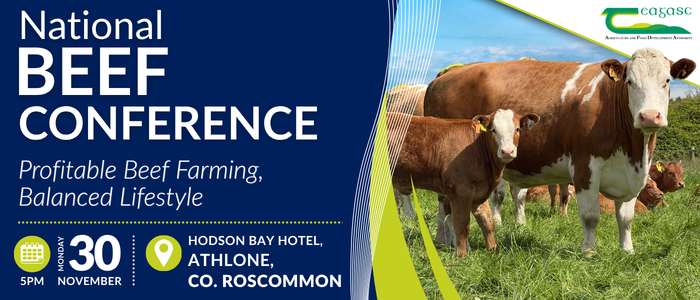
The Teagasc National Beef Conference 2026 takes place on Monday, 30 November at the Hodson Bay Hotel, Athlone.
With the theme of ‘Profitable Beef Farming, Balanced Lifestyle’, this year’s conference will focus on practical strategies to improve profitability and performance on Irish beef farms, while exploring how farmers can achieve a better balance between running a successful farm business, family life and personal wellbeing.
The conference will open at 5.00pm with a welcome from James Kelly, Drystock Advisor, Teagasc Roscommon/Longford, followed by an opening address from Professor Frank O’Mara, Teagasc Director.
The first session, ‘Driving Performance and Profit from Birth to Slaughter’, will focus on improving efficiency and maximising returns across the beef production system. Speakers include Marina Harrington, Teagasc Cattle Specialist, who will outline how to increase profit by €600 per suckler cow and Dr. Paul Smith, Teagasc Researcher at Grange, who will share insights from Beef Quest on maximising performance from weaning through to finish.
Following a short break with complimentary refreshments, the second session, ‘Better Beef, Better Balance’, will begin at 7.15pm. This session will examine emerging consumer interest in natural proteins and grass-fed beef in European and global markets, with a presentation from Julian Mellentin of New Nutrition Business.
Suckler beef farmer Aonghusa Fahy, from Ardrahan, Co. Galway, will also share his experience of teaching full-time while farming part-time, highlighting practical ways to make beef farming fit around family life.
The evening will conclude with a panel discussion, ‘Making Time for Better Beef Farming’, featuring beef and sheep farmers alongside representatives from Teagasc and the Health and Safety Authority. The discussion will explore practical approaches to managing farm workloads, improving work-life balance and supporting a more sustainable future for Irish beef farming.
The conference will close at 8.45pm with remarks from Pearse Kelly, Head of Drystock Knowledge Transfer, Teagasc.
All beef farmers are welcome to attend. The event takes place at the Hodson Bay Hotel, Athlone, Co. Roscommon (Eircode N37 XR82), with the first session starting at 5.00pm. Complimentary refreshments will be served during the evening break.
Further details on the Teagasc National Beef Conference are available here.
Balancing the winter diet: Getting the most from your feed
During winter feeding, it’s important to tailor your cattle’s diet, whether they’re growing, finishing or maintaining bodyweight. Grass silage is often supplemented with concentrates to ensure cattle meet their daily weight targets. Testing your silage for nutrient content is essential. This helps you choose the right concentrate feed to complement the silage to animals’ nutritional needs.
Some farms rely on a combination of grass silage and concentrates, while others use a variety of feed sources. The key nutrient in any diet is energy, which drives growth and performance.
For suckler cows and growing stock, energy is measured in UFL. For finishing cattle, the energy of feed is measured in UFV. Concentrates should have a UFV or UFL value of 0.93-0.94 per kilogram/fed to ensure a high-energy mix, with a good cereal content.
Before purchasing, check with your feed supplier about the UFL or UFV energy values in their rations.
Table 1: Crude Protein (%/kg fresh weight) required in concentrate for grass-silage diets
| Animal type | 10% crude protein silage | 14% crude protein silage |
| Weanlings (1.0-1.5kg/day feeding rate) | 20% | 14-16% |
| Weanlings (2.5kg/day feeding rate) | 16% | * |
| Finishing steers and heifers | 14% | 11-12% |
| Finishing bulls | 11-12% | 11-12% |
| *Silage with a crude protein value of 14% or greater tends to have a high DMD value. 2.5kg/head/day concentrate feeding rates are not recommended. | ||
If you’re feeding a Total Mixed Ration (TMR), it’s advisable to work with a nutritionist to guarantee your cattle’s daily requirements are met. Some feed ingredients may need additional minerals or nutrients to balance the diet properly.
Complete a fodder budget – act in time
November is a crucial time for beef farmers to assess winter fodder reserves and take action if a shortfall is identified. With cattle now housed, it is important to establish how much fodder is available and whether supplies will last until turnout next spring.
Do not wait until silage reserves are running low before making a plan. Completing a fodder budget now allows time to assess options and make cost-effective decisions before the winter progresses.
Where a deficit is identified, farmers should consider purchasing additional silage, increasing concentrate feeding strategically to stretch existing reserves, or combining both approaches.
The most suitable option will depend on silage quality, cattle type, feed costs and the expected length of the housing period. Any increase in meal feeding should be carefully planned to maintain animal health and performance while making the best use of available fodder.
Table 2: Guidelines to calculate winter silage requirements
| Stock Type | No. of Stock
(A) |
Winter Months
(B) |
Tonnes of fresh weight of silage required per month (C) | Total required
(A X B X C ) |
| Suckler Cows | 1.4 | |||
| 2+ year olds | 1.3 | |||
| 1-2 year olds | 1.3 | |||
| Weanlings | 0.7 | |||
| Total tonnes of fodder required | ||||
Points to note:
- When measuring the fresh weight in tonnes in your silage pit, measure length X width X height in meters and divide your answer by 1.4 (this is allowing for a silage pit at 22% dry matter).
- Fresh weight of bales can vary from farm to farm – as a guide allow 750 kg fresh weight per bale when completing your calculations.

Health And Safety in November
Dark evenings, wet weather and frosty mornings are tell-tale signs that winter feeding is in full swing on farms. However, changing weather conditions bring additional risks for both livestock and farmers.
Taking a few simple precautions can help improve safety during the winter months. Ensure farm lights are working properly, machinery is in safe working order, and the farmyard is kept tidy to reduce the risk of slips, trips and falls.
Store plastic and other farm waste neatly and securely to prevent it from being blown away and causing environmental pollution.
Where possible, routine tasks such as handling animals for parasite control or weighing livestock should be completed during daylight hours. Planning and staying vigilant can help keep everyone safe throughout the busy winter period.
The Beef Edge Podcast
The Beef Edge is Teagasc’s weekly beef podcast for farmers. Presented by Catherine Egan the podcasts will cover the latest news, information and advice to improve your beef farm performance.
Listen in to the latest episodes below:
Demonstration Farm Programmes
The Teagasc Drystock Knowledge Transfer Department run dedicated demonstration farm programmes in the areas of suckler and dairy beef.
For the latest from the DairyBeef 500 Programme, sign up to its frequent e-newsletter here.
For the latest from the Future Beef Programme, sign up to its monthly newsletter here.